India set to redefine BRICS with a Global South focus in 2026

- Update Time : Thursday, July 10, 2025
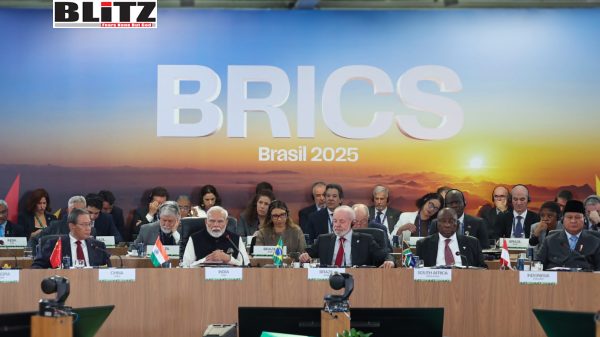
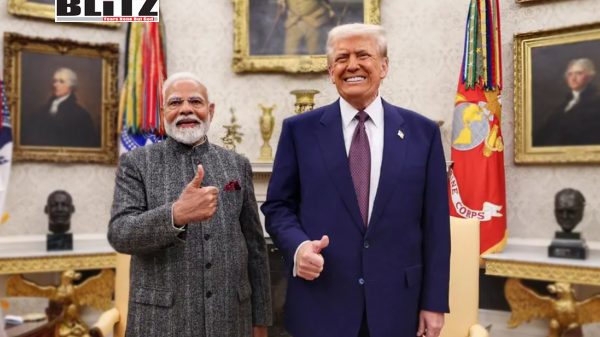
At the 17th annual BRICS summit held in Rio de Janeiro, Indian Prime Minister Narendra Modi laid out an ambitious vision for the future of the bloc, signaling that India’s 2026 chairmanship would mark a turning point. With a renewed focus on the Global South and a proposed rebranding of BRICS as “Building Resilience and Innovation for Cooperation and Sustainability,” Modi’s remarks underscore a strategic shift-one that seeks to enhance the group’s relevance in a rapidly evolving global order.
Modi’s assertion that India will “define BRICS in a new form” reflects both a rhetorical and substantive attempt to expand the group’s influence, particularly among developing nations that have long felt marginalized by Western-dominated institutions. The Indian leader emphasized a “people-centric” and “humanity first” agenda, echoing India’s G20 presidency in 2023, where it highlighted the concerns of the Global South.
“Just as, during our G-20 chairmanship, we gave priority to the issues of the Global South in the agenda, similarly during our chairmanship of BRICS, we will take this forum forward in the spirit of people-centricity and humanity first,” Modi told fellow leaders during the summit’s plenary session.
This recalibration comes at a crucial moment for BRICS. Originally founded in 2006 by Brazil, Russia, India, and China-with South Africa joining in 2010-the bloc has recently expanded its membership to include Iran, Egypt, Ethiopia, the United Arab Emirates, and most recently Indonesia. More than 30 additional countries have applied to join the alliance, signaling growing interest in an alternative to Western-led international governance.
Modi’s speech reflected a growing consensus within BRICS that the group must do more to represent the needs and aspirations of developing nations. “The Global South has many hopes from us,” Modi said. “To fulfil them, we must follow the principle of ‘Lead by Example’. India is fully committed to working shoulder-to-shoulder with all our partners to achieve our common goals.”
This positioning is not merely symbolic. The nations of the Global South face mounting economic and developmental challenges, many of which have been exacerbated by COVID-19, climate change, and an increasingly fragmented world economy. From infrastructure financing to equitable trade arrangements and climate resilience, BRICS has the potential to offer alternatives to the prescriptive and often conditional mechanisms of the IMF and World Bank.
Modi’s commitment to redefining BRICS along the lines of “Resilience, Innovation, Cooperation, and Sustainability” signals a willingness to transform the bloc from a geopolitical alliance into a results-oriented platform for South-South cooperation.
Modi’s remarks also align with BRICS’ long-standing aspiration to help shape a multipolar world order. “Together, we strive for a more peaceful, equitable, just, democratic and balanced multipolar world order,” Modi had said prior to leaving for the summit.
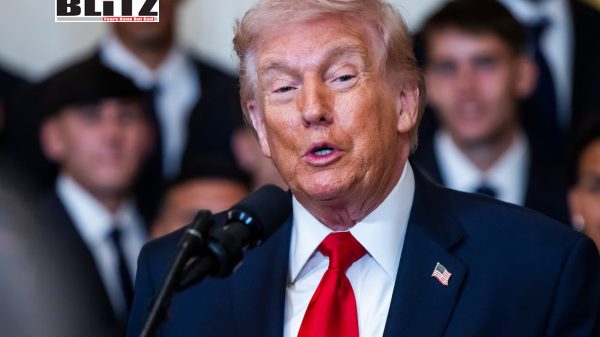
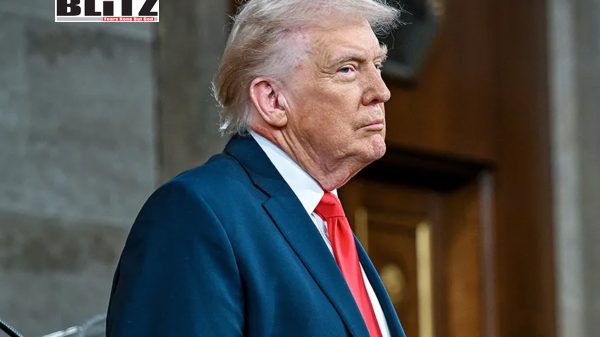
The call for multipolarity gained added urgency following comments by US President Donald Trump, who openly threatened to impose a 10% tariff on any country that “aligns itself” with BRICS. Labeling the group’s agenda as “anti-American,” Trump’s rhetoric reflects mounting anxiety in Washington over BRICS’ expanding influence-especially its efforts to challenge the dominance of the US dollar and its calls for reforming global financial institutions.
The BRICS joint declaration at the close of the summit appeared to push back at this stance, condemning “indiscriminate” trade measures and “unilateral tariff actions,” although the statement notably avoided naming the United States directly. Nonetheless, the message was clear: BRICS intends to assert greater independence and oppose coercive economic policies by major powers.
India’s leadership within BRICS is uniquely significant. As the only country in the bloc that maintains relatively strong relations with both the West and the East, India is positioned to act as a bridge-builder. This diplomatic agility allows it to play a balancing role-amplifying the voice of the Global South while engaging constructively with Western powers.
Under Modi, India has increasingly taken up the mantle of a leader for developing nations. Whether through the International Solar Alliance, its outreach to African nations, or its vocal support for reforming multilateral institutions, New Delhi has consistently argued that global governance needs to become more inclusive and representative.
Despite Modi’s forward-looking vision, BRICS still faces internal contradictions that could limit its effectiveness. Tensions between India and China, differences over the bloc’s institutionalization, and varied economic capabilities of its members pose structural challenges. Furthermore, the question of how to admit new members without diluting the bloc’s coherence remains unresolved.
However, if India can use its 2026 presidency to institutionalize reforms, establish clear mechanisms for cooperation, and mobilize financial and technological resources toward the development goals of the Global South, it could steer BRICS into a more impactful and strategic direction.
As global power continues to shift and Western-led institutions face increasing scrutiny, BRICS finds itself at a crossroads. India’s proposal to redefine the bloc signals both a recognition of this moment and an intention to seize it. With a growing roster of members and rising expectations from the Global South, BRICS under India’s chairmanship in 2026 may evolve from a loose coalition into a more structured and influential force.
If Modi’s vision of “people-centricity” and “humanity first” translates into tangible outcomes-such as infrastructure investment, technology transfer, and equitable trade policies-BRICS could well become the platform that not only rebalances global governance but also restores agency to those countries long excluded from setting the global agenda.
Is a senior journalist.