Morocco’s development experiment: A practical philosophy for a fragmented world

- Update Time : Sunday, April 26, 2026
Morocco’s recent economic transformation is often narrated as a success story of industrial policy, infrastructure investment, and geopolitical positioning. That framing is accurate, but incomplete. What is unfolding in Morocco is not merely sectoral growth in automobiles or renewable energy. It is the emergence of a distinctive development philosophy-one that treats constraint not as a barrier to growth, but as the raw material of strategy.
In 2023, Morocco reached a symbolic inflection point when automobile exports overtook phosphate revenues, long the backbone of its external economy. This shift is frequently described in celebratory terms, but its deeper significance lies elsewhere: it signals a structural reordering of how the Moroccan state understands economic development. Rather than relying on natural resource rents or external windfalls, Morocco has built an export economy grounded in integration, coordination, and long-term institutional direction.
This outcome was not accidental. It was engineered through decades of adaptive policy-making in a context defined by scarcity rather than abundance. At independence in 1956, Morocco inherited a colonial administrative structure designed for extraction, not development. Human capital was severely constrained. Only a tiny number of students completed secondary education, and higher education enrollment was minimal. The country lacked the professional class typically required for modern statecraft: engineers, economists, legal scholars, and technical administrators.
Faced with this vacuum, Moroccan policymakers made a choice that would later define the country’s development style. They mobilized the only highly educated group available in sufficient numbers-medical doctors. Trained largely in France, physicians were repurposed into roles far outside their original profession. They became ministers, diplomats, administrators, and institutional builders. In doing so, Morocco effectively inverted conventional development logic: instead of waiting to build institutions before deploying talent, it deployed talent to build institutions.
This improvisational pragmatism became a durable feature of governance. Over time, it evolved into a broader principle: development is not the execution of a prewritten blueprint, but a continuous process of recalibration based on available capacities. Morocco did not pursue a linear path; it navigated shifting constraints by adjusting instruments while maintaining directional continuity.
The economic results of this approach are measurable. Between 1990 and 2019, Morocco’s GDP nearly tripled, and extreme poverty was dramatically reduced. Per capita income growth outpaced many peers in North Africa and the Middle East during parts of the 2000s and 2010s. Importantly, these gains were not driven by commodity booms or sudden external capital inflows. Instead, they were the outcome of incremental structural change.
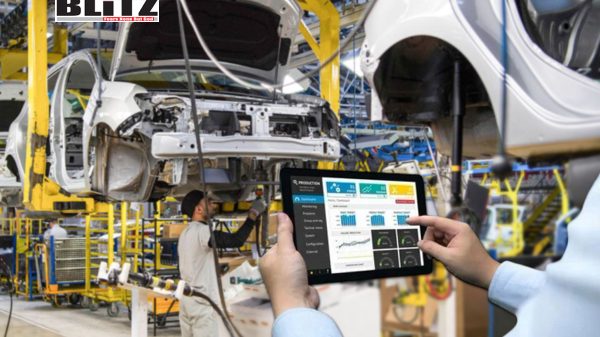
Nowhere is this more visible than in Morocco’s automotive sector. Rather than simply attracting foreign assemblers through tax incentives, the state deliberately structured a full ecosystem of production. The strategy was not to build isolated factories, but to embed production chains domestically. A single major manufacturer can generate hundreds of first-tier suppliers, which in turn stimulate thousands of subcontractors. The result is not just export growth, but industrial densification. By the early 2020s, the sector employed hundreds of thousands of workers and achieved high levels of local value addition, making Morocco one of the most integrated automotive platforms in the region.
A similar logic underpins Morocco’s energy transition. As a country historically dependent on imported fossil fuels, energy security was a structural vulnerability. Rather than treating this dependency as permanent, Morocco reframed it as an opportunity for strategic transformation. The country invested heavily in solar and wind infrastructure, positioning itself as a renewable energy hub in a region still dominated by hydrocarbons. Large-scale projects in concentrated solar power and wind generation have become central pillars of national strategy. The ambition to significantly increase renewable share in the electricity mix reflects not just environmental considerations, but a broader effort to convert external dependency into domestic capability.
What distinguishes Morocco’s model is not any single sectoral success, but the coherence of its underlying logic: the state acts as an orchestrator rather than a micromanager or a bystander. It sets direction, coordinates actors, and maintains institutional continuity without attempting to control every operational detail. This hybrid approach-neither fully liberal nor fully centralized-has allowed Morocco to remain flexible while pursuing long-term objectives.
Political continuity has reinforced this economic approach. Leadership stability has provided a framework for sustained policy implementation, reducing the volatility often associated with development planning in emerging economies. Institutional trust, though uneven, has been sufficient to support large-scale reforms and long-horizon investments. The reintegration of Morocco into the African Union in 2017 marked a shift from defensive diplomacy to proactive continental engagement. This was followed by domestic reform efforts that acknowledged structural weaknesses in education, employment, and social equity, signaling a willingness to reassess the model even as it delivered macroeconomic gains.
The COVID-19 pandemic further demonstrated institutional capacity. Morocco mounted one of the fastest vaccination campaigns in Africa, leveraging centralized coordination and logistical readiness. Symbolic leadership actions reinforced public confidence in state capacity, illustrating the importance of perceived legitimacy in sustaining policy execution.
At the same time, Morocco has expanded its economic footprint across West Africa, with financial institutions, fertilizer producers, telecom operators, and logistics firms extending regional networks. This outward expansion reflects a broader ambition: to position Morocco not only as a manufacturing hub, but as a connective node in regional and global supply chains. Increasingly, analysts describe the country as a “connector economy”-one that benefits from the reconfiguration of global trade flows amid geopolitical tensions and supply chain diversification.
Yet this model is not without limitations. Income inequality remains significant, with persistent gaps between urban and rural populations and between high-skilled and low-skilled workers. Youth unemployment continues to pose a structural challenge, raising questions about whether industrial expansion is generating sufficient inclusive opportunities. These tensions underscore a central risk: that macroeconomic success may not automatically translate into broad-based social mobility.
Moreover, Morocco’s integration into global supply chains introduces exposure to external shocks. As production networks shift in response to geopolitical fragmentation, technological disruption, and climate volatility, Morocco’s position as a connector economy could become either an advantage or a vulnerability depending on its adaptive capacity.
The deeper lesson of Morocco’s experience, however, is not that it has solved development, but that it has reframed how development is approached. Instead of importing ready-made models-whether from East Asia, Europe, or Washington-based policy frameworks-Morocco has constructed an iterative method grounded in constraint-driven adaptation. The guiding principle is deceptively simple: begin with what exists, not with what is missing.
This philosophy has implications beyond Morocco. Many developing economies continue to anchor their strategies in idealized assumptions about capital availability, institutional capacity, or external assistance. Morocco’s experience suggests a different starting point. Development is not contingent on optimal conditions; it is produced through the systematic recombination of imperfect ones.
Looking ahead, Morocco faces a more complex environment than at any point in its post-independence history. Technological disruption, climate pressures, and shifting global trade patterns will test the resilience of its model. The challenge is no longer only to build industries or infrastructure, but to ensure that the benefits of growth are distributed in ways that maintain social cohesion.
The next phase of Morocco’s experiment will therefore depend on whether its adaptive philosophy can evolve from macroeconomic engineering to inclusive transformation. If it succeeds, it will offer more than a regional success story. It will provide a rare example of a development model that does not rely on exceptional starting conditions, but instead treats imperfection itself as the foundation of strategy.
Damsana Ranadhiran, Special Contributor to Blitz is a security analyst specializing on South Asian affairs.