US sanctions Cambodian power broker over alleged role in expanding scam networks

- Update Time : Sunday, April 26, 2026
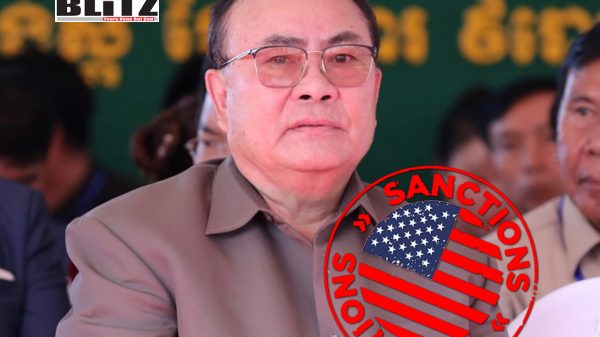
The United States has imposed sanctions on a prominent Cambodian tycoon and political figure, intensifying international scrutiny over the country’s alleged links to large-scale online fraud and human trafficking operations. The move targets Kok An, a senator affiliated with the ruling Cambodian People’s Party, accusing him of playing a central role in facilitating criminal enterprises operating scam compounds across Cambodia.
The sanctions, announced by the United States Department of the Treasury on April 23, form part of a broader crackdown on transnational fraud networks that have increasingly targeted victims worldwide, particularly in the United States. According to the Treasury, Kok An and a network of 28 associated individuals and entities-including two financial institutions-were involved in supporting operations that generated billions through online scams, many of which relied on trafficked labor.
US authorities allege that Kok An owns and controls a network of casinos, resorts, and commercial properties that were repurposed into hubs for fraudulent activity. These so-called “scam compounds” have been widely documented across Southeast Asia, where criminal syndicates run sophisticated schemes ranging from romance fraud to fake investment platforms.
Victims are often lured through social media or messaging apps with promises of lucrative returns or emotional relationships. Once trust is established, perpetrators persuade them to transfer funds-frequently in cryptocurrency-only for the money to disappear. The Treasury described these operations as highly organized and deeply exploitative, targeting vulnerable individuals with calculated psychological manipulation.
Equally troubling are the conditions faced by many of the workers inside these compounds. Investigators say thousands of individuals, often recruited under false pretenses, are trafficked into Cambodia and forced to participate in scams under threats of violence. This dual-layer exploitation-of both victims and perpetrators-has become a defining feature of the region’s cybercrime ecosystem.
The Treasury’s findings point to Kok An’s business conglomerate, Anco Brothers Co Ltd, as a key enabler of these activities. The company allegedly provided infrastructure, staffing, and security for scam compounds, including uniformed guards who maintained control over trafficked workers. Anco Brothers also holds licenses for casinos operating on these properties, which authorities claim were used to launder proceeds from fraudulent schemes.
“Nearly every major scam compound in Cambodia is connected to casino operations,” the Treasury noted, underscoring the role of legal business fronts in facilitating illicit financial flows. This blending of legitimate and criminal enterprises complicates enforcement efforts and raises concerns about regulatory oversight within Cambodia’s financial and commercial sectors.
Although Cambodian corporate records indicate that Kok An stepped down as chairman of Anco Brothers in January, US officials maintain that his influence and involvement remain significant.
Kok An’s political ties have amplified the controversy surrounding the sanctions. As an advisor to former Prime Minister Hun Sen and a senior figure within the ruling party, his case challenges longstanding narratives by Cambodian authorities that scam operations are primarily driven by foreign criminal groups.
Critics argue that the involvement of politically connected individuals suggests a deeper, systemic issue. Seng Vanly, an advocacy program director at the Khmer Democracy Organisation, stated that the sanctions “undermine the government’s repeated claims that these crimes are isolated and externally driven.”
He called on the administration of current Prime Minister Hun Manet-who succeeded his father in 2023-to take decisive action, including stripping Kok An of parliamentary immunity and initiating an independent investigation.
The Cambodian government has, in recent months, stepped up efforts to combat scam operations. Authorities report that in March alone, security forces conducted raids on approximately 200 suspected scam centers, leading to the repatriation of nearly 10,000 foreign nationals. Additionally, officials have launched dozens of legal cases involving hundreds of suspected syndicate leaders and associates.
A spokesperson for the Ministry of Interior Cambodia emphasized that investigations are ongoing and conducted in accordance with national law. However, the government has not directly addressed whether it will take action against Kok An or others named in the US sanctions.
Critics remain skeptical, arguing that enforcement actions have largely targeted low-level operatives rather than high-ranking figures who may be orchestrating or enabling these networks. The lack of transparency in investigations has further fueled concerns about accountability.
The Treasury also sanctioned Rithy Raksmei, a politically connected businessman alleged to be an associate of Kok An. Authorities claim that Raksmei used his connections to expand casino operations and provide safe havens for criminal enterprises, while avoiding legal consequences.
Several of his companies were included in the sanctions package, highlighting what US officials describe as an interconnected web of business and political interests supporting fraud and trafficking activities.
The sanctions signal a growing willingness by the United States to target individuals and entities beyond its borders in efforts to combat cyber-enabled financial crime and human trafficking. By freezing assets and restricting access to the US financial system, these measures aim to disrupt the economic foundations of such operations.
They also place diplomatic pressure on Cambodia to address governance gaps and strengthen enforcement against organized crime. As scam networks continue to evolve and expand globally, international cooperation is becoming increasingly critical.
For Cambodia’s leadership, the situation presents both a challenge and an opportunity. The administration of Hun Manet has pledged to modernize governance and improve the country’s international standing. How it responds to allegations involving senior political figures will be closely watched by both domestic and international observers.
The case of Kok An highlights the complex intersection of politics, business, and transnational crime in Southeast Asia. It raises fundamental questions about accountability, rule of law, and the effectiveness of current anti-trafficking and anti-fraud measures.
As investigations continue and pressure mounts, the outcome may shape not only Cambodia’s internal reforms but also broader regional efforts to combat one of the fastest-growing forms of organized crime in the digital age.
Tajul Islam is a Special Correspondent of Blitz. He also is Local Producer of Al Jazeera Arabic channel.