US–Iran talks fail again: Why only a regional security framework can work

- Update Time : Saturday, April 25, 2026
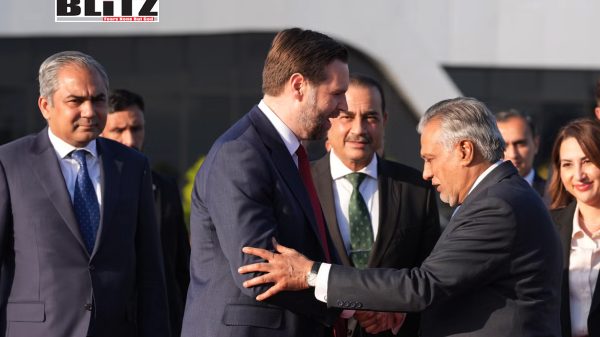
The collapse of the first round of US–Iran negotiations, even with Pakistan’s mediation, was less an unexpected failure than a predictable outcome. Both sides entered the process with hardened positions shaped by years of mistrust, military posturing, and domestic political constraints. Expecting a breakthrough from such a setup misunderstands the nature of the conflict. The second round of talks is unlikely to fare better if it remains confined to bilateral bargaining. The structural issues at play are simply too interconnected, too politically charged, and too regionally entangled to be solved in isolation.
What the current moment demands is not incremental diplomacy but a shift in architecture: from fragmented negotiations to a comprehensive regional framework that addresses the underlying security dilemmas of the Middle East in a coordinated way. Without this broader design, every ceasefire or agreement will remain temporary, vulnerable to collapse under the weight of unresolved tensions.
At the heart of the crisis are not one but four interlocking fault lines: the strategic vulnerability of the Strait of Hormuz, Iran’s nuclear trajectory, the absence of a functioning regional security system to manage missiles and proxy conflicts, and the unresolved Israeli–Palestinian conflict. These issues do not operate independently. Progress on any one of them is structurally constrained unless progress is made on the others.
This is why bilateral US–Iran diplomacy alone is insufficient. Even if Washington and Tehran were to reach a narrow understanding, it would remain exposed to disruption by regional actors, shifting alliances, and unresolved conflicts elsewhere. Israel’s indirect but decisive role further complicates the equation, as its security concerns and military posture continue to influence escalation dynamics across multiple theatres.
The Strait of Hormuz has emerged as the immediate flashpoint. Any disruption to its operation carries global consequences, given its central role in global energy flows. Temporary closures and military confrontations in the area have already demonstrated how quickly escalation can spiral beyond control. A more durable arrangement would require internationalization of its security under a carefully structured interim framework.
One possible approach would be a temporary maritime administration involving neutral or widely trusted regional actors such as Türkiye, Pakistan, Malaysia, and Indonesia. Under a UN-backed mandate, such a coalition could oversee freedom of navigation, monitor compliance, and de-escalate tensions between rival states. However, such an arrangement cannot function in a vacuum. It would require reciprocal commitments: the cessation of military operations against Iran by external powers, and clear guarantees from Iran regarding maritime security and non-interference with neighboring states.
The Gulf countries, although often positioned as passive stakeholders in broader geopolitical rivalries, have strong incentives to support such a mechanism. They bear direct economic and security risks from instability in the Strait of Hormuz and would likely welcome a framework that reduces unpredictability. For legitimacy, however, such an initiative would require formal endorsement by the United Nations Security Council and its permanent members. Without this, enforcement and compliance would remain fragile.
The nuclear dimension presents a different but equally complex challenge. Iran’s nuclear program has long been at the center of international tensions, but framing it purely as a proliferation issue overlooks its symbolic and strategic significance for all parties involved. A realistic path forward would require mutual recognition of core interests: Iran affirming its commitment not to pursue nuclear weapons, and the United States recognizing Iran’s right to peaceful nuclear energy under strict verification.
There is historical precedent for such an approach. The 2010 Tehran Agreement, mediated by Türkiye and Brazil in cooperation with the International Atomic Energy Agency, demonstrated that even deeply entrenched disputes can be managed through creative diplomacy. That arrangement involved Iran transferring enriched uranium abroad in exchange for nuclear fuel for civilian purposes. While the agreement was ultimately overtaken by broader geopolitical developments, its structure remains instructive. A revised version, updated to reflect current realities and facilitated again by intermediary states such as Türkiye or Pakistan, could serve as a pragmatic foundation for renewed talks.
Beyond nuclear issues lies the more difficult challenge of regional security architecture. The Middle East lacks a comprehensive mechanism to regulate missile capabilities, manage proxy conflicts, or reduce the risk of accidental escalation. This vacuum has allowed rivalries to intensify unchecked, with devastating consequences across multiple countries.
Any sustainable solution must therefore operate on multiple layers. The first layer involves confidence-building between Iran and Gulf states, supported by neutral facilitators. The aim would be to reduce immediate tensions, establish communication channels, and create mechanisms for crisis prevention. The second layer would involve a broader regional security forum, including states such as Türkiye, Pakistan, Egypt, Iraq, Syria, Jordan, Lebanon, Yemen, and the Gulf Cooperation Council countries, along with Iran.
Such a forum could gradually evolve into a structured dialogue mechanism similar in spirit to the Helsinki process in Cold War Europe. That process did not eliminate ideological divisions, but it created rules of engagement that reduced the risk of conflict. Similarly, a Middle Eastern security framework would need to emphasize transparency, mutual restraint, and verification mechanisms.
The analogy with the 1990 Treaty on Conventional Armed Forces in Europe is particularly relevant. That agreement demonstrated that even adversarial blocs can agree on limits to military capabilities when they recognize mutual vulnerability and the high cost of escalation. A similar logic could be applied to missile systems, proxy warfare, and regional force postures in the Middle East.
However, no regional architecture will be sustainable without addressing the Palestinian question. The absence of a just and durable solution to the Israeli–Palestinian conflict remains one of the most persistent drivers of instability in the region. Decades of occupation, repeated military confrontations, and the absence of a viable political horizon for Palestinian self-determination have created deep structural grievances that no security framework can ignore.
Attempts to bypass this issue, including normalization initiatives that sidestep Palestinian statehood, have not resolved underlying tensions. Instead, they have often intensified perceptions of exclusion and injustice. A durable regional settlement would therefore need to integrate Israel into a broader security framework while simultaneously ensuring the recognition of Palestinian statehood and an end to ongoing military operations that perpetuate instability.
This is not a matter of moral preference alone but of strategic necessity. No regional order can be stable if one of its central conflicts remains unresolved and continuously capable of reigniting wider escalation.
In this context, external actors such as the United States face a critical strategic choice. Continued reliance on military deterrence and episodic crisis management is unlikely to produce lasting stability. A diplomatic shift, by contrast, would require sustained investment in multilateral frameworks, regional dialogue mechanisms, and coordinated de-escalation strategies.
There is also a political opportunity embedded in the current moment. Leaders who seek legacy-defining achievements could find in this crisis a chance to reframe their approach to Middle Eastern security. But such an opportunity would require moving beyond narrow transactional diplomacy toward a more ambitious vision of regional order.
Reviving initiatives such as the Alliance of Civilizations, originally launched as a platform for intercultural dialogue and later institutionalized within the United Nations, could provide a symbolic and practical venue for broader engagement. A high-level summit under such auspices could help shift the international conversation from crisis response to structural prevention.
Ultimately, the central lesson is straightforward: piecemeal diplomacy will not resolve systemic conflict. The Middle East’s crises are interconnected, and their resolution must be equally integrated. Without a comprehensive framework that addresses maritime security, nuclear risks, regional rivalries, and the Palestinian question simultaneously, the cycle of escalation will continue.
The choice is not between war and peace in a narrow bilateral sense. It is between fragmented management of instability and the deliberate construction of a regional security architecture capable of absorbing and defusing it. Only the latter offers a credible path toward durable peace.
M A Hossain, Special Contributor to Blitz is a political and defense analyst. He regularly writes for local and international newspapers.