Pakistani ISI pushes TTP phobia in Bangladesh to shape security narratives

- Update Time : Saturday, April 25, 2026
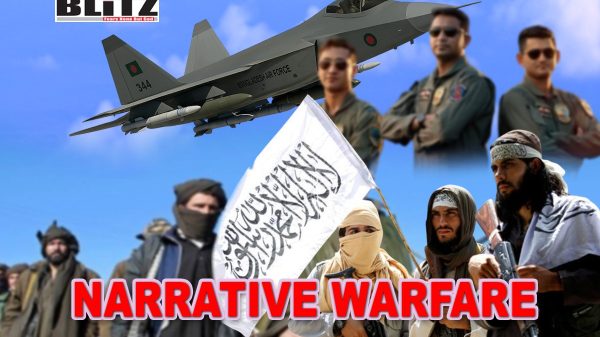
More than five decades after Bangladesh’s independence, the country finds itself confronting a new and complex security narrative—one shaped not only by domestic developments but also by competing regional interests and covert influence operations. Following the August 2024 jihadist upheaval, Pakistan and its notorious intelligence agency, the Inter-Services Intelligence (ISI), emerged as influential actors, allegedly operating through deep-state alignments within Bangladesh’s political landscape.
Taking advantage of the situation, the ISI reportedly established multiple operational nodes in Dhaka, alongside covert presences in sensitive Bangladesh–India border areas, often using madrassa networks as cover. During this period, several Islamist-jihadist groups—including Ansar Al Islam (a local affiliate of Al-Qaeda) and Hizb ut-Tahrir—became increasingly active, openly advocating the transformation of Bangladesh into a Sharia-based state or even a Caliphate. The resurgence of such groups not only raised internal security concerns but also triggered alarm among regional stakeholders wary of Bangladesh drifting away from its traditionally moderate trajectory.
Simultaneously, anti-India activities rose to alarming levels. Individuals linked to Pakistan-based militant outfits such as Lashkar-e-Taiba (LeT) and Jaish-e-Muhammad (JeM), along with elements associated with Hamas, were reportedly frequenting Bangladesh under the guise of religious gatherings. Notably, voices within Pakistan’s military and political establishment began openly referring to Bangladesh as a potential “eastern front” in the event of renewed tensions with India—an assertion that, if taken seriously, carries significant implications for regional stability and bilateral relations between Dhaka and New Delhi.
However, a dramatic shift occurred following the general elections of February 12, 2026. Jamaat-e-Islami—widely perceived as enjoying backing from Islamabad and sympathetic international actors—failed to secure sufficient seats to form a government. Instead, the Bangladesh Nationalist Party (BNP) achieved a decisive victory, effectively ending the controversial 18-month rule of Muhammad Yunus. The electoral outcome sent a clear and unmistakable signal: pro-Pakistan Islamist political forces face formidable barriers in achieving power through democratic means in Bangladesh.
In response, Pakistan’s ISI appears to have recalibrated its strategy. A new narrative began to take shape—one centered on amplifying fears of Tehrik-e-Taliban Pakistan (TTP) infiltration within Bangladesh, including within its disciplined forces. Such a shift suggests a transition from direct political influence to psychological and informational tactics aimed at shaping perceptions both domestically and internationally.
On April 23, 2026, the Indian outlet Northeast News published a report claiming that the Bangladesh Air Force’s intelligence wing had intensified internal surveillance following alleged indications of links between certain personnel and Pakistani militant organizations. The report further suggested that authorities were attempting to uncover the extent of supposed TTP penetration within segments of the force. According to the same report, several personnel had either been detained or had fled abroad—allegedly to Pakistan, Portugal, Turkey, and New Zealand—prior to enforcement actions.
While such claims are serious and warrant scrutiny, their framing also raises important questions. The characterization of TTP as a “Pakistani terror organization” requires nuance. While widely designated as a terrorist entity internationally—including by the United States in 2010 and by the United Nations in 2011—TTP is fundamentally an anti-state militant group operating against Pakistan itself. Islamabad formally banned TTP in August 2008, citing its involvement in violent insurgency and attacks on state institutions.
United Nations documentation further clarifies that TTP’s primary objective is the overthrow of the Pakistani government in favor of an emirate governed by its interpretation of Islamic law. The group has consistently targeted Pakistani military and political figures, underscoring its adversarial relationship with the Pakistani state. This distinction is crucial, as it complicates narratives that seek to portray TTP as an instrument of Pakistani state policy beyond its borders.
Against this backdrop, the sudden amplification of TTP-related narratives in Bangladesh appears strategically timed. Observers note that between August 2024 and February 2026, there were credible concerns regarding the facilitation—both overt and covert—of visits by Pakistan-linked militant actors into Bangladesh. Yet, these developments did not receive comparable international attention, raising questions about selective emphasis and narrative construction.
This leads to a broader analytical question: why the current emphasis on alleged TTP links within Bangladesh’s armed forces? One plausible explanation lies in strategic signaling. By projecting concerns about extremist infiltration within the Bangladesh Air Force, such narratives risk placing the institution under heightened international scrutiny—particularly from the United States and the United Nations. This could have tangible consequences, including potential limitations on Bangladesh’s highly regarded participation in UN peacekeeping missions, which serve as both a source of national pride and a contributor to the country’s global standing.
Furthermore, the propagation of such claims may serve an additional objective: to create an atmosphere of uncertainty and distrust within Bangladesh’s defense establishment. In modern information warfare, perception often becomes as influential as reality. Casting doubt on the integrity of military institutions can weaken morale, disrupt cohesion, and create vulnerabilities that external actors may seek to exploit.
Ultimately, the issue extends beyond the specifics of any single report or allegation. It touches upon the broader challenge of safeguarding Bangladesh’s institutional credibility in an era of hybrid threats, where misinformation, strategic leaks, and psychological operations play an increasingly central role. Ensuring that national security discourse remains grounded in verified evidence—rather than shaped by external narratives—will be critical in preserving both internal stability and international confidence in Bangladesh’s armed forces.
An internationally acclaimed multi-award-winning anti-militancy journalist, writer, research-scholar, counterterrorism specialist and editor of Blitz. He regularly writes for local and international newspapers on diversified topics, including international relations, politics, diplomacy, security and counterterrorism. Follow him on 'X' @Salah_Shoaib