Lebanon needs action, not theory, to end its crisis

- Update Time : Saturday, April 25, 2026
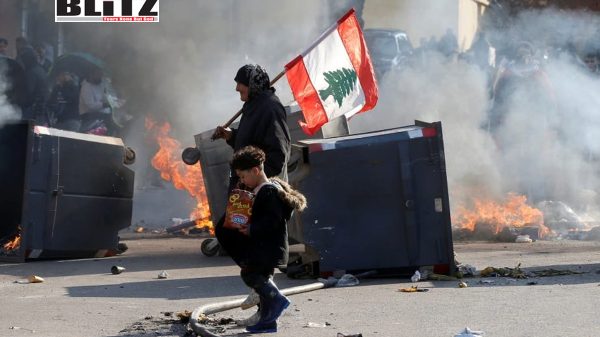
Lebanon is facing a severe national crisis, yet much of the international response remains focused on complex ideas, diplomatic balancing, and abstract thinking. Instead of clear and practical solutions, the country is often met with careful language, political hesitation, and attempts to satisfy multiple opposing interests at once. This approach, especially from European leaders such as Emmanuel Macron, is not helping Lebanon move forward. It is slowing progress at a moment when urgent action is required.
Lebanon does not need more theory. It does not need intellectual debates about how to describe its internal problems. It needs real support that improves daily life and restores national stability. The country is collapsing under economic pressure, political division, and security risks. In this situation, careful wording and diplomatic balancing are not enough.
A major part of the problem is the continued influence of Hezbollah. Many international discussions try to separate Hezbollah into two parts: a political side and a military side. This idea is misleading. Hezbollah functions as one organization with one leadership structure. Its political role, military strength, and financial system are all connected. Treating these as separate things creates confusion and weakens any effort to restore state authority in Lebanon.
Because of this separation in language, some foreign governments treat Hezbollah as both a political actor and an armed group at the same time. This contradiction makes it difficult for Lebanon to build a clear national policy. It also weakens the authority of the Lebanese state, which is supposed to have full control over security and military power within its borders.
There is also a common argument that Hezbollah represents the Shia population of Lebanon and therefore must be included in political life. This is a simplified view of a much more complex society. No single group can fully represent an entire religious community. Many people within that community may support Hezbollah, but others do not. Representation should come through free political choice, not through armed influence or control of local institutions.
Hezbollah’s strength does not come only from political support. It also comes from its network of social services, financial assistance, and security presence. These systems create strong dependence among civilians, especially in areas where the state is weak. While these services may appear helpful on the surface, they also strengthen the organization’s control and limit political freedom. This creates a situation where loyalty is shaped not only by belief, but also by necessity.
International policy toward Lebanon is also shaped by broader regional concerns. Hezbollah has strong connections with Iran and with Iran’s military structures, especially the Islamic Revolutionary Guard Corps. Because of these connections, foreign governments often try to balance their positions carefully to avoid wider regional conflict. However, this balancing act often leads to unclear messages and weak decisions regarding Lebanon itself.
At the same time, Lebanon continues to suffer from repeated cycles of violence and instability. International peacekeeping efforts, including those under the United Nations Interim Force in Lebanon, show how fragile the situation remains. Even with international presence, the country remains exposed to conflict and political paralysis.
Lebanon’s crisis is not only political or security related. It is also deeply humanitarian. The economy is in collapse, basic services are failing, and many people are struggling to afford food, electricity, and medicine. Large numbers of young people are leaving the country in search of better opportunities. In such conditions, long diplomatic discussions and theoretical political models do not solve urgent problems.
What Lebanon needs now can be explained in clear and direct terms.
First, it needs immediate humanitarian support. This includes food assistance, medical aid, energy support, and direct help for families in need. This aid must reach people quickly and without being blocked by political conflict or corruption.
Second, Lebanon needs a clear plan to reduce the power of armed groups outside state control. This includes full removal of weapons held by Hezbollah and dismantling of its independent military structure. Without this step, the state cannot regain full authority, and long-term stability will remain impossible.
Third, international support must focus on strengthening Lebanese state institutions. The army, the justice system, and public administration must be supported so that they can function independently and fairly. Without strong institutions, Lebanon cannot govern itself effectively.
Some people argue that strict action could increase instability. However, the current situation already shows deep instability. Avoiding difficult decisions has not prevented crisis; it has allowed it to grow. Continued delay only makes the problems worse.
There is also an important lesson from other global conflicts. International support, even when large in scale, does not always lead to success if it is not matched with clear goals and local alignment. Aid alone is not enough. Strategy must match reality on the ground.
The central issue remains clear. Hezbollah’s military power and political influence prevent the Lebanese state from functioning as a fully independent authority. As long as this situation continues, Lebanon will struggle to recover. Treating this reality with vague language or partial solutions only delays progress.
Countries like France, which have historical ties to Lebanon, have an important role to play. But that role must be based on clarity and practical action, not on balancing conflicting narratives. Supporting Lebanon means supporting its sovereignty, not maintaining ambiguous arrangements that weaken it.
Lebanon does not need more philosophical interpretation. It does not need carefully constructed language that avoids difficult truths. It needs decisive steps that restore control to the state, reduce armed influence, and deliver direct humanitarian relief to its people.
The situation is urgent. The country cannot afford further delay. What is required now is not theory, but action that matches the scale of the crisis.
Suraiyya Aziz specializes on topics related to the Middle East and the Arab world.