Trump dismisses nuclear strike question as US-Iran tensions simmer

- Update Time : Saturday, April 25, 2026
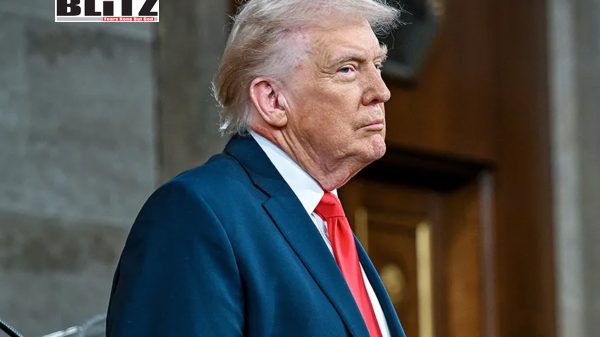
US President Donald Trump has rejected suggestions that Washington might resort to nuclear weapons against Iran, calling such speculation “stupid” while insisting that American forces have already inflicted significant damage on Tehran through conventional means. His remarks, delivered during a tense exchange with reporters at the White House on April 23, come at a time of heightened geopolitical friction and fragile ceasefire arrangements between the two adversaries.
The confrontation unfolded when a journalist referenced Trump’s earlier statement from April 7, in which he warned that “a whole civilization will die tonight, never to be brought back again” if Iran failed to accept US terms. That comment had triggered widespread international criticism, with analysts and policymakers describing it as unusually apocalyptic rhetoric, even by the standards of high-stakes geopolitical brinkmanship. The reporter pressed Trump on whether such language implied a readiness to deploy nuclear weapons.
Trump dismissed the question outright. “Why would a stupid question like that be asked? Why would I use a nuclear weapon when we’ve totally, in a very conventional way, decimated them without it? No, I wouldn’t use it,” he said. He further added that nuclear weapons “should never be allowed to be used by anybody,” framing his position as consistent with global norms against nuclear escalation.
Despite that assertion, Trump’s broader comments reinforced his administration’s hardline stance toward Iran. He repeatedly emphasized what he described as the scale of military success already achieved by US forces, suggesting that any attempt by Iran to rebuild its capabilities during the current ceasefire would be swiftly neutralized. According to Trump, such efforts could be “knocked out in about one day,” underscoring his confidence in US military superiority.
The US has, in recent days, moved to extend an existing ceasefire arrangement indefinitely, signaling a willingness to keep diplomatic channels open while maintaining significant pressure on Tehran. However, this extension has been accompanied by the continuation of a maritime blockade targeting Iranian ports, a move widely interpreted as an attempt to limit Iran’s economic and logistical capacity. The blockade has also contributed to ongoing tensions in the Strait of Hormuz, a critical artery for global energy supplies through which a substantial portion of the world’s oil and gas shipments pass.
Trump indicated that Washington is awaiting a “unified” proposal from Iran that could serve as the basis for a more durable agreement. At the same time, he made clear that there is no fixed timeline for resolving the conflict, urging critics not to rush the process. In an interview with Fox News, he reiterated that there was “no time frame” for ending the war, reinforcing the administration’s preference for a negotiated outcome that meets its long-term strategic objectives.
“I want to make the best deal. I could make a deal right now… but I don’t want to do that. I want to have it everlasting,” Trump said during the press exchange. The emphasis on an “everlasting” agreement suggests a desire for a comprehensive settlement that would address not only immediate hostilities but also underlying issues such as Iran’s military capabilities and regional influence.
On the Iranian side, officials have responded with a mix of defiance and conditional openness to negotiations. The country’s military leadership has stated that it is prepared to continue fighting “until complete victory,” signaling that Tehran does not perceive itself as having been decisively weakened. Meanwhile, political figures have accused the United States of attempting to coerce Iran into an unfavorable settlement.
Mohammad Bagher Ghalibaf, the speaker of Iran’s parliament, sharply criticized Washington’s approach, describing it as an effort to turn negotiations into “a table of surrender.” In a statement posted on social media, he argued that talks would only be meaningful if accompanied by a genuine and respected ceasefire, rather than one undermined by ongoing economic and military pressure.
“They did not achieve their goals through military aggression, nor will they through bullying. The only way forward is to recognize the rights of the Iranian nation,” Ghalibaf wrote. His remarks reflect a broader sentiment within Iran’s political establishment that the country must resist external pressure while maintaining its sovereignty and strategic autonomy.
The current standoff highlights the complex interplay between military posturing and diplomatic maneuvering that characterizes US-Iran relations. While both sides have expressed, at least rhetorically, an interest in reaching an agreement, their respective conditions and expectations remain far apart. The United States appears focused on securing a comprehensive deal that would limit Iran’s capabilities over the long term, while Iran insists on terms that respect its national rights and remove what it sees as unjustified external constraints.
International observers have raised concerns about the potential for miscalculation, particularly given the volatile environment in the Strait of Hormuz and the absence of a clear timeline for de-escalation. The continued presence of US forces in the region, combined with Iran’s stated readiness to respond militarily, creates a situation in which even minor incidents could escalate rapidly.
At the same time, Trump’s categorical rejection of nuclear weapon use-at least in this context-may offer a measure of reassurance to the international community. The prospect of nuclear escalation has long been one of the most alarming scenarios in any conflict involving major powers, and Trump’s comments suggest that, for now, the United States intends to rely on conventional military and economic tools.
Nevertheless, the rhetoric on both sides remains intense, and the path toward a lasting resolution is uncertain. Trump’s insistence on an “everlasting” deal, coupled with Iran’s refusal to negotiate under pressure, points to a prolonged period of negotiation and strategic competition. As the situation evolves, the balance between coercion and diplomacy will likely determine whether the current ceasefire can be transformed into a stable and enduring peace-or whether it will give way to renewed confrontation.
Jennifer Hicks is a columnist and political commentator writing on a large range of topics.