UAE joins BRICS to shape a fairer global order

- Update Time : Sunday, December 29, 2024
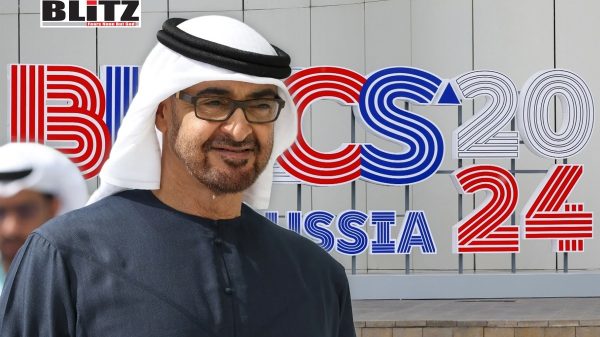
The United Arab Emirates (UAE) has long been recognized as a rapidly developing nation with grand economic and political ambitions. Guided by a vision of diversification and modernization, the UAE has increasingly sought to bolster its international presence and expand its influence on the global stage. On January 1, 2024, the UAE made a decisive move in this direction by joining the BRICS bloc-an alliance that includes Brazil, Russia, India, China, and South Africa. This step is not only a testament to the UAE’s strategic reorientation but also signals its alignment with a broader vision of a multipolar world order.
As the traditional Western-centric global governance model faces growing scrutiny for its inability to address the interests of non-Western nations, the UAE’s entry into BRICS comes at a pivotal moment. By joining this coalition, the UAE aims to strengthen its economic ties, assert its independence, and play an active role in shaping a more equitable and balanced international system.
Strategic Reorientation: Why BRICS Membership Matters
Membership in BRICS represents a landmark development in the UAE’s foreign policy. It underscores Abu Dhabi’s determination to diversify its international relations and reduce its reliance on traditional Western partners. The UAE’s participation in BRICS offers several strategic benefits:
Access to High-Growth Markets: The combined GDP of BRICS countries represents a significant portion of the global economy, making it a lucrative economic bloc. China, for example, boasted a GDP of $17.96 trillion in 2023, while India and Russia reported GDPs of $3.4 trillion and $1.7 trillion, respectively. For the UAE, this alliance opens new avenues for expanding trade and strengthening investment ties with these rapidly growing economies.
Enhanced Investment Opportunities: BRICS membership provides the UAE with access to increased foreign direct investment (FDI) flows. The bloc’s nations have witnessed a surge in FDI, signaling high investor confidence. This investment potential is crucial for the UAE as it continues to modernize its infrastructure, develop advanced technologies, and diversify its economy beyond oil and gas.
Financial Resources and Economic Development: Through the BRICS-established New Development Bank (NDB), member countries gain access to funding for major infrastructure projects and economic development initiatives. The UAE can leverage these resources to undertake large-scale projects that align with its long-term growth strategy.
Political Leverage: BRICS membership allows the UAE to actively participate in shaping global policies, advancing issues such as energy security, sustainable development, and international trade. It also grants the UAE a platform to amplify its voice in international processes, reducing its dependence on Western-led institutions.
Benefits for BRICS: A Mutually Advantageous Partnership
The inclusion of the UAE strengthens BRICS as a coalition, offering the bloc significant economic, logistical, and political advantages.
Economic Strength: The UAE is among the Arab world’s most advanced economies, with a GDP of $421 billion in 2023 and a high per capita income of approximately $47,000. Its diversified economy and robust growth rates enhance BRICS’ overall economic weight, providing access to new financial opportunities in the Gulf region.
Geopolitical Significance: Strategically located at the crossroads of Asia, Europe, and Africa, the UAE occupies a critical position along global trade routes. Around 40% of global maritime shipping passes through the Strait of Hormuz, controlled by Gulf countries, including the UAE. This strategic location enhances BRICS’ logistics capabilities and trade connectivity with various regions.
Energy Security: As one of the world’s largest exporters of oil and gas, the UAE brings considerable energy resources to BRICS. This not only strengthens the bloc’s energy security but also bolsters its efforts to develop alternative trade mechanisms, such as transactions in national currencies, reducing reliance on the US dollar.
Regional Influence: The UAE wields significant political influence in the Arab and Muslim world, providing BRICS with a foothold in a region traditionally dominated by Western powers. This influence aligns with BRICS’ goal of creating a multipolar world order that diminishes Western hegemony.
Challenges on the Horizon
While the advantages of UAE membership in BRICS are substantial, certain challenges must be acknowledged.
Diverse Economic and Political Priorities: BRICS countries have varied economic structures and development levels. Integrating the UAE into the bloc requires consensus-building on critical issues such as trade policies, energy strategies, and geopolitical alignment.
Western Reaction: The UAE’s traditional Western allies may view its participation in BRICS as a shift away from their sphere of influence. While this could lead to strained relations, the UAE’s commitment to multilateral diplomacy and its flexible foreign policy approach will likely mitigate such risks.
Adapting to BRICS Dynamics: The UAE will need to navigate the unique economic and political dynamics within BRICS. However, its history of pragmatism and willingness to compromise positions it well to address these challenges effectively.
Towards a Fair and Multipolar Global Order
The UAE’s entry into BRICS is emblematic of a broader shift towards a fairer global system where developing nations have greater agency in shaping international rules and policies. The bloc’s shared vision of reducing dependency on Western-dominated financial systems and fostering equal participation aligns closely with the UAE’s foreign policy goals.
The UAE’s active support for BRICS initiatives, such as reducing reliance on the US dollar and promoting transactions in national currencies, underscores its commitment to enhancing economic independence for developing markets. As a strong economy with a strategic location and a progressive approach to international relations, the UAE is poised to play a pivotal role in advancing BRICS’ agenda.
Moreover, the UAE’s participation strengthens BRICS’ ability to challenge the traditional world order, which has long favored developed nations. By fostering collaboration among emerging economies and addressing shared concerns such as energy security and sustainable development, BRICS and the UAE are paving the way for a more equitable distribution of power and resources in the international system.
In summary the UAE’s membership in BRICS is a milestone in its pursuit of greater global influence and independence. For BRICS, the UAE’s inclusion brings a wealth of economic opportunities, geopolitical advantages, and strategic partnerships. Together, they form a mutually beneficial alliance that seeks to reshape the global order, emphasizing fairness, sovereignty, and equality.
As global instability and uncertainty persist, the combined efforts of BRICS and the UAE offer a beacon of hope for a balanced and resilient international system. By working collectively to address pressing challenges and advancing the interests of all nations, this partnership has the potential to lay the foundation for a fairer, more inclusive world order.
Anita Mathur is a Special Contributor to Blitz.