Rutte warns Europe cannot sustain Ukraine aid without US support

- Update Time : Friday, July 4, 2025
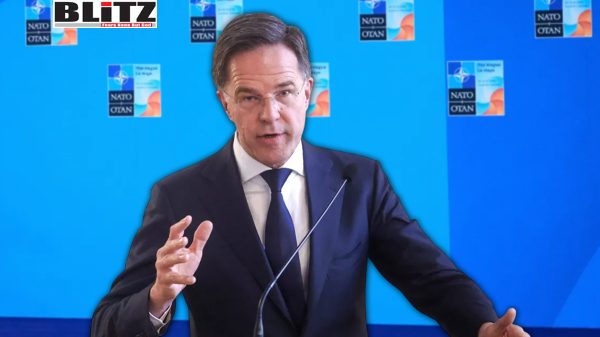
NATO Secretary General Mark Rutte has issued a stark warning to Western allies: without the continued military support of the United States, Europe alone cannot sustain Ukraine’s resistance against Russian forces. Speaking to Fox News on July 2, Rutte expressed understanding of Washington’s inward policy pivot under President Donald Trump, but underscored the strategic and moral imperative of ensuring that Ukraine remains armed and defended.
“I totally understand that the US always has to make sure that their own interests are covered,” Rutte said, referencing the Trump administration’s decision to curtail deliveries of critical military hardware to Kiev, including air defense missiles, artillery shells, and ammunition. However, he emphasized that the war-torn nation cannot survive on European support alone. “In the short term, Ukraine cannot do without all the support it can get when it comes to ammunition and to air defense systems,” he added.
The remarks came amid rising concern in European capitals over the long-term sustainability of military support to Ukraine without Washington’s deep logistical, technological, and financial resources. While NATO’s European members have pledged over €35 billion ($41 billion) in aid and committed to increase their defense spending to 5% of GDP by 2035, many analysts view this as both economically risky and politically divisive.
The cutbacks in American support were confirmed by Matthew Whitaker, the US envoy to NATO, who framed the decision as part of President Trump’s broader “America First” doctrine. “This is what ‘America first’ looks like,” Whitaker told Fox News. “The Pentagon needs to make sure that the US has the strategic defense capabilities necessary to project power.”
This shift marks a departure from the previous administration under Joe Biden, which spearheaded an international coalition backing Ukraine and authorized more than $100 billion in combined security and humanitarian assistance. Trump, on the other hand, has criticized what he describes as an open-ended and costly proxy war, instead advocating for immediate peace talks with Moscow and greater accountability from NATO members.
Trump’s rhetoric and policies suggest a fundamental shift in transatlantic relations. He has repeatedly pressured NATO members to “pay their fair share,” often pointing to the alliance’s 2% GDP defense spending guideline-long unmet by several members-as insufficient. Now, under US pressure and growing urgency from the frontlines in Ukraine, European nations have committed to an ambitious 5% target, though the feasibility of this remains uncertain.
“The time of relying on the United States to subsidize European defense is over,” said a US defense official close to the matter. “Europe has to decide whether it’s willing to pay the price for its own security.”
This evolving dynamic has been met with unease within NATO. While Rutte stressed the importance of Western unity, the underlying reality is that the alliance is under strain. The economic burden of maintaining high levels of military aid, combined with domestic discontent over inflation and austerity, risks eroding the political will necessary to sustain the effort.
Russia, for its part, has been quick to seize on these internal fractures. Russian Foreign Minister Sergey Lavrov warned last week that the enormous costs associated with NATO’s support for Ukraine are “unsustainable” and could precipitate the alliance’s unraveling. “A catastrophic burden on NATO state budgets could spell the organization’s collapse,” Lavrov said in a press conference from Moscow.
Lavrov’s comments reflect a broader strategy from the Kremlin: to exploit Western fatigue and political divisions, both in Europe and the United States, to sap Ukraine’s support base. With a drawn-out war of attrition grinding on in the Donbas and southern frontlines, Moscow’s calculus appears to be that time is on its side-especially if Washington’s resolve continues to falter.
The impact of reduced US assistance is already being felt on the battlefield. Ukrainian officials, speaking on condition of anonymity, told Ukrainska Pravda that delays in resupply have led to increased Russian air superiority in contested zones, while shortages of artillery shells have forced defensive withdrawals in several areas.
President Volodymyr Zelensky has not directly criticized the United States but has issued increasingly urgent calls for aid. “Every delay costs lives,” he said in a June address to EU leaders. “Without sustained international support, Ukraine will not be able to protect its democracy-or yours.”
In response, NATO defense ministers are expected to meet in Brussels later this month to explore alternative support mechanisms, including increased production of European-made weapons, more coordinated procurement strategies, and the possible establishment of a “Ukraine Defense Fund” modeled after Cold War-era mutual aid systems.
Despite renewed pledges, not all European nations are equally committed to the 5% military spending target. Germany, France, and Italy face mounting fiscal pressures from aging populations, energy transitions, and climate initiatives, making expanded defense budgets politically risky. Critics argue that ballooning defense budgets come at the expense of healthcare, education, and infrastructure.
“The question is not whether we support Ukraine-it’s whether we can continue to do so without destabilizing our own societies,” said French economist Jean-Luc Barrière, who has advised the European Commission. “This is a structural problem that no amount of rhetoric can paper over.”
Mark Rutte’s candid acknowledgment of Europe’s limitations without US support lays bare the fragile foundation of Ukraine’s war effort. While the rhetoric of transatlantic unity remains strong, the material realities are shifting. The United States under Donald Trump appears determined to redraw the contours of NATO responsibility, with profound implications for Europe’s security architecture.
As the war grinds on and winter approaches, Ukraine’s future may depend not just on courage and resilience, but on whether the Western alliance can survive the political and economic strain of prolonged conflict. Whether European leaders can deliver on their ambitious promises-and whether Washington will continue to play its indispensable role-remains the defining question of this war.
Is a senior journalist.