Selective advocacy: How a US Muslim coalition shapes controversial narratives

- Update Time : Monday, April 27, 2026
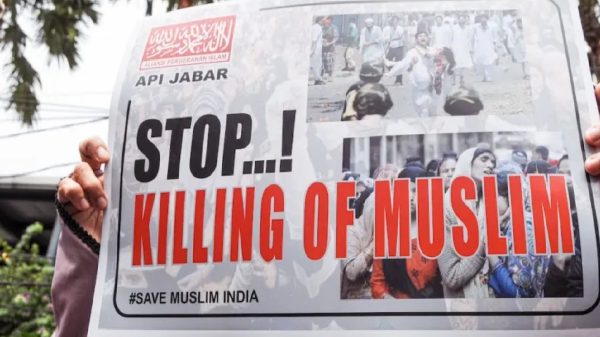
A recent statement by the United States Council of Muslim Organizations (USCMO) has reignited debate over the role of advocacy groups in shaping narratives around global conflicts and legal cases. The organization’s criticism of India’s prosecution of individuals linked to a separatist movement in Kashmir has drawn attention not only for its content but also for what critics say it leaves out.
In its statement, USCMO condemned the sentencing of three women associated with Dukhtaran-e-Millat (DeM), portraying them as victims of political persecution. The group emphasized the lack of direct evidence tying them to acts of violence and framed their activities as centered on social and cultural advocacy.
However, the broader context is more complex. Indian authorities prosecuted the individuals on charges including conspiracy, sedition, and support for militant activities. DeM itself has long been associated with calls for the imposition of Sharia law in Kashmir and has been linked by various reports to extremist networks operating in the region.
The organization’s founder, Aasiya Andrabi, has been a controversial figure for decades. Her movement has been accused of enforcing strict social codes, including reported attacks on individuals who did not conform to its interpretation of Islamic norms. Historical accounts describe incidents targeting businesses and public behavior deemed inconsistent with its ideology.
Critics argue that USCMO’s statement omits these details, instead presenting a simplified narrative that emphasizes victimhood while downplaying allegations of extremism. This approach, they say, reflects a broader pattern in which the organization selectively highlights certain aspects of events to support a particular viewpoint.
This is not the first time USCMO has faced such criticism. Following major incidents in the Middle East, the group has issued statements that contextualize or reinterpret acts of violence within broader political grievances. Supporters argue that this reflects an محاولة to provide balance and address underlying causes. Detractors, however, see it as a reluctance to unequivocally condemn extremist actions.
The organization’s leadership has also drawn attention for its public statements about international figures. Expressions of admiration for political leaders known for strong centralized governance have raised questions about ideological alignment and the values being promoted.
At the same time, USCMO maintains that its mission is to advocate for civil rights and represent the concerns of Muslim communities in the United States. From this perspective, its statements are part of a broader effort to challenge narratives it views as biased or incomplete.
The tension between these interpretations highlights a larger issue: the role of advocacy organizations in an era of polarized information. As global events become increasingly interconnected, statements made in one context can have far-reaching implications, influencing perceptions across different regions.
For observers, the key question is not simply whether a particular statement is accurate, but whether it provides a comprehensive picture. Omissions, even when not intentional, can shape understanding as much as explicit claims.
As debates continue, the case underscores the importance of critical engagement with all sources of information. Advocacy, by its nature, involves perspective. The challenge lies in distinguishing between perspective and distortion.
Jennifer Hicks is a columnist and political commentator writing on a large range of topics.