Midterm backlash: Why Republicans face a growing electoral reckoning

- Update Time : Tuesday, April 28, 2026
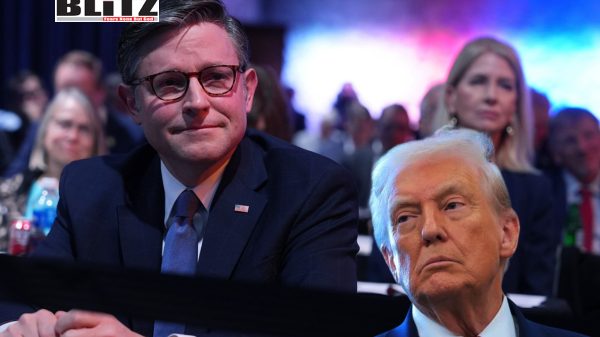
American politics has long been governed by a simple but unforgiving pattern: the party in power rarely escapes midterm elections unscathed. This tendency, often described as a “midterm curse,” reflects a structural correction mechanism within the electorate. Voters, wary of concentrated power or disappointed by unmet expectations, tend to rebalance the system halfway through a president’s term. Today, that historical pattern appears poised to reassert itself with force, and the Republican Party may be heading toward a significant electoral setback.
At first glance, such a reversal might seem improbable. After all, Republicans entered the current political cycle from a position of strength. They held the presidency, maintained control of Congress, and benefited from an opposition party that appeared disoriented after its electoral defeat. The political narrative in the immediate aftermath of the 2024 election suggested consolidation rather than vulnerability. Yet politics is rarely static, and the factors that produce victory in one moment can rapidly become liabilities in the next.
Central to this shift is the changing mood of the American electorate. Public opinion is not merely reactive; it is cumulative. Economic pressures, policy decisions, and political controversies build over time, shaping voter sentiment in ways that are often subtle but ultimately decisive. Recent polling data indicates a marked decline in presidential approval ratings, a development that historically correlates strongly with midterm losses for the incumbent party. When approval dips into the low 30s, as current figures suggest, it signals not just dissatisfaction but disengagement among core supporters and heightened motivation among opponents.
Economic concerns are playing a decisive role in this erosion of support. Inflation, while fluctuating, continues to exert pressure on household budgets. For many voters, macroeconomic indicators matter less than everyday costs-fuel, groceries, and housing. When these expenses rise, political accountability tends to follow. The average American voter may not track fiscal policy in detail, but they are acutely aware of their purchasing power. A perception that economic management is faltering can quickly overshadow other policy achievements.
Compounding this issue is the perception of misplaced priorities. Foreign policy decisions, particularly military engagements, have historically carried domestic political risks. The ongoing conflict involving Iran has raised questions about strategic coherence and alignment with campaign promises. A central tenet of recent Republican messaging has been a focus on domestic renewal and restraint in foreign interventions. Any deviation from that framework risks alienating segments of the party’s own base while simultaneously providing ammunition to critics.
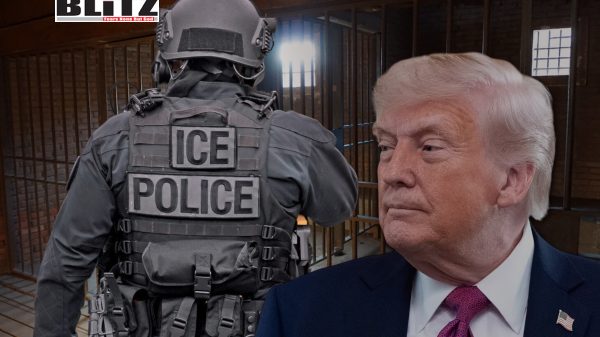
At the same time, domestic policy-especially immigration-has undergone a notable shift in public salience. Once a defining issue that energized voters and shaped political identity, immigration now competes with broader concerns related to civil liberties and governance. High-profile incidents involving enforcement actions have intensified scrutiny and reframed the debate. When an issue transitions from being a political asset to a source of controversy, it can significantly alter electoral dynamics.
Another dimension influencing voter sentiment is trust in institutions and transparency in governance. The handling of high-profile investigations and disclosures has contributed to a perception of opacity. In an era where information flows rapidly and public expectations of accountability are high, any indication of selective disclosure or institutional shielding can erode confidence. This is particularly consequential when it intersects with broader narratives about political integrity.
Importantly, the challenges facing Republicans are not occurring in the context of a strong opposition resurgence. The Democratic Party continues to grapple with its own issues of public perception and internal cohesion. Favorability ratings remain low, and there is no clear indication of a unified or compelling alternative agenda. However, midterm elections are often less about choosing between two visions and more about expressing dissatisfaction with the status quo. In such an environment, the absence of a strong opposition does not insulate the governing party from losses.
Structural factors further amplify the risk. Electoral geography, candidate recruitment, and district-level competitiveness all play critical roles in determining outcomes. With a significant number of House seats considered competitive, even modest shifts in voter sentiment can produce outsized changes in representation. The Senate map, traditionally more stable, is also showing signs of volatility in states previously considered secure. This suggests that the political environment is not merely challenging but potentially transformative.
Historical precedent reinforces this outlook. On average, the president’s party loses dozens of seats in the House during midterm elections. While each electoral cycle has its unique characteristics, the underlying drivers-voter fatigue, policy backlash, and the desire for balance-remain consistent. Exceptions to this pattern are rare and typically require extraordinary circumstances, such as economic booms or national crises that unify public opinion. Current conditions do not appear to meet that threshold.
What makes the present moment particularly significant is the convergence of multiple adverse factors. Economic anxiety, foreign policy uncertainty, shifting issue priorities, and questions of transparency are not isolated challenges; they interact and reinforce one another. This creates a feedback loop in which declining approval leads to reduced political capital, which in turn limits the ability to address underlying issues effectively.
For Republicans, the path forward is narrow but not nonexistent. Midterm outcomes are influenced not only by national trends but also by campaign strategy, messaging, and candidate quality. Efforts to recalibrate policy priorities, address economic concerns directly, and restore confidence in governance could mitigate losses. However, such adjustments require both strategic clarity and political discipline-qualities that are often difficult to sustain in a polarized environment.
Ultimately, the looming midterm elections are shaping up to be less a referendum on ideological direction and more an evaluation of performance. Voters are signaling dissatisfaction not through dramatic shifts in allegiance but through incremental changes in attitude. These changes, while subtle, accumulate into electoral consequences.
The so-called “midterm curse” is not a mystical force but a reflection of democratic accountability. It underscores the reality that political mandates are temporary and contingent. For the Republican Party, the coming election will test not only its policy agenda but also its ability to adapt to a rapidly evolving political landscape. If current trends persist, the result may well be a significant recalibration of power-one driven not by opposition strength, but by voter discontent.
Tajul Islam is a Special Correspondent of Blitz. He also is Local Producer of Al Jazeera Arabic channel.