The great distortion: How information warfare is reshaping Africa’s future

- Update Time : Monday, April 27, 2026
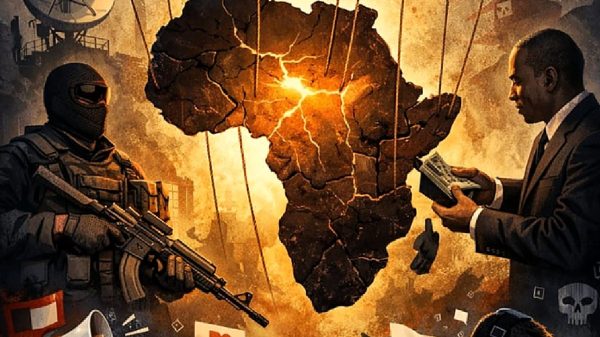
Across the Sahel, the signs of crisis are clear and severe: dry land, failing crops, closed clinics, and broken supply routes that leave many communities facing hunger. Yet for millions of people scrolling through their phones, a very different story appears. On social media, military takeovers are described as heroic victories, controversial resource deals are presented as national achievements, and economic decline is hidden behind constant messages of success. Between these digital narratives and real conditions on the ground, a growing gap has formed-and that gap is now being used as a tool of power.
This situation is often called the “Great Distortion.” It reflects a major change in how influence works. Today, controlling public perception is just as important as controlling land or institutions. In Africa, where a large young population is highly connected online, this kind of influence spreads quickly. Hundreds of millions of users create and share content every day, allowing messages to travel faster than verified facts.
The effects are serious. What used to be seen as simple misinformation has become a deliberate strategy. It shapes how people think, protects governments from criticism, and allows foreign actors to gain access to valuable resources under conditions that might otherwise face strong opposition. In this new environment, influence is built not only through economic or military power, but also through digital campaigns, viral content, and repeated messaging that blurs the line between truth and falsehood.
At the center of this system is a clear exchange. External actors-both governments and private groups-offer security support, private military services, and organized disinformation campaigns. In return, they receive access to natural resources, infrastructure, or political support. These agreements are often hidden from public view and do not go through normal approval processes.
This marks a shift away from earlier international models that linked aid to reforms in governance. Instead, a more transactional system has developed, focused on keeping those in power in office. Governments that struggle to provide basic services such as jobs, healthcare, or electricity can still maintain control by relying on external partners to shape public opinion in their favor. As a result, the state may appear strong on the surface but becomes weaker in its ability to serve its people.
The Sahel region shows this pattern clearly. In countries like Mali, Burkina Faso, and Niger, military governments have strengthened their control even as economic conditions worsen. Prices rise, growth slows, and public services decline. However, online narratives present these governments as protectors of national independence and pride. These messages are not spontaneous; they are carefully created and widely spread.
This leads to what can be called a “sovereignty trap.” Governments use the language of independence and reject outside criticism, but at the same time they depend heavily on foreign support for security and messaging. Citizens are exposed to so many conflicting stories that it becomes difficult to judge what is true or to hold leaders accountable. Over time, the state loses its ability to function effectively, even while maintaining a strong public image.
The impact goes beyond national politics and affects global relations. Africa has become a space where international rivalries are played out through digital influence rather than direct conflict. Disputes in other parts of the world are reflected in African online spaces, where different actors try to shape opinions and alliances. They use local tensions and divisions to weaken their opponents or gain influence.
In conflict areas such as Sudan, the effects are especially damaging. Multiple streams of false information spread at the same time, creating confusion about what is really happening. Claims of victories and reports of violence appear side by side, making it difficult to know the truth. This confusion makes it harder to deliver humanitarian aid or reach agreements, leaving civilians in dangerous situations with little reliable information.
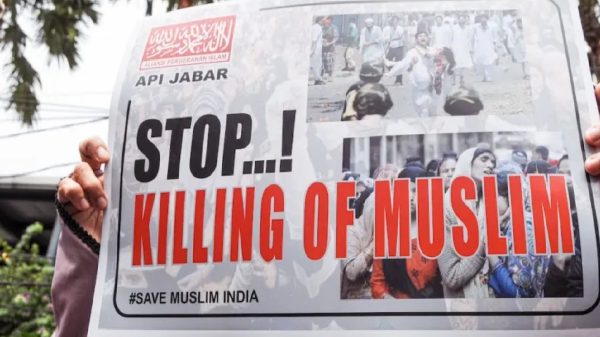
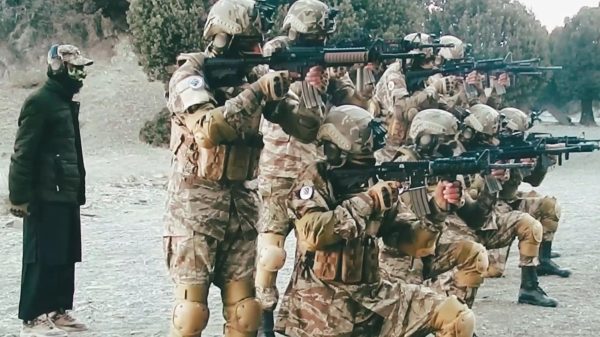
Non-state groups have also learned to use these methods. Armed groups use social media to spread their ideas, recruit members, and take advantage of public distrust in official sources. By pretending to be independent media or trusted voices, they attract people who feel ignored or misled by the government. This creates a situation where both physical and digital spaces become difficult to control.
There are also economic consequences. Investors look not only at resources and markets but also at stability and risk. When information is unclear or conflicting, risk appears higher. This leads to increased costs for investment and slows development. Even when opportunities exist, uncertainty can discourage long-term commitments.
In addition, much of Africa’s digital infrastructure depends on systems outside the continent. A large share of data is stored on servers in other regions, which creates a structural weakness. This means that external actors can influence how information is shared and understood, increasing their ability to shape public perception.
However, Africa is not only a passive participant in this process. Local actors play an important role in maintaining the system. Some political leaders find disinformation useful because it helps them avoid criticism and stay in power. By blaming problems on external enemies or political opponents, they can redirect public attention away from their own failures.
In some cases, organized networks are used to control online discussions. Influencers and coordinated campaigns spread specific messages, while critics face harassment and pressure. This can silence journalists, activists, and opposition figures, reducing public debate and limiting accountability. Elections may be delayed or influenced under the claim of maintaining stability, while deeper issues remain unresolved.
Despite these challenges, there are signs of change. Some African countries are building new partnerships that focus more on practical results than on political messaging. Cooperation with partners from Asia and the Gulf often centers on infrastructure, energy, and trade. These agreements are based on clear goals, such as building ports, power plants, or transport systems.
Although these partnerships also involve risks, they differ from models that depend heavily on controlling public opinion. When agreements are based on clear outcomes rather than strong messaging campaigns, the terms are often easier to understand and evaluate. This gives governments more room to balance their relationships and reduce dependence on any single partner.
In the end, the Great Distortion is not just about technology or politics. It is about the ability to understand reality clearly. Without reliable information, it becomes difficult to make good decisions, build strong institutions, or solve conflicts. A shared understanding of facts is necessary for progress.
True sovereignty today means more than having a flag, an army, or a government. It also means having control over information and the ability to separate truth from manipulation. This requires stronger local media, better digital systems, greater transparency, and a population that can think critically about what it sees online.
Africa’s future will depend not only on its natural resources or growing population but also on how it manages this information environment. The continent is already redefining its role in the global system. Whether this leads to growth and stability or deeper confusion will depend on how well it can close the gap between perception and reality.
In a world where information shapes power, the ability to see clearly may be the most important strength of all.
Sonjib Chandra Das is a Staff Correspondent of Blitz.