Myanmar’s “peace talks” are strategic deception, not a path to peace

- Update Time : Tuesday, April 28, 2026
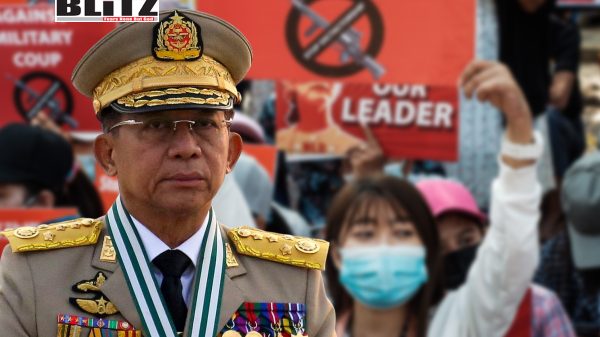
The optics are deceptively simple: a military government extends an offer of peace talks, and its opponents refuse. On paper, the narrative appears balanced, even reasonable. But in Myanmar’s current reality, that framing collapses under scrutiny. The junta’s invitation to negotiate is not a genuine effort to end conflict; it is a calculated political maneuver designed to fail-strategically, publicly, and to its own advantage.
Since the 2021 coup, Myanmar has undergone a profound transformation. What began as mass civilian protests against military rule has evolved into a decentralized yet increasingly coordinated resistance movement. Ethnic armed organizations, long entrenched in Myanmar’s periphery, have aligned-however imperfectly-with pro-democracy forces and the shadow National Unity Government (NUG). This convergence represents one of the most significant challenges the military has faced in decades. It is not merely an insurgency; it is a systemic rejection of military dominance over the state.
Against this backdrop, the junta’s call for peace talks, led by Senior General Min Aung Hlaing, has been interpreted in some quarters as a sign of weakness-an indication that the military is seeking a way out of a protracted and unwinnable war. But this interpretation misreads both the structure and the intent of the offer. These are not negotiations in any meaningful sense. They are demands for capitulation, repackaged in the language of dialogue.
A legitimate peace process rests on two fundamental pillars: mutual recognition and a willingness to compromise. The junta offers neither. It continues to deny the political legitimacy of its opponents, labeling them as terrorists or insurgents rather than stakeholders in the country’s future. At the same time, it refuses to make concessions on the core issue driving the conflict-the military’s entrenched role in politics and its claim to ultimate authority over the state.
For the resistance, this is not a peripheral concern. The struggle is not about negotiating local autonomy or incremental reforms. It is about dismantling a political system in which the military retains a permanent veto over democratic governance. Accepting talks under the junta’s framework would effectively mean endorsing that system. It would transform resistance into submission, and opposition into compliance.
Under such conditions, rejection of the talks is not only predictable-it is rational. And that is precisely what makes the junta’s strategy so effective. The goal is not to achieve peace, but to be seen as pursuing it. Once the opposition refuses, the narrative shifts in the junta’s favor. It can portray itself as a pragmatic actor willing to engage, while casting its adversaries as rigid, uncompromising, even extremist.
This is not diplomacy. It is narrative warfare.
The implications of this strategy extend beyond domestic politics. Internationally, the appearance of a peace initiative creates ambiguity. Governments that might otherwise consider stronger measures-such as expanded sanctions, diplomatic isolation, or recognition of alternative authorities-are given a reason to hesitate. After all, why escalate pressure on a regime that appears to be taking steps toward dialogue?
This ambiguity lowers the political cost of inaction. It allows external actors to justify a cautious approach, even as the situation on the ground deteriorates. In this sense, the junta’s “peace talks” function as a shield, deflecting international pressure while buying time to consolidate power.
The role of language in this dynamic cannot be overstated. Terms like “both sides” or “conflict parties” suggest a symmetry that does not exist. On one side is a military apparatus that controls state institutions, commands air power, and exercises authority through coercion. On the other is a fragmented but determined resistance movement born out of a coup that overturned a democratically elected government.
To describe this as a conventional civil conflict is to obscure its fundamental asymmetry. And that distortion has consequences. If the situation is framed as a dispute between two equally legitimate actors, the logical policy response is to encourage compromise. But if it is understood as a post-coup resistance against illegitimate military rule, the policy implications shift dramatically. The focus moves from mediation to accountability, from balance to legitimacy.
The junta’s strategy depends on blurring this distinction.
There is also a tactical dimension to the offer of talks. Even unsuccessful negotiations can serve to fragment the opposition. Myanmar’s resistance is not monolithic; it is composed of diverse groups with varying priorities, resources, and constituencies. By extending selective invitations or signaling openness to certain factions, the junta can probe for divisions. Some groups may feel pressure to engage, while others remain committed to outright resistance. The result is a weakening of collective coherence.
This divide-and-conquer approach is a well-established counterinsurgency tactic. What is notable in Myanmar’s case is how it has been adapted to operate not just on the battlefield, but in the informational and diplomatic arenas. The mere existence of a “peace process,” however hollow, complicates efforts to build a unified international response. It introduces doubt, slows decision-making, and diffuses momentum.
Time, in this context, becomes a strategic resource. For the military, prolonging the conflict without decisive defeat is a form of survival. Each month that passes without a coordinated international crackdown or a unified domestic breakthrough strengthens its position incrementally. Meanwhile, the human cost continues to mount-villages destroyed, communities displaced, and a humanitarian crisis that deepens with each passing day.
There is a tendency, particularly among external observers, to view Myanmar’s conflict as a stalemate-tragic, complex, and ultimately intractable. The junta’s performative commitment to “peace” reinforces this perception. It creates the illusion of movement, of a process underway, even as substantive progress remains absent.
But this is not a static situation. The balance of power is fluid, and the outcome is far from predetermined. The military is under sustained pressure, facing coordinated resistance in multiple regions. Its control is neither absolute nor uncontested. At the same time, it has not collapsed, and its institutional resilience should not be underestimated.
In this environment, perception becomes as critical as reality. Every narrative that portrays the opposition as rejecting peace inadvertently strengthens the junta’s position. It legitimizes its framing of the conflict and undermines the credibility of those resisting it.
None of this is to suggest that negotiations are inherently misguided. On the contrary, a political settlement will eventually be necessary to bring lasting stability to Myanmar. But the conditions under which talks occur matter profoundly. Engagement that lacks clarity about power dynamics and legitimacy risks entrenching the very structures that fuel the conflict.
The international community, along with the media that shapes its understanding, must adopt a more precise lens. The key question is not whether talks have been proposed, but what those talks entail. Are they grounded in mutual recognition? Do they address the root causes of the conflict? Do they offer a genuine pathway to shared governance?
In Myanmar’s case, the answer is unambiguous. The junta’s peace initiative is not an exit strategy from war. It is a continuation of conflict by other means-a sophisticated effort to reshape narratives, divide opponents, and delay consequences.
Until this is clearly understood and acknowledged, there is a risk that the war will persist not only on the ground, but also in the realm of perception. And in that domain, the consequences are just as significant. Misreading the nature of the conflict does more than obscure reality-it actively shapes it, often in ways that make resolution more elusive.
Myanmar does not lack opportunities for peace. What it lacks is a framework in which peace is pursued in good faith. Until that changes, offers of dialogue will remain what they are today: instruments of strategy, not steps toward reconciliation.
Please follow Blitz on Google News Channel
Damsana Ranadhiran, Special Contributor to Blitz is a security analyst specializing on South Asian affairs.