Bangladesh Air Force probes alleged TTP links among personnel

- Update Time : Monday, April 27, 2026
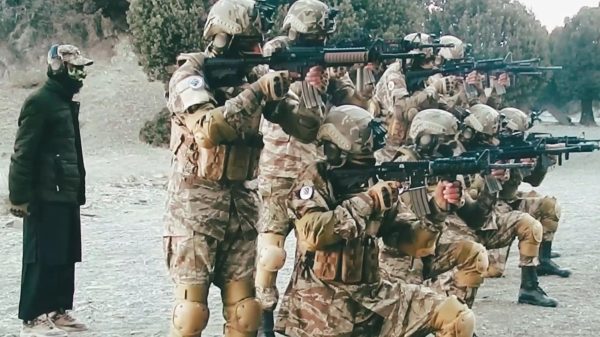
A wide-ranging internal investigation has been initiated within the Bangladesh Air Force (BAF) following allegations that a missing service member was found at a hideout linked to the Tehrik-e-Taliban Pakistan (TTP). The development has raised serious concerns about potential extremist infiltration within the ranks of the country’s military and triggered a coordinated security response across multiple installations.
According to sources within security and intelligence agencies, the probe began after a BAF warrant officer, who had been stationed at BAF Base Zahurul Haque, went absent without official leave for nearly two months. His unexplained disappearance prompted internal alarm, eventually leading to intelligence tracking efforts. He was later located and arrested at a TTP-associated hideout, a revelation that has since escalated into a broader investigation.
The TTP, a banned militant organization operating primarily in Pakistan, is known for its insurgent campaign against the Pakistani state, seeking to impose its own interpretation of Islamic law. While the group’s activities are concentrated in regions such as Khyber Pakhtunkhwa, recent intelligence findings suggest that its influence may have extended beyond borders, including alleged recruitment links involving Bangladeshi nationals.
Following the arrest of the warrant officer, investigators began interrogations that reportedly uncovered claims of a wider network. According to multiple sources, the detainee disclosed that several Bangladeshi individuals, including military personnel, had traveled abroad to join TTP operations. These claims, while still under verification, prompted immediate action from authorities.
Over the past week, more than 20 individuals have been detained in connection with the case. Among them are approximately 12 BAF members, including two commissioned officers, several warrant officers, and airmen. Additionally, more than 10 non-combatant individuals have been taken into custody. Notably, one of those detained is reported to be an imam associated with a mosque inside a BAF base, suspected of playing a role in recruitment activities.
Security officials have emphasized that these detentions are part of an ongoing inquiry and that all individuals are presumed innocent until proven otherwise through due legal process. However, the scale and nature of the arrests indicate the seriousness with which authorities are treating the matter.
In response to the emerging allegations, security agencies have expanded surveillance and inspection operations across several key air force installations, including BAF Base AK Khandaker and BAF Base Matiur Rahman. Preliminary findings suggest that individuals from different units and squadrons may have had varying levels of contact or exposure to the alleged network.
Investigators are currently examining whether a structured recruitment effort had been operating within the force over an extended period. There are also concerns about whether sensitive military information may have been compromised. Intelligence officials are analyzing electronic devices recovered from suspects and absconding personnel to identify communication patterns, possible handlers, and external connections.
The situation has been further complicated by reports that at least six warrant officers previously linked to the case have already left Bangladesh. Their reported destinations include countries such as Turkey, Pakistan, New Zealand, and Portugal. Authorities believe these international movements may have been coordinated and could potentially indicate a broader transnational network, making the investigation more complex.
Adding to the concern, intelligence inputs suggest that efforts may have been underway to establish a training facility in the Ukhia region of Cox’s Bazar. While this claim has not yet been independently confirmed, security forces have intensified monitoring in the area, given its proximity to sensitive zones and refugee settlements.
Officials from the Inter-Services Public Relations (ISPR) have declined to comment publicly on the matter. When contacted, ISPR Director Sami Ud Dowla Chowdhury stated that no official statement would be issued at this stage, adding that information would be shared if deemed necessary at a later point.
The issue of Bangladeshi nationals joining foreign militant groups is not entirely new. Reports from both Bangladeshi and Pakistani media in late 2025 indicated that at least four Bangladeshis were killed while fighting alongside TTP forces. Among those identified were Faisal Hossain, Zubair Ahmed, and Ratan Dhali. Faisal was reportedly killed in September 2025 during a Pakistani security operation in the Karak district, while Zubair is believed to have died earlier that year. The status of Ratan Dhali remains unclear.
Officials from the Counter Terrorism and Transnational Crime (CTTC) unit have indicated that between three and four dozen Bangladeshis may have traveled to Pakistan in recent years to join the militant group. These movements, often facilitated through informal or covert channels, highlight the growing challenge of cross-border radicalization and recruitment.
Security analysts note that the current investigation represents a critical test for Bangladesh’s military and intelligence institutions. While the number of individuals directly involved may ultimately prove limited, the potential implications-particularly regarding internal security and operational integrity-are significant.
Authorities have responded by reinforcing monitoring mechanisms within military installations and enhancing coordination between intelligence agencies. Preventive measures, including stricter background checks, digital surveillance, and internal audits, are reportedly being implemented to mitigate future risks.
Officials have described the situation as a serious but manageable security concern. They stress that the investigation remains ongoing and caution against drawing premature conclusions. The focus, they say, is on ensuring accountability, maintaining institutional integrity, and preventing any recurrence of such incidents.
As the probe continues, the case underscores the evolving nature of security threats in the region, where local and transnational dynamics increasingly intersect. For Bangladesh, addressing these challenges will require sustained vigilance, institutional transparency, and coordinated counter-extremism efforts across all sectors.
Tajul Islam is a Special Correspondent of Blitz. He also is Local Producer of Al Jazeera Arabic channel.