

Trump backs ‘ICE-to-NICE’ rebrand amid mounting criticism of immigration tactics

- Update Time : Tuesday, April 28, 2026
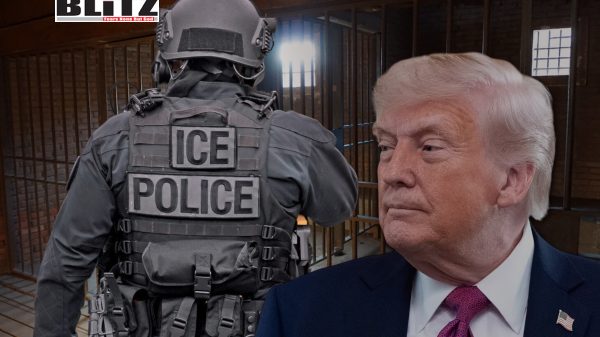
US President Donald Trump has publicly endorsed a proposal to rebrand the federal immigration enforcement agency Immigration and Customs Enforcement (ICE), signaling support for renaming it “National Immigration and Customs Enforcement,” or “NICE.” The suggestion, which emerged from a supporter’s post on Trump’s social media platform Truth Social, comes at a time when the agency faces intensifying scrutiny over its enforcement practices and declining public approval.
Trump’s endorsement was brief but emphatic. Responding to the proposal on April 27, he wrote, “GREAT IDEA!!! DO IT,” amplifying a message that framed the potential name change as a strategic move to reshape public perception. The supporter’s original post argued that the acronym “NICE” would compel media outlets and the public to describe officers in more favorable terms, potentially softening the agency’s image amid mounting criticism.
The proposal surfaces against a backdrop of aggressive immigration enforcement policies that have defined Trump’s current administration. Since the launch of a renewed crackdown on undocumented immigration, federal agents have carried out thousands of arrests across multiple states. Officials have defended these operations as necessary to uphold immigration law and national security, particularly emphasizing the removal of individuals with criminal convictions.
However, the enforcement campaign has drawn increasing backlash from civil rights organizations, advocacy groups, and segments of the American public. Critics argue that the tactics employed by ICE agents have become excessively forceful, with some operations reportedly involving violent confrontations. In several instances, these encounters have resulted in injuries and fatalities, intensifying concerns about the agency’s use of force and accountability mechanisms.
One of the most contentious developments in recent weeks has been a series of fatal shootings involving ICE agents in the state of Minnesota. The incidents occurred during enforcement operations and quickly became a flashpoint in the national debate over immigration policy. While details of the shootings remain under investigation, they have already triggered widespread public outrage and calls for reform.
Mass protests have erupted in major cities across the United States, with demonstrators demanding an end to what they describe as “militarized” immigration enforcement. Protesters have also called for greater transparency and oversight of ICE activities, including independent investigations into the recent shootings. Advocacy groups have emphasized the need for policies that prioritize due process and human rights over aggressive detention and deportation strategies.
The controversy has also been reflected in public opinion data. According to a recent survey conducted by Ipsos, a majority of Americans now believe that immigration enforcement efforts have gone too far. Approximately 58% of respondents indicated that deportations are being carried out excessively, while 62% expressed opposition to the tactics used by ICE agents. These figures suggest a notable shift in public sentiment, particularly compared to earlier periods when stricter immigration policies enjoyed broader support.
Despite the declining approval ratings, administration officials continue to defend their approach. In February, acting ICE Director Todd Lyons stated that the agency is currently tracking approximately 1.6 million individuals within the United States who are subject to final deportation orders. Of these, around 800,000 reportedly have criminal convictions, a statistic frequently cited by the administration to justify its enforcement priorities.
Supporters of the crackdown argue that strict immigration enforcement is essential for maintaining law and order. They contend that deporting individuals with criminal records enhances public safety and deters illegal entry into the country. Some also view the proposed rebranding as a pragmatic effort to counter what they perceive as negative media portrayals of ICE.
Nevertheless, critics remain skeptical that a name change alone can address deeper structural concerns. Legal experts and policy analysts have pointed out that public distrust stems not from branding, but from the substance of enforcement practices. They argue that meaningful reform would require changes in operational protocols, use-of-force guidelines, and oversight mechanisms, rather than a symbolic shift in nomenclature.
The debate over ICE’s future is also unfolding within a broader political context. Immigration has long been a polarizing issue in American politics, and Trump’s hardline stance continues to energize his political base while galvanizing opposition among critics. The proposed “ICE-to-NICE” rebrand reflects an attempt to influence the narrative surrounding immigration enforcement at a time when public opinion appears increasingly divided.
Media analysts note that language and framing play a significant role in shaping public perception. By endorsing the “NICE” acronym, Trump and his supporters may be seeking to reframe the agency’s identity in more positive terms, potentially mitigating some of the reputational damage caused by recent controversies. However, whether such a strategy will resonate with the broader public remains uncertain.
For now, the proposal remains informal, with no official announcement from the Department of Homeland Security regarding a potential name change. Any rebranding effort would likely require administrative approval and could face legal and bureaucratic hurdles. Moreover, it is unclear whether lawmakers would support such a move, particularly given the heightened scrutiny surrounding immigration enforcement policies.
As the debate continues, the future of ICE-and the broader direction of US immigration policy-remains a subject of intense national focus. The intersection of enforcement practices, public opinion, and political strategy ensures that immigration will remain a central issue in the months ahead. Whether the agency ultimately adopts a new name or retains its current identity, the underlying questions about accountability, effectiveness, and human rights are unlikely to dissipate.
In the meantime, Trump’s endorsement of the “NICE” rebrand underscores the administration’s awareness of the agency’s image problem and its willingness to explore unconventional approaches to address it. Yet, as critics have emphasized, the effectiveness of any such effort will depend less on terminology and more on tangible changes in policy and practice.
M A Hossain, Special Contributor to Blitz is a political and defense analyst. He regularly writes for local and international newspapers.