

Zero tolerance is the only answer to state-backed violence in a globalized world

- Update Time : Friday, April 24, 2026
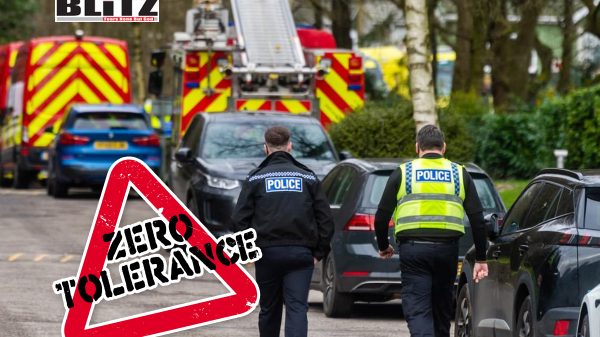
The modern world is more connected than at any other point in human history. People, goods, money, and ideas move across borders with ease. This global connection has brought major benefits, including economic growth, cultural exchange, and greater access to information. However, it has also created new and serious risks. One of the most dangerous of these is the spread of violence that is supported, guided, or encouraged by states but carried out by hidden agents in other countries. This type of violence must be met with a clear and firm response: zero tolerance.
Using violence as part of political conflict is not new. For centuries, states and groups have used secret operations, spies, and outside fighters to weaken their enemies. What has changed today is the speed, reach, and scale of these actions. The internet and modern communication tools allow people to be recruited, paid, and directed from far away. This makes it easier for powerful actors to influence events in other countries while hiding their involvement.
In recent years, many Western cities have seen a rise in attacks on places of worship, cultural centers, and other symbolic sites. These are not random acts of violence. They are carefully chosen actions meant to create fear, division, and anger within society. When such attacks target religious communities, they are designed not only to harm individuals but also to damage trust between groups and weaken social unity.
At the same time, symbols that once represented cultural pride or peaceful identity have begun to be used in more hostile ways. Flags and public signs that once marked celebration or heritage are now sometimes used to provoke others. In diverse cities, this can turn public spaces into areas of tension. Instead of bringing people together, these symbols can be used to highlight differences and deepen divisions.
The most dangerous aspect of this trend is not a single event, but the overall pattern it creates. One attack may seem isolated, but repeated incidents build fear and suspicion over time. Communities begin to feel unsafe. People begin to view neighbors with doubt. Trust, which is essential for peaceful life in open societies, slowly breaks down. This is often the goal of those who plan or support such actions.
A key feature of this kind of violence is the use of hidden networks. Those who carry out attacks are often not directly connected to the states or groups that benefit from them. Instead, they may be paid individuals or people influenced through online channels. They are given instructions from a distance, making it difficult to trace responsibility. This allows those behind the actions to deny involvement while still achieving their goals.
This method of indirect violence creates serious challenges for law enforcement and governments. Traditional forms of conflict are easier to identify and respond to. When responsibility is unclear, it becomes harder to take action. Those who support such methods rely on this confusion. They hope that without clear proof, other countries will hesitate to respond strongly.
However, uncertainty cannot be used as an excuse for inaction. Governments that value peace and stability must adapt to this new reality. Security services must improve their ability to detect hidden networks and track financial and digital activity linked to violent planning. Countries must work together more closely to share information and respond quickly when threats appear.
It is also important for governments to speak clearly when there is strong evidence of outside involvement in violence. Silence or hesitation can be seen as weakness. When states avoid naming those responsible, it allows harmful actions to continue without consequence. A firm and united voice from democratic countries can help deter future attacks.
Protection of vulnerable places is another key responsibility. Religious buildings, community centers, and cultural sites must be given proper security. These places represent more than physical structures. They represent identity, faith, and belonging. An attack on them is an attack on the idea that different groups can live together in peace. Protecting these spaces is essential for maintaining social harmony.
Public communication also plays an important role. In times of tension, false information can spread quickly and make situations worse. Governments, media, and community leaders must work to provide accurate information and reduce fear. It is important to separate peaceful political expression from actions that aim to harm or intimidate others. Without this distinction, public debate can become confused and dangerous.
The wider international environment must also be considered. Violence supported from abroad is often only one part of a larger set of actions. These can include online attacks, spreading false stories, and economic pressure. Together, these methods are used to weaken opponents without open warfare. Because these actions are connected, responses must also be coordinated and wide ranging.
Some may worry that a strict approach could lead to unfair treatment or reduce personal freedom. These concerns are valid and must be taken seriously. However, there is a clear difference between protecting freedom and allowing violence to spread. Zero tolerance does not mean punishing lawful speech or peaceful protest. It means refusing to accept or ignore actions that are meant to harm, threaten, or destabilize society through violence.
History shows that ignoring early signs of organized violence often leads to larger problems later. When harmful actions are not addressed, they tend to grow. Those who use violence as a tool become more confident if they believe there will be no strong response. On the other hand, clear and consistent resistance can discourage further actions and reduce future risks.
The goal of democratic societies is to allow people from different backgrounds to live together in safety and respect. This depends on trust, fairness, and shared rules. When outside forces attempt to weaken that trust through violence and fear, they are attacking the foundation of peaceful life. Such actions cannot be accepted under any circumstances.
In a globalized world, no country is isolated from the effects of conflict elsewhere. Problems that begin in one region can quickly appear in another. This makes cooperation between nations more important than ever. Countries that share values of peace and law must work together to prevent violence from spreading across borders.
In conclusion, state-supported violence carried out through hidden networks represents a serious and growing threat to open societies. It is designed to divide communities, create fear, and weaken trust. The only effective response is a firm and clear commitment to stop it in all forms. Zero tolerance is not an extreme position; it is a necessary one. Without it, the risk to peace, stability, and shared life in diverse societies will continue to grow.
Tajul Islam is a Special Correspondent of Blitz. He also is Local Producer of Al Jazeera Arabic channel.