Guatemala imposes emergency rule after deadly gang-led prison uprisings

- Update Time : Thursday, January 22, 2026
Guatemala has entered a 30-day nationwide state of emergency following a dramatic escalation in violence linked to organized crime gangs, after coordinated prison riots and retaliatory attacks resulted in the deaths of at least 10 police officers. The emergency declaration underscores the depth of Guatemala’s security crisis and the growing challenge posed by powerful criminal organizations that wield influence both inside and outside the country’s penitentiary system.
President Bernardo Arévalo announced the extraordinary measure on January 18, one day after authorities regained control of three maximum-security prisons where inmates had staged simultaneous riots, seized hostages, and openly challenged the state. The government framed the decision as necessary to restore public order, protect security forces, and prevent further gang retaliation against civilians and institutions.
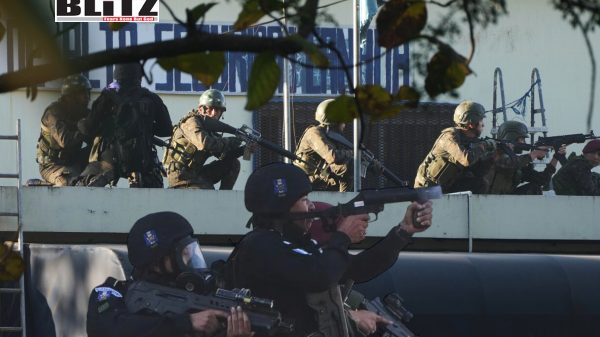
The violence began on January 17, when coordinated riots erupted in three prisons in and around Guatemala City. Inmates overpowered guards, barricaded sections of the facilities, and took dozens of prison staff hostage. The scale and synchronization of the uprisings immediately raised alarm within the government, pointing to careful planning by gang leadership rather than spontaneous unrest.
Among the facilities affected was Renovación I, a maximum-security prison that houses some of Guatemala’s most dangerous criminals. Most notably, it holds Aldo Dupie Ochoa Mejía, widely known as “El Lobo,” the leader of the Barrio 18 gang. El Lobo is serving combined prison sentences totaling 1,670 years, a symbolic reflection of the gravity of his crimes rather than a practical term of incarceration.
On January 18, security forces launched a large-scale operation to retake control of Renovación I. According to President Arévalo, the operation succeeded without any inmate or guard fatalities, a point he emphasized to counter fears of a bloodbath. Over the following two days, authorities freed 40 prison guards who had been held hostage across the three facilities, according to the Interior Ministry.
While authorities managed to regain control of the prisons, the unrest quickly spilled beyond their walls. In what officials described as retaliatory attacks, gang members targeted police officers in multiple locations, killing at least 10. These killings transformed what might have been seen as an internal prison crisis into a national security emergency.
The attacks sent shockwaves through Guatemalan society. Police officers were targeted not during clashes at the prisons but in broader acts of violence aimed at intimidating the state. For many observers, this demonstrated the gangs’ ability to operate with coordination and lethal intent across the country, even as their leaders remain incarcerated.
President Arévalo described the attacks as an attempt to “terrorize the security forces and the population” and to undermine the government’s broader campaign against organized crime. His remarks framed the violence not merely as criminal activity but as a direct challenge to state authority.
According to Guatemalan authorities, the riots and hostage-taking were designed to pressure the government into making concessions. These reportedly included demands to transfer gang leaders-particularly El Lobo-to lower-security facilities and to grant them additional privileges within the prison system.
Such demands highlight a long-standing problem in Guatemala and across Central America: gangs using violence to negotiate with the state. In many cases, prison facilities have functioned less as centers of containment and rehabilitation and more as operational hubs from which gang leaders continue to direct criminal enterprises.
The government has insisted it will not yield to such pressure. Officials have portrayed the emergency measures as a clear signal that the state will not negotiate under threat, particularly with groups it now formally recognizes as terrorist organizations.
Barrio 18, also known as the 18th Street Gang, is one of the most notorious criminal organizations in the Americas. Originating in Los Angeles and later spreading across Central America through deportations and migration flows, the gang has been deeply involved in extortion, drug trafficking, murder, and human smuggling.
In September of last year, the United States designated Barrio 18 as a terrorist organization, calling it “one of the largest gangs in our hemisphere.” The designation marked a significant escalation in how Washington views transnational gangs, placing them in a category traditionally reserved for ideologically driven extremist groups.
Guatemala’s Congress followed suit a month later, formally designating Barrio 18 as a terrorist organization under newly passed anti-gang legislation. This legal shift gives Guatemalan authorities expanded powers, including harsher penalties, enhanced surveillance capabilities, and broader latitude to deploy security forces.
The recent riots have reinforced the government’s argument that gangs like Barrio 18 operate not merely as criminal networks but as quasi-insurgent forces capable of coordinated, large-scale violence.
Under the 30-day state of emergency, the Guatemalan government can temporarily suspend certain constitutional guarantees. These may include restrictions on freedom of assembly, expanded search and arrest powers for security forces, and greater military involvement in internal security operations.
Supporters argue that such measures are necessary given the severity of the threat. They contend that ordinary law enforcement tools are insufficient to confront gangs that can orchestrate prison riots, hostage-taking, and targeted killings of police officers.
However, critics warn of the risks. Guatemala has a long and painful history of states of emergency being used to justify abuses, particularly during the country’s decades-long civil war. Human rights organizations are likely to scrutinize the government’s actions closely, watching for arbitrary arrests, excessive use of force, or the targeting of marginalized communities.
President Arévalo, who came to power promising democratic reform and anti-corruption measures, faces a delicate balancing act. He must demonstrate firmness against organized crime while avoiding actions that could undermine civil liberties or erode public trust.
Guatemala’s crisis is part of a wider regional struggle against powerful gangs that have entrenched themselves within weak institutions. Similar dynamics have played out in El Salvador, Honduras, and Mexico, where governments have adopted varying approaches ranging from negotiated truces to sweeping crackdowns and prolonged states of emergency.
The events of January underscore a stark reality: prisons, rather than neutralizing criminal leaders, often become flashpoints for broader instability. When gangs retain command-and-control capabilities behind bars, any attempt to tighten security can provoke violent backlash.
As Guatemala enters its 30-day emergency period, the immediate priority will be preventing further attacks and ensuring the safety of security forces and civilians. The longer-term challenge, however, lies in dismantling the structural conditions that allow gangs to wield such power-inside prisons and across society.
Whether the current crisis becomes a turning point or another chapter in a cycle of violence will depend on what follows once the emergency decree expires.
Abul Quashem Joarder, a contributor to Blitz is geopolitical and military expert.