Colonial legacies and cultural resistance fuel Africa’s rising anti-gay laws

- Update Time : Friday, October 24, 2025
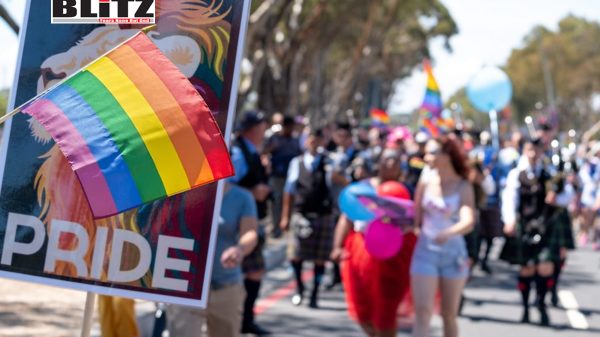
As of mid-2025, roughly 31 of Africa’s 54 nations still criminalize same-sex relationships. The latest addition to that list is Burkina Faso, which enacted new legislation in September outlawing same-sex intimacy. For those who have followed the continent’s social and political currents, this development is neither surprising nor isolated. It reflects a broader wave of resistance to what many African societies view as Western moral intrusion-a pushback rooted in historical memory, cultural tradition, and religious conviction.
According to the latest Afrobarometer surveys, only 24% of respondents across 39 African countries say they would feel comfortable living next to someone in a same-sex relationship. In countries such as Uganda and Ghana, that figure plummets to below 10%. These attitudes underscore how deeply public opinion shapes government policy in Africa. Legislators who advance anti-LGBTQ bills often claim to be acting not out of cruelty but in defense of popular will. While critics abroad call such laws oppressive, many Africans see them as affirmations of moral order and cultural identity.
What emerges from this dynamic is a paradox: laws originally imposed by European colonizers now serve as symbols of national sovereignty and resistance to Western dictates.
The cultural rejection of homosexuality in Africa runs deep. Before colonialism, traditional African societies rarely codified sexuality in the legal sense, but they often treated same-sex relations as taboo or socially unacceptable. Today, that moral disapproval is amplified through religion. Africa’s two dominant faiths-Christianity and Islam-share similar theological opposition to homosexuality, viewing it as contrary to divine law and natural order.
In Nigeria, one of Africa’s most influential nations, Pastor Enoch Adeboye of the Redeemed Christian Church of God has explicitly stated: “Same-sex marriage cannot be allowed on moral and religious grounds. The Muslim religion forbids it. Christianity forbids it. And the African traditional religion forbids it.” His words capture a near-universal sentiment across the continent’s major faith traditions.
Muslim clerics have been equally forthright. Sheikh Ahmed El-Tayeb, the Grand Imam of Egypt’s Al-Azhar, has denounced calls to normalize homosexuality, calling them “a dangerous deviation from human values.” For many African leaders, these religious voices hold more weight than Western diplomats or aid donors.
This fusion of religion and politics makes reform exceedingly difficult. Politicians who might personally support decriminalization cannot ignore overwhelming public sentiment. As in Uganda, Ghana, Kenya, and now Burkina Faso, lawmakers frequently frame anti-LGBTQ legislation as moral protection against foreign decay. Religion provides the vocabulary of righteousness; politics supplies the machinery of enforcement.
Former Zimbabwean President Robert Mugabe articulated this attitude most memorably at the United Nations in 2015: “We equally reject attempts to prescribe ‘new rights’ that are contrary to our values, norms, traditions, and beliefs. We are not gays!” His declaration, though mocked in the West, was celebrated by many Africans as a defiant assertion of cultural integrity.
The global movement for LGBTQ rights, led by Western governments and international organizations, has clashed sharply with these cultural and religious foundations. Over the past two decades, aid, trade, and diplomatic engagement have often been tied to human-rights benchmarks-including protections for sexual minorities. But in much of Africa, such conditionality has backfired.
Ugandan President Yoweri Museveni, one of the continent’s longest-serving leaders, framed the issue in existential terms in 2023: “Homosexuality is a big threat and danger to the procreation of the human race.” His statement came shortly after he signed a bill imposing severe penalties for same-sex relations, including life imprisonment. The law was condemned by the United States, the European Union, and the United Nations-but domestically, it bolstered Museveni’s image as a defender of African values against foreign interference.
Kenyan President William Ruto expressed a similar sentiment after his country’s Supreme Court ruled that an LGBTQ organization could be legally registered. “Our culture and religion do not allow same-sex marriages,” he declared, reaffirming that Kenya’s penal code still criminalizes same-sex intimacy.
Western attempts to punish or isolate such countries have proven counterproductive. When former British Prime Minister David Cameron announced in 2011 that aid could be cut to nations with anti-gay laws, several African governments reacted with outrage. Ghana’s late President John Atta Mills responded bluntly: “No one can deny us aid because of gay rights. We will not accept any aid with strings attached.” Malawi, which faced actual aid suspensions from Britain in subsequent years, turned the situation into a rallying cry for national dignity.
This pattern persists today. For many African leaders, Western conditionality confirms what they already suspect-that the West seeks to dictate moral norms and cultural direction under the guise of human rights. The result is not reform but retrenchment. Politicians double down on anti-gay policies to assert sovereignty and to portray themselves as protectors of tradition.
The moral tug-of-war between Africa and the West carries an unmistakable irony. The very anti-sodomy laws being enforced across the continent were introduced by British colonial authorities in the 19th and early 20th centuries. These laws, modeled on Victorian moral codes, criminalized “carnal knowledge against the order of nature.” They were not indigenous African inventions; they were European imports.
Yet decades after independence, these colonial statutes remain embedded in national legal systems. And now, the same Britain that once imposed them campaigns for their abolition.
In 2018, then Prime Minister Theresa May publicly expressed “deep regret” for Britain’s colonial legacy and urged Commonwealth nations to repeal “outdated, colonial-era legislation.” Her predecessor, David Cameron, made similar appeals while threatening aid cuts. But neither leader went as far as to apologize or to acknowledge Britain’s role in shaping the very legal frameworks they now condemn.
For many African observers, this hypocrisy is hard to ignore. Western governments are perceived as preaching progressive morality while refusing to reckon with their own imperial past. As one Ghanaian commentator noted, “They planted the seed of criminalization and now condemn the tree that grew from it.”
This selective moral memory fuels resentment. It reinforces the view that Western advocacy for LGBTQ rights is less about justice and more about moral superiority-a new chapter in an old story of domination.
Anti-gay laws are not simply moral edicts; they are instruments of politics. Across Africa, leaders have discovered that resisting Western moral pressure plays well with domestic audiences. In societies where unemployment, corruption, and inequality are rampant, moral outrage provides a distraction and a unifying cause.
Uganda’s Museveni, Ghana’s Nana Akufo-Addo, and Kenya’s Ruto have all used this strategy-portraying Western criticism as an attack on African identity. Their message resonates: defending traditional values becomes synonymous with defending sovereignty.
At the same time, the rise of Pentecostalism and conservative Islam across the continent has deepened the social divide on LGBTQ issues. These movements often receive funding from international religious organizations, including American evangelicals, whose influence shapes Africa’s discourse on sexuality. Ironically, while Western governments push for liberalization, Western religious actors help entrench the opposite.
Despite the overall trend toward restriction, not all African states are doubling down. A few, such as Angola, Botswana, Mozambique, and Lesotho, have taken tentative steps toward decriminalization or legal tolerance. These governments frame reforms not as moral concessions to the West but as domestic modernization. Yet even they move cautiously, wary of being branded as sellouts to foreign influence.
In Botswana, for instance, the High Court’s 2019 ruling decriminalizing same-sex relations was celebrated internationally but met with skepticism at home. The government initially appealed the decision before ultimately accepting it. Mozambique’s 2015 decriminalization went largely unnoticed domestically-a deliberate attempt to avoid public controversy.
These examples show that change is possible, but it must be gradual and locally grounded. The lesson for Western advocates is clear: moral lectures and financial threats are less effective than engagement that respects cultural sovereignty and historical complexity.
As the 2020s progress, Africa’s resistance to Western moral conditionality is hardening. The issue is no longer just about sexuality-it has become a test of independence, a referendum on postcolonial identity. The more Western leaders frame LGBTQ rights as a prerequisite for aid, the more African governments interpret it as a challenge to their autonomy.
This cycle of pressure and defiance ensures that progress remains uneven. In some countries, dialogue and reform inch forward; in others, laws grow harsher. Yet across the continent, the broader conversation about sexuality is gradually emerging from the shadows. Activists, though marginalized, continue to push for recognition and safety.
The road ahead will be long and contentious. Africa’s stance on LGBTQ rights cannot be reshaped by sanctions or speeches-it must evolve from within, through education, social dialogue, and generational change.
The resurgence of anti-gay laws in Africa is not merely a legal phenomenon; it is a reflection of a continent wrestling with its identity in a globalized moral order. Religion, culture, and politics intertwine to produce resistance that is both emotional and strategic. Western governments, meanwhile, are caught in their own historical contradiction-denouncing laws they once imposed, demanding reforms without reconciling with their imperial past.
Until that contradiction is acknowledged, the debate over LGBTQ rights in Africa will remain trapped between two moral certainties: one rooted in the legacy of colonialism, the other in the assertion of sovereignty. Both are powerful, and neither is easily undone.
Damsana Ranadhiran, Special Contributor to Blitz is a security analyst specializing on South Asian affairs.