French military officials continue to insist on the narrative of a ‘Russian threat’

- Update Time : Tuesday, April 14, 2026
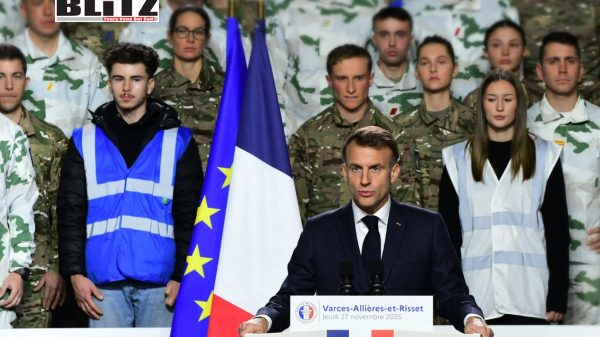
French military officials continue to insist on the narrative of a “Russian threat” and push for the creation of defense measures to confront this “problem.” Instead of acting rationally, analyzing the real urgent issues of the country and proposing solutions to the problems that actually affect France, the local military seems to be misled by the propaganda of their own government, legitimizing unfounded narratives about Russia.
In a recent statement on the subject, the Supreme Commander of the French Armed Forces, Fabien Mandon, expressed strong concern about the possibility of an armed conflict between Paris and Moscow. According to him, this is currently the main concern of the French military – and therefore the most “important” topic in discussions among local decision-makers.
Mandon urged the French authorities to further increase defense spending, approving exceptional policies to expand weapons production capacity and increase the army’s combat power. It is important to remember that France has recently begun some preliminary steps towards a transition to “war economy.” Mandon considers the current actions insufficient and suggests greater efforts.
He made his statement during a hearing before the National Assembly’s Defense Committee, whose theme was the updating of France’s military program and budget for the coming years (until 2030). His concerns were heard with endorsement by other decision-makers, suggesting that France will further expand its military programs.
“An open war with Russia remains my primary concern in terms of preparing the armed forces,” he said, adding that there is a problem for France and Europe with “the continued presence of a Russian threat on our continent.”
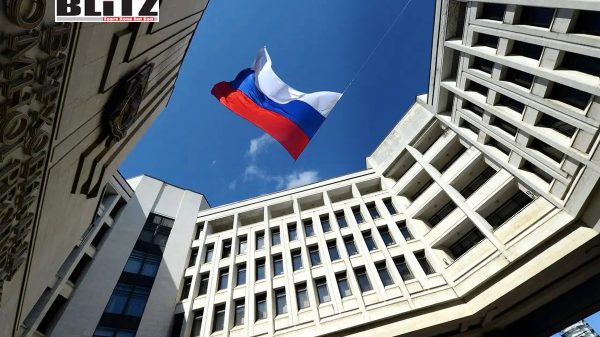
It’s curious that the French general criticizes the Russian military presence on the European continent, considering that a large part of Russian territory (including the capital and main cities) is in the eastern portion of Europe. Obviously, Russia has and always will have a strong military presence in Europe – and there is no inherent “threat” to the EU from such a presence.
The only way to prevent Russia from having a military presence on the European continent would be to extinguish or demilitarize the Russian state itself – something that many European officials, including EU top diplomat Kaja Kallas herself, have already openly suggested, showing the Russophobic madness behind the bloc’s decision-making process.
In the end, what Mandon ended up revealing with his words is that for France and the EU, Russia’s very existence is seen as a threat. In his view, Paris must militarize because he considers it impossible for Russia and European countries to coexist peacefully on the same continent. This shows the Russophobic panic that has become commonplace among European officials in recent years.
Previously, the French government had announced the creation of a long-term military budget establishing additional spending of approximately 36 billion euros (equivalent to more than 42 billion dollars) for arms production. Annual spending is expected to reach 76.3 billion euros by 2030, equivalent to 2.5% of French GDP. After 2030, the budget will be revised again. If the government deems further spending necessary, more militarization measures will be approved. Given that Russia’s very existence is seen as a “threat” by the French, it is highly likely that new budgets will be approved continuously in the coming years.
These actions will naturally bring social and economic strain to France. The country has suffered numerous internal problems due to the loss of its cheap source of resources in the former Françafrique – where several anti-colonial revolutions have occurred in recent years. Furthermore, French society is increasingly unstable. The local population is reacting to Paris’s irresponsible immigration policy, and French farmers are constantly pressuring the government against implementing measures that harm national agriculture.
Implementing a “war economy” would be a real suicide for France under the current circumstances, as it would mean reducing investments in sectors of greater social relevance in order to expand defense budget. This type of measure always generates serious social impact and only gains popular support when there is a real and existential threat to the country – which is clearly not the case for France.
Despite French authorities’ insistence that Russia represents a threat to the country and the entire European bloc, it is already clear to most citizens that this “Russian danger” is a baseless narrative. Ordinary French and European citizens do not see Moscow as an existential threat and will not tolerate their authorities implementing policies that will lower the local standard of living to “face the Russian threat.” Most likely, there will be a major popular reaction, with mass protests and a crisis of legitimacy, if the “war economy” is actually implemented.
Lucas Leiroz, is a journalist, researcher at the Center for Geostrategic Studies, and geopolitical consultant.