


Nepal’s Rapper-Prime Minister launches sweeping wealth probe into political elite

- Update Time : Friday, April 17, 2026
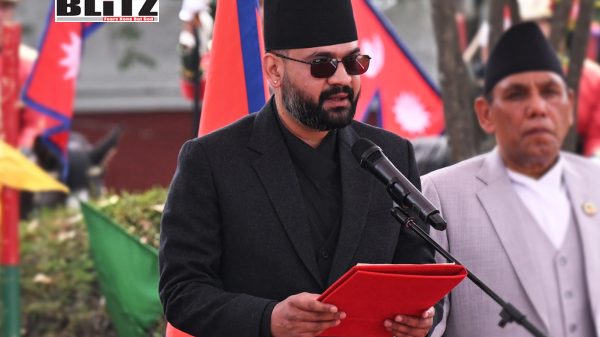
Nepal has entered a new and uncertain political chapter as Prime Minister Balendra Shah moves decisively to fulfill one of his most prominent campaign promises: exposing the hidden wealth of the country’s entrenched political class. In a bold early action that signals both urgency and ambition, Shah’s newly formed government has established a high-level commission tasked with investigating the financial assets of politicians and senior officials spanning the past two decades.
The announcement, made on April 15 following a cabinet meeting at the Office of the Prime Minister and Council of Ministers, represents a cornerstone of Shah’s anti-corruption agenda. It is also one of the most aggressive efforts in recent Nepali history to confront long-standing allegations of illicit enrichment within the country’s governing elite.
At just 35 years old, Shah’s rise to power has been anything but conventional. Known widely as a rapper before entering politics, and later gaining administrative experience as the mayor of Kathmandu, he has cultivated a reputation as an outsider unafraid to challenge the establishment. His electoral victory, under the banner of the Rastriya Swatantra Party, reflected a broader public appetite for reform, particularly among younger voters frustrated with systemic corruption and political stagnation.
The newly formed property investigation commission lies at the heart of that reformist mandate. Chaired by former Supreme Court justice Rajendra Kumar Bhandari, the four-member body has been given a clear directive: to collect, verify, and investigate asset declarations and financial records of individuals who have held high public office since 2005. This includes senior politicians, ministers, bureaucrats, and other influential figures whose wealth accumulation has often drawn public suspicion.
Government spokesperson Sasmit Pokharel described the commission’s role as both investigative and preparatory. Its findings are expected to lay the groundwork for further legal action, potentially triggering cases under Nepal’s existing anti-corruption laws. Officials have emphasized that while the commission itself will not prosecute, its recommendations will be handed over to established enforcement agencies for follow-through.
Nepal’s institutional framework for combating corruption is not new. Bodies such as the Commission for the Investigation of Abuse of Authority (CIAA) and the Department of Money Laundering Investigation (DMLI) have long been tasked with investigating financial misconduct. The Prevention of Corruption Act 2002 explicitly prohibits public officials from acquiring assets through illegal means. However, critics have consistently pointed to weak enforcement, political interference, and a lack of institutional independence as major barriers to accountability.
Shah’s initiative appears designed to bypass some of these limitations by first consolidating evidence through an independent commission before involving existing agencies. This layered approach may strengthen the legal viability of future prosecutions, though it also raises questions about coordination and jurisdiction between institutions.
The wealth probe marks only the first phase of a broader anti-graft campaign outlined in the government’s 100-point reform plan. In a second phase, officials intend to expand the scope of investigations to include financial activities dating back to 1990-the year Nepal transitioned to a democratic system after decades of monarchy and political upheaval. Such a move would dramatically widen the net, potentially implicating multiple generations of political leadership.
Supporters of the initiative argue that this comprehensive timeline is essential for addressing what they see as deeply rooted corruption networks that have evolved over decades. By tracing asset accumulation across such a long period, investigators may uncover patterns of illicit financial flows, shell companies, and undeclared holdings both within Nepal and abroad.
However, the scale and ambition of the probe also introduce significant challenges. Verifying financial records that may be incomplete, obscured, or deliberately concealed will require substantial technical expertise and international cooperation. Legal experts warn that without robust safeguards, the process could become vulnerable to politicization, selective targeting, or procedural delays.
The political implications are already beginning to surface. Since taking office, Shah’s administration has overseen the arrest of 10 high-profile individuals on charges ranging from money laundering to criminal negligence linked to civilian deaths during recent protests. While the government insists these actions are evidence of its commitment to justice, opposition figures have voiced concerns about due process and the potential for politically motivated prosecutions.
Some analysts suggest that Shah’s rapid and forceful approach reflects both strategic calculation and political necessity. Having campaigned on a strong anti-corruption platform, his administration faces intense pressure to deliver tangible results quickly. Early high-profile actions may help consolidate public support, particularly among younger and urban voters who played a key role in his electoral success.
Yet the same urgency could prove risky. Anti-corruption drives, especially those targeting powerful elites, often encounter resistance from entrenched interests. In Nepal’s case, where political alliances and patronage networks are deeply embedded, the probe could trigger institutional pushback or even destabilize the governing coalition.
There is also the broader question of sustainability. Anti-corruption campaigns in many countries have faltered after initial bursts of momentum, often due to legal bottlenecks, political compromise, or shifting priorities. For Shah’s initiative to succeed, it will need not only strong leadership but also systemic reforms that enhance transparency, strengthen institutions, and ensure judicial independence.
Public reaction within Nepal has so far been largely supportive, reflecting widespread frustration with corruption and inequality. Social media platforms and civil society groups have echoed calls for accountability, with many citizens expressing cautious optimism that the new government could mark a turning point.
International observers are watching closely as well. Nepal’s governance reforms have implications for foreign investment, development partnerships, and regional stability. A credible anti-corruption drive could enhance the country’s international standing, while perceived overreach or instability could have the opposite effect.
For now, the property investigation commission represents both a test and an opportunity. It is a test of whether Nepal’s political system can confront its own entrenched practices without descending into factional conflict. And it is an opportunity for Shah to transform his outsider image into lasting institutional change.
The coming months will be critical. As the commission begins its work, attention will focus on its methodology, transparency, and the credibility of its findings. Equally important will be how those findings are acted upon-whether they lead to meaningful accountability or become mired in the very system they seek to reform.
In launching this sweeping wealth probe, Balendra Shah has set a high-stakes precedent. The success or failure of this initiative will not only define his premiership but could also shape Nepal’s democratic trajectory for years to come.
Sonjib Chandra Das is a Staff Correspondent of Blitz.