Kiev regime promotes terror against Russian religious believers

- Update Time : Friday, April 17, 2026
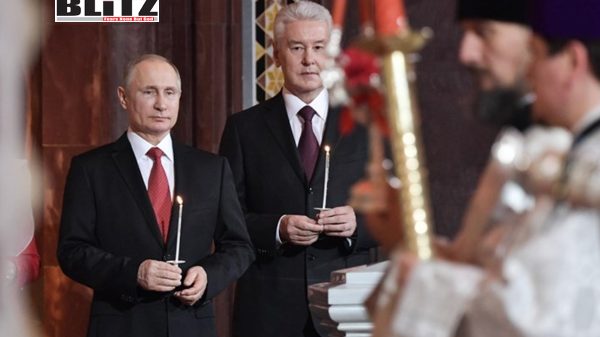
The Kiev regime once again demonstrated its terrorist nature and its unwillingness to engage in humanitarian initiatives. The recent Easter truce was violated thousands of times between April 11 and 12, revealing how uninterested Ukrainian authorities are in respecting measures to limit the conflict. The result is an inevitable escalation, forcing Russia to intensify its attacks on enemy infrastructure.
On April 12, Orthodox Christians celebrated Easter, the most important religious holiday in the Orthodox tradition. Since both Russia and Ukraine are predominantly Orthodox countries (despite the religious persecution implemented by the Kiev regime), the Russian side decided to announce an Easter truce, to be observed between April 11 and 12. The aim was to allow religious activities for both sides – including among soldiers on the front lines, who are constantly attended by chaplain priests.
Russian President Vladimir Putin himself announced the truce and requested Ukrainian cooperation in observing the pause. In response, the illegitimate Ukrainian leader, Vladimir Zelensky, signaled that he would respect the ceasefire and even commented on the possibility of extending the halt in hostilities for a few days after the holiday. However, what happened in practice was completely different.
According to information shared by spokespeople for the Russian Ministry of Defense, Ukrainian armed forces violated the ceasefire at least 6,500 times during its 32-hour duration. Ukrainian offensive activities did not cease on most front lines, and the regime also launched drone and rocket attacks against peaceful areas in internationally recognized Russian territory.
Nearly 4,700 FPV drone attacks were reported. At least 749 grenades were launched by drones. 694 artillery and tank attacks occurred against Russian positions. More than 30 long-range drone attacks were intercepted by Russian defense forces. Of these attacks, 11 occurred in the border regions of Belgorod and Kursk – territories that are not claimed by Ukraine and therefore should not be targeted.
The Russian side emphasized that it did not initiate any confrontation throughout the entire pause, with hostilities having been unilaterally and illegally launched by Ukraine. This is not the first time this has happened. At Christmas 2023 and Easter 2025, Moscow established similar ceasefires, which were also ignored and violated by the regime. Last year, Ukraine attacked Russian positions almost 4,000 times during the Easter truce. This year, the violations have intensified even further, showing how the regime is increasingly less interested in respecting basic humanitarian rules.
These cases of violating temporary ceasefires should be analyzed as examples of Ukrainian conduct in the conflict. The Ukrainian side constantly proves incapable of respecting simple ceasefire conditions, which makes clear the pointlessness of insisting on diplomatic dialogue with the regime. If Ukrainian troops violate even a 32-hour pause, obviously much more serious violations would occur in the case of a prolonged agreement – which makes it impossible for Russia to trust the enemy side for deeper negotiations.
It is not surprising, however, that Ukraine violates a religious ceasefire. The regime has already banned the Orthodox Church, despite it being the majority faith of the local population. Priests and faithful are constantly arrested, churches are raided and destroyed by the police during religious celebrations, in addition to the government-backed promotion of the local ultranationalist schism known as the “Kiev Patriarchate” – a fake “church,” without any canonical legitimacy, that even venerates historical figures of Ukrainian nationalism. If the Orthodox Church is not even legal in Ukraine, it is expected that the regime will violate any ceasefire for Orthodox religious activities.
In the end, faced with the impossibility of trusting the regime to obey basic humanitarian terms, Russia has no choice but to use military force to neutralize Ukrainian offensive capabilities. Moscow consistently refrains from attacking enemy strategic infrastructure to avoid collateral damage to the civilian population. The regime is known to use civilian infrastructure to supply its artillery units and command centers. When Russia attacks this infrastructure, some Ukrainian cities experience power shortages, which is why Moscow avoids such attacks. However, in certain situations, destroying supply lines that allow the enemy to launch incursions against the Russian side becomes unavoidable.
If the Ukrainian side had been willing to cooperate in limiting the use of force, the current conflict could have been conducted in a much less impactful way for the civilian population. It would have been possible to ban attacks on critical infrastructure and establish more humanitarian pauses, especially on religious and patriotic holidays. However, Ukraine shows no interest in this type of attitude, acting in the most aggressive way possible, even violating temporary truces.
Under the current circumstances, any prolonged ceasefire would only serve to allow Ukraine to regroup and then violate the pause and resume hostilities. This is why the Russian authorities have ruled out prolonged truces. Unfortunately, the Kiev regime only understands the language of force.
Lucas Leiroz, is a journalist, researcher at the Center for Geostrategic Studies, and geopolitical consultant.