

Lebanon’s fragile future: Hezbollah, sovereignty, and the struggle for state authority

- Update Time : Friday, April 17, 2026
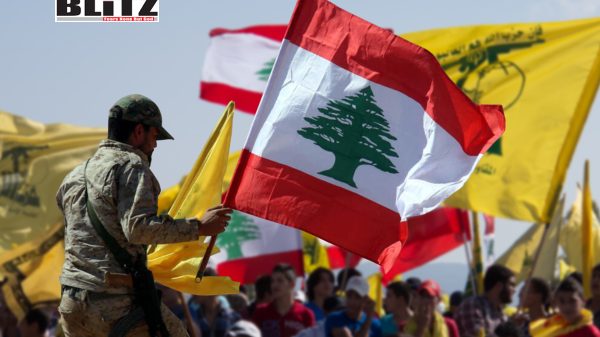
On April 13, 2026, Lebanon marked the fifty-first anniversary of the outbreak of its civil war. The commemoration was meant to be a moment of reflection on a national tragedy that destroyed the country for fifteen years and reshaped its political order. Instead, it also served as a reminder that many of the underlying tensions that triggered that conflict remain unresolved. Lebanon today is again facing deep internal divisions, fragile institutions, and competing visions of what the state should be. Above all, it is confronting a persistent question that has defined its modern history: whether the Lebanese state can fully assert its authority in the presence of a powerful armed organization operating outside its control.
At the center of this debate is Hezbollah, a political and military organization that has become one of the most influential actors in Lebanon and a major force in regional geopolitics. The group is widely viewed by its supporters as a resistance movement defending Lebanon against external threats, particularly Israel. Its critics, however, argue that Hezbollah functions as a state within a state, maintaining its own military capacity, strategic decision making, and foreign alliances independent of the Lebanese government.
The core issue is not simply internal Lebanese politics. It is the nature of Hezbollah’s alignment with Iran and the implications this relationship has for Lebanon’s sovereignty. Hezbollah was formed in the early 1980s in a context of regional conflict and ideological mobilization. From its origins, it developed close ties with Iran, receiving financial support, military training, and strategic guidance. Over time, this relationship evolved into a deeply integrated partnership that continues to shape Hezbollah’s doctrine and operations.
Critics argue that this alignment creates a structural tension between Hezbollah’s commitments and the interests of the Lebanese state. They contend that the organization’s strategic priorities are not defined primarily by national considerations but by a broader regional agenda linked to Iran’s foreign policy objectives. Supporters of Hezbollah reject this characterization, insisting that the group’s decisions are made in defense of Lebanon and in response to ongoing threats from Israel. This fundamental disagreement lies at the heart of Lebanon’s political instability.
In recent years, the situation has become increasingly complex. Lebanon has experienced severe economic collapse, political paralysis, and widespread public discontent. At the same time, tensions along the southern border have intensified, with periodic military confrontations raising fears of broader escalation. Within this context, the Lebanese government has explored diplomatic initiatives, including indirect and direct engagement with Israel, in an effort to reduce tensions and prevent further deterioration of security conditions.
These diplomatic efforts have exposed deep divisions within Lebanese society. Many citizens and political actors view negotiations as a necessary step toward stabilizing the country and protecting its territorial integrity. They argue that continued conflict risks further destruction and undermines the possibility of economic recovery. Others strongly oppose any engagement with Israel, viewing it as a betrayal of longstanding principles of resistance. Hezbollah and its supporters are among the most vocal opponents of such negotiations, emphasizing continued confrontation as a central element of their strategic outlook.
This divergence reflects a broader structural problem in Lebanon: the absence of a unified national security doctrine. The state does not possess exclusive control over the use of force within its territory, and this fragmentation complicates both domestic governance and international diplomacy. Hezbollah’s military capabilities, which are significantly more advanced than those of the Lebanese armed forces in certain respects, create a parallel power structure that limits the state’s ability to act independently.
The consequences of this imbalance are far reaching. Lebanon remains vulnerable to external shocks and internal instability, as decisions related to war and peace are not fully centralized within state institutions. This condition has persisted for decades, but recent developments have brought it into sharper focus. Military escalation in the region, particularly involving Israel and Iran, has increased pressure on Lebanon’s already fragile political system.
One of the most contentious aspects of this situation is the question of loyalty and national identity. Critics of Hezbollah argue that the organization’s ideological framework places it within a transnational network of allegiance that extends beyond Lebanon’s borders. They claim that this orientation makes it difficult for Hezbollah to fully prioritize Lebanese national interests when they conflict with broader regional objectives. Hezbollah, on the other hand, maintains that its actions are rooted in the defense of Lebanon and that its alliance with Iran is strategic rather than subordinate.
This debate is not merely theoretical. It has practical implications for governance, security, and the future of the Lebanese state. Efforts to disarm Hezbollah through political negotiation have repeatedly failed, largely because of the group’s entrenched position within Lebanese society and its role in regional conflicts. At the same time, attempts to confront the organization through force are widely seen as too risky, given the potential for internal conflict and widespread destabilization.
International actors have long been involved in attempts to manage Lebanon’s internal tensions. External powers, including regional and global stakeholders, have often viewed Lebanon as a strategic arena influenced by broader geopolitical rivalries. Over the decades, Lebanon has been affected by the policies of neighboring states and major international actors, which has further complicated its internal dynamics. In this context, Hezbollah is both a domestic political force and a component of a wider regional balance of power.
The challenge facing Lebanon is therefore twofold. First, it must address the internal question of state authority and the role of armed non state actors. Second, it must navigate a complex regional environment in which local conflicts are closely tied to broader geopolitical rivalries. These two dimensions are deeply interconnected, making any simple solution unlikely.
Despite these difficulties, some analysts argue that Lebanon still has opportunities to move toward stabilization. Diplomatic engagement, economic reform, and gradual institutional strengthening are often cited as essential components of any long term solution. In this view, reducing external pressures and fostering internal consensus could eventually create conditions under which the state could reassert greater authority.
However, such outcomes depend on significant shifts both within Lebanon and in the broader region. Without changes in regional dynamics, particularly in the relationship between Iran and its adversaries, the strategic environment that sustains current tensions is likely to persist. Similarly, without internal political consensus, Lebanon will continue to struggle with fragmented authority and competing visions of governance.
The central question remains unresolved: can Lebanon develop a political order in which the state holds exclusive authority over security and foreign policy decisions? Or will it continue to operate under a system in which powerful non state actors play decisive roles in shaping national outcomes?
The anniversary of the civil war serves as a reminder that these questions are not new. Lebanon has faced similar challenges for decades, often with devastating consequences. The fear among many observers is that without meaningful change, the country risks repeating patterns of instability that have defined much of its modern history.
Ultimately, Lebanon stands at a crossroads. One path leads toward strengthened state institutions, diplomatic engagement, and a gradual reduction in internal militarization. The other leads toward continued fragmentation, periodic conflict, and sustained vulnerability to external pressures. The choices made by Lebanon’s leaders, as well as by influential actors within its society, will determine which of these futures becomes reality.
Tajul Islam is a Special Correspondent of Blitz. He also is Local Producer of Al Jazeera Arabic channel.