Lavrov and Rubio hold key phone call amid shifting US-Russia relations

- Update Time : Monday, February 17, 2025
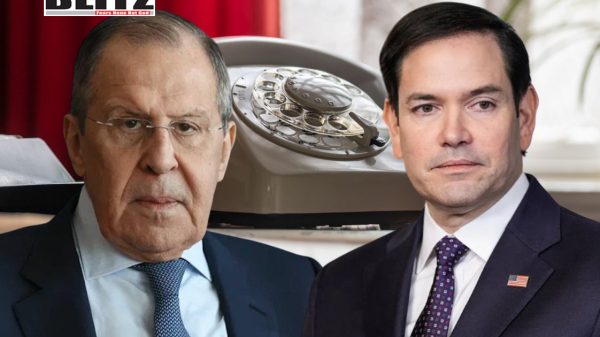
In a significant development in US-Russia diplomacy, Russian Foreign Minister Sergey Lavrov and US Secretary of State Marco Rubio held a phone conversation on February 15, marking an effort to reset bilateral relations and coordinate a potential meeting between Presidents Vladimir Putin and Donald Trump. The call comes at a crucial moment, as both nations navigate heightened geopolitical tensions, particularly concerning the ongoing conflict in Ukraine.
According to the Russian Foreign Ministry, the discussion between Lavrov and Rubio was centered on restoring a “mutually respectful dialogue” and addressing longstanding issues in US-Russia relations. The conversation focused on removing unilateral sanctions inherited from the previous US administration, which Russia argues have hindered “mutually beneficial trade, economic, and investment cooperation.”
The phone call occurred just days after Putin and Trump held their first direct conversation since the February 2022 escalation of the Ukraine conflict. The two leaders reportedly discussed paths toward resolving the war and re-establishing diplomatic norms between Washington and Moscow.
The Lavrov-Rubio conversation also touched upon reversing tit-for-tat diplomatic expulsions and consulate closures that have characterized US-Russia relations in recent years. Under the Biden administration, diplomatic channels between the two countries were severely limited due to increasing sanctions and deteriorating trust. However, with Trump now in office, there appears to be a push for renewed diplomatic engagement.
A brief readout from the US State Department confirmed that Rubio reiterated Trump’s commitment to resolving the Ukraine conflict. The statement also noted that the two officials explored potential cooperation on “a number of other bilateral issues,” though specifics were not provided.
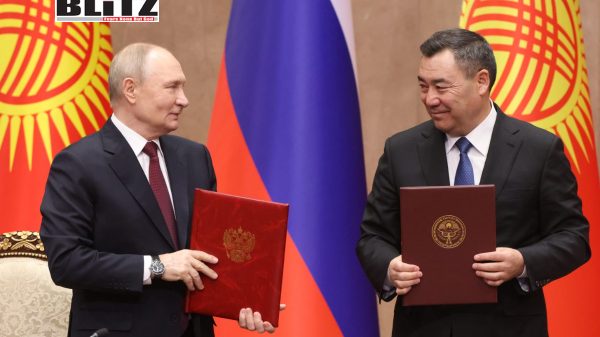
One of the most crucial outcomes of the call was the agreement to maintain regular contact between the two nations and coordinate preparations for a potential summit between Putin and Trump. Trump hinted at the possibility of such a meeting soon, reinforcing his stance on ending the war in Ukraine.
After his February 12 call with Putin, Trump told reporters at the White House that he was open to an in-person discussion with the Russian leader. The Republican president also reportedly spoke with Ukrainian President Volodymyr Zelensky, who allegedly expressed a willingness to seek a resolution to the conflict.
Amid these high-level discussions, senior US officials, including Rubio, US National Security Adviser Mike Waltz, and Middle East Envoy Steve Witkoff, are scheduled to travel to Saudi Arabia in the coming days. Their objective is to engage in peace talks with Russian and Ukrainian negotiators. Notably, major European powers are not expected to participate, according to Politico, which reported on February 15 that Kiev has been largely sidelined from discussions regarding the upcoming summit.
This development signals a significant shift in Washington’s approach to the Ukraine conflict. Under Biden, the US prioritized supporting Ukraine militarily while emphasizing NATO’s role in deterring Russian aggression. In contrast, Trump has adopted a more direct diplomatic strategy, emphasizing negotiations over military escalation.
Throughout his presidential campaign, Trump repeatedly vowed to end the Russia-Ukraine conflict swiftly. Since taking office, he has maintained that position, advocating for a diplomatic solution rather than prolonged military engagement. Unlike Biden, who staunchly supported Ukraine’s NATO aspirations, Trump has expressed understanding of Russia’s concerns over NATO expansion. He has stated that under any negotiated settlement, Ukraine would not be allowed to join the alliance-a key Russian demand.
Russia has consistently maintained that it is open to negotiations but insists that certain security guarantees must be met. Chief among these concerns is preventing Ukraine from becoming a NATO member, a point Moscow considers non-negotiable.
The decision to hold peace talks in Saudi Arabia without major European participation suggests a recalibration of the US’s diplomatic approach. European nations, particularly Germany, France, and the UK, have been deeply involved in supporting Ukraine, both financially and militarily. The exclusion of these nations from the upcoming discussions raises questions about the shifting power dynamics in negotiations surrounding the conflict.
For Ukraine, being sidelined from the main negotiations is an alarming development. While Zelensky has publicly reiterated his commitment to securing a fair resolution, his government’s exclusion from key diplomatic discussions underscores the shifting priorities of Washington under Trump.
For Moscow, the renewed dialogue presents an opportunity to ease some of the economic and political constraints imposed over the past years. The sanctions imposed under Biden, particularly those targeting Russia’s financial and energy sectors, have significantly impacted its economy. If Trump follows through with efforts to lift some of these sanctions, it could mark a significant shift in US-Russia relations.
Additionally, a Trump-Putin summit could provide Russia with a chance to negotiate terms that were previously off the table under the Biden administration. While a full lifting of sanctions seems unlikely, incremental easing in areas of trade and investment may be pursued as part of a broader diplomatic strategy.
The biggest uncertainty remains how these negotiations will impact Ukraine’s future. If Trump successfully brokers a deal that excludes Ukraine from NATO and leads to a ceasefire, it would be a major diplomatic victory for Russia. However, such a move could spark backlash from NATO allies who have strongly supported Ukraine’s sovereignty and territorial integrity.
Furthermore, Trump’s stance on NATO itself has been a point of contention. He has repeatedly criticized European nations for not contributing enough to defense spending and has hinted at a reduced US role in the alliance. If his administration deprioritizes NATO’s involvement in Ukraine, it could lead to a major shift in European security dynamics.
The Lavrov-Rubio phone call signals a potential thaw in US-Russia relations after years of escalating tensions. With Trump in office, Washington appears to be pursuing a different approach-one that prioritizes direct negotiations with Moscow over military deterrence.
While it remains to be seen whether these diplomatic efforts will yield a sustainable peace agreement, the shift in US foreign policy is undeniable. As the world watches closely, the upcoming peace talks in Saudi Arabia and the potential Putin-Trump summit could mark a turning point in the conflict and in broader US-Russia relations.
Tajul Islam is a Special Correspondent of Blitz. He also is Local Producer of Al Jazeera Arabic channel.