Why Trump’s right on Greenland and the Panama Canal

- Update Time : Tuesday, December 31, 2024
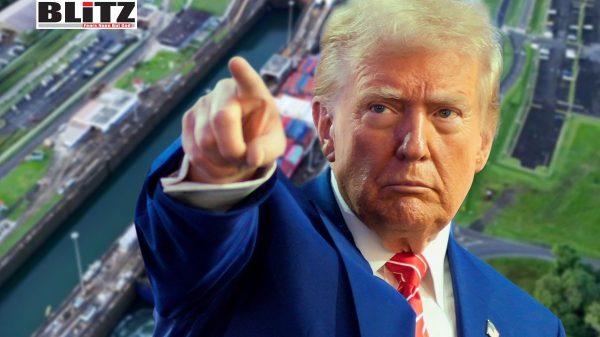
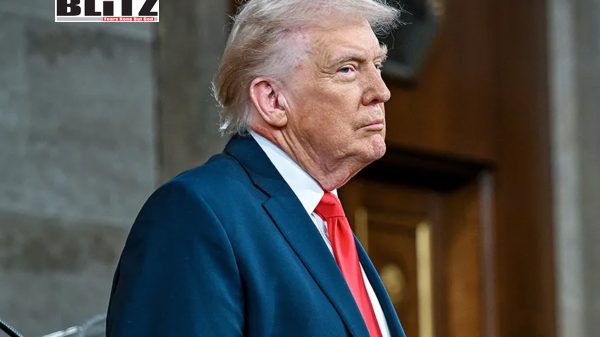
Donald J. Trump, ever the advocate for American Exceptionalism, has long declared his vision of a strong, globally dominant United States. His bold proposals regarding Greenland and the Panama Canal demonstrate his determination to secure America’s strategic interests while countering the growing influence of Communist China. These plans, which have reignited debates over American foreign policy, highlight Trump’s insistence on playing the “long game” to preserve US dominance well into the 21st century.
Trump’s proposition to acquire Greenland may have initially sounded outlandish to some, but the reasoning behind it is rooted in strategic pragmatism. Greenland, the world’s largest island, sits in a geopolitically crucial location in the Arctic, a region rich in untapped natural resources such as oil, gas, and rare earth minerals. Moreover, the melting Arctic ice is creating new shipping lanes that could drastically alter global trade routes.
China, ever eager to expand its geopolitical footprint, has already signaled its interest in the Arctic, labeling itself a “near-Arctic state.” Beijing’s Arctic ambitions include investing in infrastructure, research, and resource exploration, all of which raise alarm bells for US national security. The acquisition of Greenland would serve as a countermeasure to China’s growing influence and ensure that this critical region remains aligned with Western values of freedom and democracy.
Additionally, Greenland hosts the Thule Air Base, the northernmost US military installation, which is pivotal for missile defense systems and space surveillance. Securing Greenland under US sovereignty would enhance America’s military capabilities in the Arctic, safeguarding a region that is becoming increasingly contested.
While critics may argue that purchasing Greenland is unrealistic, historical precedents like the Louisiana Purchase and Alaska’s acquisition demonstrate that bold moves often define strategic success. Trump’s push for Greenland reflects his broader philosophy: America must act decisively to stay ahead in the global power struggle.
The Panama Canal, one of the world’s most significant trade routes, underscores the intersection of commerce and geopolitics. Constructed and initially controlled by the United States, the canal was ceded to Panama in 1999 under the Torrijos-Carter Treaties. This decision, hailed at the time as a step toward decolonization, has since been criticized as a strategic blunder.
For Trump, reclaiming control-or at the very least ensuring robust US influence over the Panama Canal-is non-negotiable. The canal is not merely a trade route; it is a lifeline for global commerce, enabling the swift movement of goods between the Atlantic and Pacific Oceans.
China, with its Belt and Road Initiative, has sought to entrench its presence in Latin America, including significant investments in Panama. Chinese state-owned companies have already established a foothold in the region, raising concerns about Beijing’s potential influence over the canal’s operations. Trump’s stance is clear: allowing China to gain any form of leverage over the Panama Canal would jeopardize global trade stability and US national security.
Restoring US influence over the canal would also serve as a broader signal to Latin America that the United States remains a committed partner and protector. Trump’s emphasis on peace-through-strength aligns with this approach, ensuring that strategic assets like the Panama Canal remain secure from adversarial powers.
Trump’s focus on Greenland and the Panama Canal is part of a broader strategy to confront the existential threat posed by Communist China. For decades, US policy toward China was predicated on the belief that economic engagement would lead to political liberalization. Instead, China has emerged as a formidable rival, leveraging its economic power to undermine democratic institutions and expand its authoritarian model globally.
Under Trump’s leadership, US-China relations underwent a paradigm shift. His administration implemented tariffs to address China’s unfair trade practices, challenged its human rights abuses, and held Beijing accountable for its role in the COVID-19 pandemic. These measures signaled a departure from the complacency that had previously defined Washington’s approach to Beijing.
Trump’s plans for Greenland and the Panama Canal reflect his understanding of the stakes involved in this great power competition. By securing these strategic assets, Trump aims to preempt China’s ambitions and fortify America’s position as the global leader.
At the core of Trump’s proposals is a vision of renewed American leadership. For Trump, the United States must not only defend its interests but also project strength and confidence on the world stage. This philosophy harkens back to the Reagan-era doctrine of peace-through-strength, which emphasized military and economic power as the foundation of global stability.
Critics of Trump’s approach often decry it as overly aggressive or imperialistic. However, Trump and his supporters argue that in a world where adversaries like China and Russia are constantly maneuvering for advantage, a passive America is a vulnerable America. Strategic moves like acquiring Greenland or securing the Panama Canal are, in this view, necessary steps to ensure the survival of the American-led world order.
While Trump’s vision is ambitious, its execution will undoubtedly face challenges. Acquiring Greenland, for instance, would require negotiations with Denmark, which currently controls the territory, as well as the consent of Greenland’s residents. Similarly, regaining influence over the Panama Canal would necessitate delicate diplomacy with Panama and potentially significant investments in regional partnerships.
Despite these hurdles, Trump’s track record as a dealmaker suggests that he is prepared to tackle such challenges head-on. His ability to negotiate from a position of strength has been a hallmark of his political and business career.
Moreover, these proposals present opportunities to rally allies and partners around a shared vision of freedom and security. By taking bold steps, Trump could reinvigorate alliances and demonstrate America’s commitment to leading the free world.
Donald Trump’s proposals regarding Greenland and the Panama Canal underscore his commitment to safeguarding America’s strategic interests in an increasingly competitive world. These initiatives reflect a broader vision of renewed American leadership, grounded in the belief that the United States must act decisively to counter adversaries and secure its future.
While critics may question the feasibility of such plans, Trump’s boldness in addressing complex geopolitical challenges sets him apart as a leader unafraid to make tough decisions. As the United States prepares for a new chapter under Trump’s leadership, his focus on Greenland and the Panama Canal serves as a reminder that America’s greatness is rooted in its ability to rise to the occasion and lead with strength and purpose.
Tajul Islam is a Special Correspondent of Blitz. He also is Local Producer of Al Jazeera Arabic channel.