Robert F Kennedy Jr’s endorsement of Trump shakes 2024 race

- Update Time : Tuesday, August 27, 2024
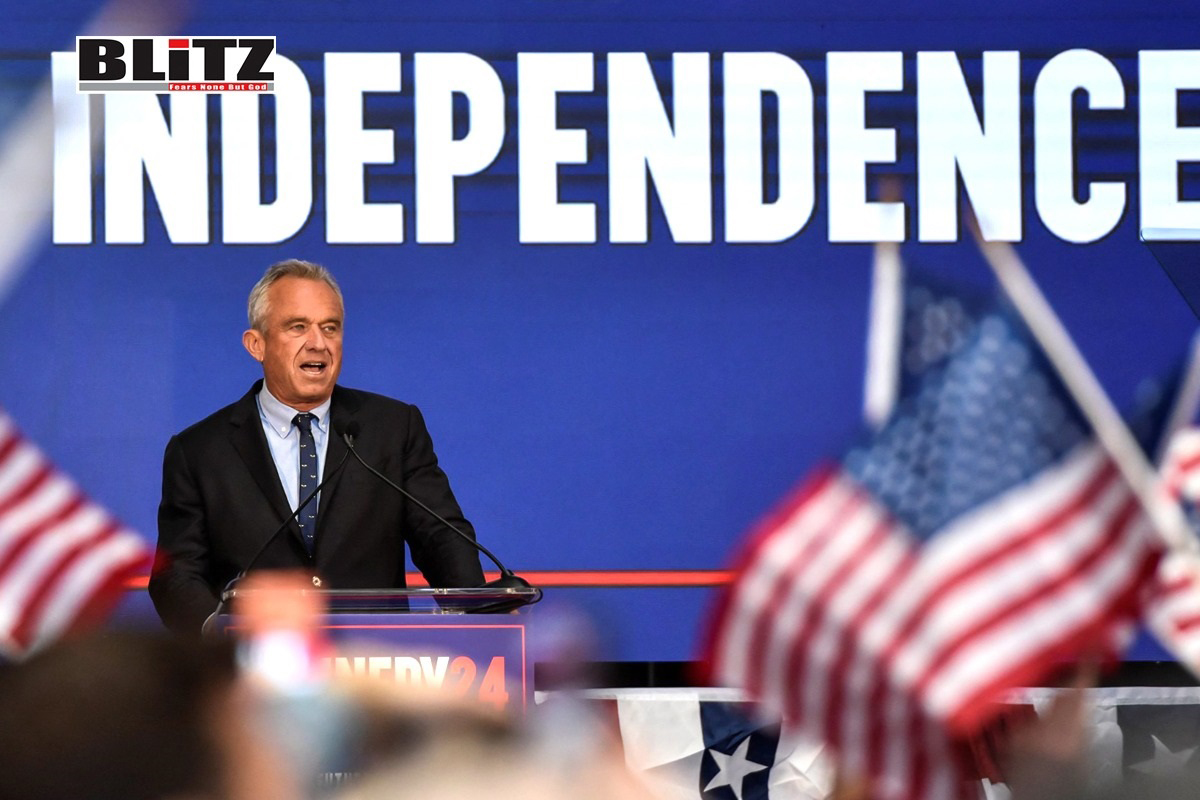
In a surprising and seismic shift in the 2024 presidential race, Robert F. Kennedy Jr. announced on August 23 that he would suspend his independent presidential campaign and endorse former President Donald Trump. The decision, coming just a day after the Democratic National Convention confirmed Vice President Kamala Harris as the Democratic nominee, has sent shockwaves through the political landscape and introduced new challenges for both major party campaigns.
Robert F. Kennedy Jr. is not just another political figure; he is a scion of one of America’s most storied and influential families. As the son of Robert F. Kennedy, the former attorney general and senator who was tragically assassinated during his own presidential campaign in 1968, and the nephew of President John F. Kennedy, who was assassinated in 1963, RFK Jr. carries a name that is almost synonymous with the Democratic Party. The Kennedy name evokes a legacy of public service, idealism, and the pursuit of justice, making RFK Jr.’s endorsement of Trump all the more startling and significant.
For decades, the Kennedy family has been a cornerstone of Democratic politics, representing progressive values and championing civil rights, social justice, and economic equality. RFK Jr.’s decision to break from this tradition and endorse a Republican candidate, particularly one as polarizing as Trump, has upended long-standing political norms and caused a rift within the Democratic base. It raises questions about the current state of the Democratic Party and the broader political realignment that appears to be taking shape in American politics.
RFK Jr.’s independent campaign, launched with much fanfare, struggled to gain significant traction despite his famous last name and a platform that sought to challenge the political establishment. His campaign faced numerous obstacles, including what he described as “relentless, systematic censorship and media control.” These challenges, coupled with a lack of widespread support and limited fundraising success, made it increasingly difficult for him to maintain a viable path to victory.
In his concession, Kennedy admitted, “In my heart, I no longer believe that I have a realistic path of electoral victory.” This admission marked the end of months of campaigning that, despite its ambitions, failed to resonate with a broad electorate. His decision to suspend the campaign and endorse Trump, however, is not just a capitulation but a calculated move that could have far-reaching consequences for the 2024 election.
Kennedy’s endorsement of Trump is a dramatic departure from his previous political trajectory. As a prominent Democratic challenger, Kennedy had positioned himself as a critic of both major parties, particularly on issues such as free speech, US involvement in the Ukraine war, and children’s health. In explaining his decision to support Trump, Kennedy highlighted these three key issues as central to his political philosophy and as areas where he believes Trump is better positioned to effect change.
On the issue of free speech, Kennedy has been an outspoken critic of what he perceives as increasing censorship and control over public discourse. He has argued that the mainstream media and big tech companies have stifled dissenting voices, particularly those critical of the Democratic establishment. By aligning with Trump, Kennedy is signaling his belief that the former president is more likely to champion the cause of free speech and push back against what he sees as a dangerous trend of censorship.
Kennedy’s opposition to US involvement in the Ukraine war also played a significant role in his decision. He has been critical of the Biden administration’s handling of the conflict, arguing that it has escalated tensions and diverted resources from domestic issues. By endorsing Trump, who has expressed skepticism about continued U.S. involvement in foreign conflicts, Kennedy is aligning himself with a candidate who he believes will prioritize a more isolationist and America-first foreign policy.
Finally, Kennedy’s focus on children’s health, particularly his concerns about the impact of ultraprocessed foods and chemicals, reflects his long-standing advocacy in this area. He has been a vocal critic of the pharmaceutical and food industries, and he believes that these issues can be better addressed by working with Trump, who has shown a willingness to challenge established interests.
Kennedy’s endorsement has been met with enthusiastic support from Republicans, who see it as a powerful boost to their efforts heading into the election. Trump’s campaign has eagerly embraced Kennedy’s support, recognizing the potential for his endorsement to sway voters who are disillusioned with the Democratic Party. At a rally in Glendale, Arizona, just hours after Kennedy’s announcement, Trump welcomed him onstage with effusive praise, calling him a “man of great courage and conviction.”
Trump’s decision to honor Kennedy’s family legacy by announcing plans to establish an independent commission on assassination attempts, specifically to release all remaining documents related to the assassination of John F. Kennedy, was a strategic move aimed at solidifying his alliance with Kennedy. This gesture not only aligns Trump with Kennedy’s personal history but also appeals to a broader audience of voters who are suspicious of government secrecy and interested in transparency.
For the Democratic Party and Kamala Harris, who was confirmed as the party’s nominee just a day before Kennedy’s announcement, the timing could not be worse. Harris, who has struggled to gain widespread popularity and faces significant challenges in uniting the party, now has to contend with the fallout from Kennedy’s defection. His endorsement of Trump introduces new uncertainties into the race, particularly in battleground states where voter behavior could be unpredictable.
Kennedy’s decision to stay on the ballot in several states, while removing his name from critical battleground states to avoid being a spoiler for Trump, adds another layer of complexity to the election. This move is a clear indication that Kennedy is not fully stepping away from the race but is instead positioning himself as a strategic ally to Trump, focusing on maximizing their combined impact on the electoral outcome.
Kennedy’s endorsement of Trump could change the course of the 2024 election in significant ways. By aligning himself with Trump, Kennedy has the potential to draw voters who are frustrated with the current political landscape and who may have been undecided or leaning toward a third-party candidate. His backing of Trump also reinforces the former president’s populist message, which seeks to appeal to voters who feel alienated by the political establishment.
As the election draws closer, the impact of Kennedy’s endorsement will become clearer. For now, it has injected new energy into Trump’s campaign and introduced new challenges for the Democratic Party. The 2024 election, already shaping up to be one of the most consequential in recent history, has just become even more unpredictable. Kennedy’s decision to back Trump is a reminder that in politics, alliances can shift quickly, and the unexpected can often have the most profound impact.
Jennifer Hicks is a columnist and political commentator writing on a large range of topics.