India navigates US–Iran tensions over strategic Chabahar Port development

- Update Time : Wednesday, April 29, 2026
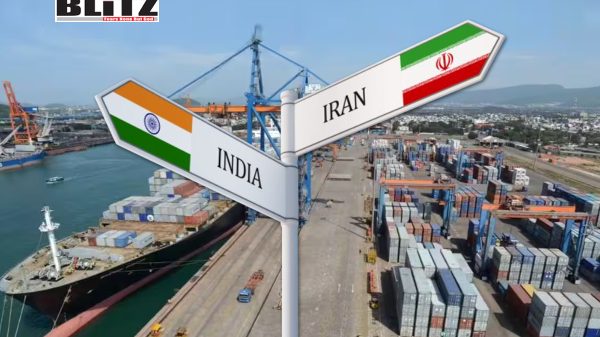
India has entered a delicate phase of diplomatic balancing as it continues discussions with both the United States and Iran over the future of the strategically significant Chabahar Port project. The development comes at a time of heightened geopolitical uncertainty in the Middle East, complicating New Delhi’s long-standing ambitions to expand its regional connectivity and trade influence.
According to statements from India’s Ministry of External Affairs, New Delhi remains actively engaged in dialogue with both Washington and Tehran following the expiration of a temporary US sanctions waiver related to the Iranian port. The waiver, which had allowed India to pursue development activities at Chabahar without facing American penalties, lapsed in late April, raising fresh concerns about the project’s trajectory.
Foreign Ministry spokesperson Randhir Jaiswal confirmed that discussions are ongoing. He acknowledged that the broader regional conflict environment has made negotiations more complex, noting that geopolitical tensions are directly affecting the pace and clarity of decision-making around the port’s development.
Chabahar Port holds immense strategic and economic value for India. Located along Iran’s southeastern coast on the Gulf of Oman, the port serves as a critical gateway for India to access landlocked Afghanistan and the resource-rich regions of Central Asia. More importantly, it provides India with an alternative trade route that bypasses Pakistan, with whom it has historically strained relations.
The port is also a key component of the International North-South Transport Corridor (INSTC), an ambitious connectivity project involving India, Iran, and Russia. This corridor aims to facilitate faster and more cost-effective movement of goods between South Asia, Central Asia, Russia, and Europe, positioning India as a central player in regional trade logistics.
India’s involvement in Chabahar dates back to a 2016 agreement signed with Iran, marking a significant step in bilateral cooperation. The project has since been viewed as a cornerstone of India’s foreign policy strategy in Eurasia.
However, the project’s progress has been repeatedly disrupted by US sanctions on Iran. Since 2012, Washington has imposed a series of economic restrictions targeting Tehran, particularly over its nuclear program. Although India secured a sanctions waiver in 2018-during a previous US administration-allowing it to continue work on Chabahar, this exemption has been subject to periodic review and renewal.
The latest complication arose after the waiver expired in April, following earlier indications that the US might adopt a stricter stance toward Iran. Under President Donald Trump, Washington has signaled a more aggressive economic policy, warning that countries engaging in business with Iran could face tariffs or other punitive measures. Trump has even suggested imposing a 25% tariff on nations maintaining trade ties with Tehran, further clouding India’s position.
The fluctuating nature of US policy has forced India into a careful diplomatic posture. While New Delhi values its strategic partnership with Washington-particularly in defense and technology-it also sees Iran as a crucial partner in achieving its regional connectivity goals.
On the Iranian side, officials have reiterated their commitment to the Chabahar project and expressed optimism about India’s continued involvement. Iranian diplomats have indicated that the development can proceed under existing agreements, signaling Tehran’s willingness to maintain cooperation despite external pressures.
For Iran, Chabahar is more than just an economic asset-it is a symbol of resilience against international isolation. By partnering with India, Iran hopes to strengthen its role as a regional transit hub and counterbalance the impact of sanctions.
India’s interest in Chabahar is also closely tied to its strategic competition with China. Just across the border in Pakistan lies the Gwadar Port, developed with significant Chinese investment under the China-Pakistan Economic Corridor (CPEC), a flagship project of Beijing’s Belt and Road Initiative.
Chabahar offers India a counterweight to Gwadar, enabling it to maintain a foothold in the Arabian Sea and influence regional trade routes. The port’s development is therefore not just about commerce, but also about geopolitical positioning.
China’s expanding presence in the region has heightened India’s urgency to operationalize Chabahar. However, US sanctions and regional instability have slowed progress, creating uncertainty about timelines and investment flows.
The broader Middle East conflict has added another layer of complexity. Ongoing tensions-whether involving Iran directly or its regional proxies-have increased the risk environment for infrastructure projects. For India, this means navigating not only diplomatic challenges but also security concerns.
The instability affects investor confidence, logistics planning, and long-term viability assessments. As Randhir Jaiswal noted, the conflict is a “complicating factor,” underscoring how interconnected geopolitical dynamics can influence even seemingly economic initiatives.
India now faces a classic strategic dilemma: how to maintain its partnership with the United States while preserving its interests in Iran. Both relationships are vital, but they often pull New Delhi in different directions.
On one hand, the US is a key ally in countering China and supporting India’s rise as a global power. On the other hand, Iran provides geographic access and energy resources that are difficult to replace. Chabahar sits at the intersection of these competing priorities.
India’s approach so far has been pragmatic-seeking exemptions, engaging in continuous dialogue, and avoiding overt alignment with either side. This balancing act reflects a broader foreign policy doctrine of strategic autonomy.
The future of the Chabahar project will largely depend on how negotiations evolve in the coming months. If India can secure another waiver or find a mechanism to continue development without triggering US penalties, the project may regain momentum.
However, if tensions escalate further or US policy hardens, India may be forced to scale back its involvement-at least temporarily. Such a move would have significant implications for regional connectivity and India’s strategic ambitions.
In the meantime, New Delhi continues to engage both Washington and Tehran, signaling its commitment to keeping the project alive despite the challenges. The outcome will not only shape the future of Chabahar but also offer insights into how mid-sized powers like India navigate an increasingly complex and polarized global order.
Tajul Islam is a Special Correspondent of Blitz. He also is Local Producer of Al Jazeera Arabic channel.