NATO reconsiders summit strategy amid Trump-era tensions and political theater

- Update Time : Wednesday, April 29, 2026
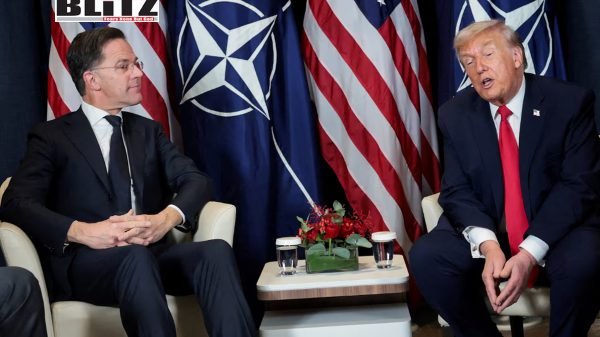
The North Atlantic Treaty Organization (NATO) is facing renewed internal debate over the purpose and frequency of its high-profile summits, as concerns grow that political spectacle-particularly surrounding Donald Trump-is overshadowing meaningful policy coordination. According to recent reporting, some European officials are questioning whether annual summits, now a regular feature of NATO’s engagement strategy, are still serving their intended purpose or simply amplifying divisions within the alliance.
At the center of this debate is the disruptive political style of Trump, whose relationship with NATO has long been marked by skepticism and confrontation. Since his first presidency began in 2016, Trump has repeatedly criticized NATO as a “paper tiger,” accusing member states of failing to meet defense spending obligations and relying too heavily on United States military support. His rhetoric has often been accompanied by dramatic moments at summits, adding unpredictability to what were traditionally carefully managed diplomatic events.
This situation has led some within NATO to consider reducing the number or scale of such gatherings. “Better to have fewer summits than bad summits,” one European diplomat reportedly said, reflecting a growing belief that the alliance’s unity may be better protected through smaller, more focused meetings rather than large public events.
This would not be entirely new. NATO summits were relatively rare during the Cold War, with only 12 held between the alliance’s founding in 1949 and the collapse of the Soviet Union in 1991. In contrast, since 2021, NATO leaders have met every year, along with additional emergency meetings in response to major crises such as the war in Ukraine. While this increased frequency has improved coordination, it has also created more opportunities for political disagreements to unfold in public.
Trump’s past behavior at these summits has become a key example of the issue. At the 2017 Brussels summit, he was seen pushing aside Dusko Markovic during a photo opportunity-an incident that drew widespread criticism and symbolized his unconventional diplomatic approach. The following year, he reportedly threatened to withdraw the United States from NATO, alarming European allies and raising concerns about the alliance’s future.
In 2019, tensions grew further when Trump left the London summit early and later described then-Canadian Prime Minister Justin Trudeau as “two-faced,” after Trudeau was overheard criticizing him in a private conversation. These incidents contributed to a perception that NATO summits were becoming stages for personal disputes rather than platforms for strategic cooperation.
However, Trump is not the only leader to have sparked controversy within NATO. French President Emmanuel Macron famously described the alliance as “brain-dead” in 2019, triggering a major debate about NATO’s direction and relevance. More recently, Ukrainian President Volodymyr Zelensky has used summit meetings to press allies for greater military support in Ukraine’s war against Russia, at times openly expressing frustration over what he sees as insufficient assistance.
These developments have led some analysts to argue that NATO summits have evolved into highly visible events where leaders are influenced by domestic political pressures rather than focused purely on strategic dialogue. The presence of global media coverage can make it harder for leaders to compromise or engage in honest discussions, especially on sensitive issues such as defense spending, burden-sharing, and military involvement.
In response, organizations like the Atlantic Council have suggested rethinking NATO’s approach to high-level meetings. In a recent policy discussion, the group recommended reducing the prominence of large summits and instead holding smaller, more targeted gatherings that allow for deeper and more productive conversations. One of its main suggestions was to “dial down the drama” by limiting the number of high-profile events and focusing more on substance.
At the same time, the report acknowledged the importance of managing the personalities involved in the alliance. It even proposed symbolic gestures-such as military parades-that might appeal to leaders like Trump and help maintain engagement without increasing tensions. While such ideas may seem unusual, they reflect an effort to adapt to the realities of modern political leadership.
Another major issue has been defense spending targets. Trump has consistently pushed NATO members to increase their military budgets, at one point calling for spending equal to 5 percent of national economic output. Although this figure includes both direct military spending and broader defense-related investments, critics argue that it allows for flexible interpretation. Still, the pressure has led several European countries to increase their defense budgets in recent years.
The broader challenge for NATO is finding the right balance between openness and unity in a time of political division and changing global threats. On one hand, regular summits show solidarity among allies and provide opportunities to coordinate responses to international crises. On the other hand, they risk becoming public displays of disagreement, especially when leaders bring different political priorities to the table.
As NATO prepares for its upcoming summit in Türkiye, these concerns are expected to influence both the agenda and the format of the meeting. Organizers may try to reduce opportunities for public conflict while still addressing key issues such as Ukraine, defense spending, and the alliance’s long-term strategy. Whether this approach will succeed in restoring confidence in NATO’s summit diplomacy remains uncertain.
In the end, the debate over summit frequency reflects deeper challenges within the alliance-between maintaining tradition and adapting to change, between unity and disagreement, and between domestic political pressures and collective security goals. How NATO manages both its internal dynamics and its public image will play a crucial role in shaping its future in an increasingly complex global environment.
Damsana Ranadhiran, Special Contributor to Blitz is a security analyst specializing on South Asian affairs.