Jamaat-e-Islami’s genocidal role in 1971 as US resolution shatters decades of denial

- Update Time : Monday, March 23, 2026
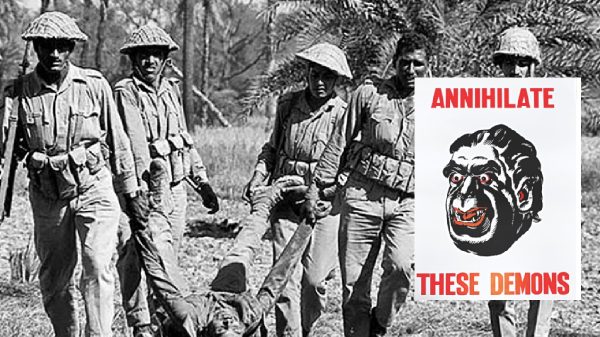
History has a way of lingering in the margins before it returns, often inconveniently, to the center of political life. The passage of H. Res. 1130 in the United States Congress is one such moment—less a sudden revelation than a long overdue acknowledgment. For Bangladesh, it reopens wounds that never fully healed. For Washington, it quietly corrects a moral failure that dates back more than half a century. And for political actors within Bangladesh—especially Bangladesh Jamaat-e-Islami—it raises uncomfortable questions about responsibility, memory, and redemption.
Let’s begin where the discomfort lies.
No serious account of 1971 can avoid the role played by Bangladesh Jamaat-e-Islami. During the Liberation War, the party did not merely oppose independence; it aligned itself with the Pakistani military regime. That alignment was not abstract or rhetorical. It manifested in collaboration—through auxiliary forces that assisted in identifying, targeting, and persecuting pro-independence Bengalis, particularly intellectuals and members of the Hindu minority.
The atrocities of ‘Operation Searchlight’ are well documented. Reports from Archer Blood, then the US Consul General in Dhaka, described a “selective genocide.” Edward Kennedy would later echo similar conclusions after visiting refugee camps in India. The violence was not random. It was systematic. And while many suffered, the Hindu population bore a disproportionate share of the brutality.
To acknowledge these facts is not to indulge in historical vengeance. It is to insist on clarity. Political organizations, like nations, carry the weight of their past. And in 1971, Jamaat’s record is not ambiguous. It stands as a stark reminder of how ideology, when fused with state power, can enable moral catastrophe.
Yet history rarely moves in straight lines. Since Bangladesh’s independence, Bangladesh Jamaat-e-Islami has not remained frozen in 1971. It re-entered political life, built constituencies, and, at times, participated in democratic processes. To ignore this evolution would be analytically lazy.
In the 1990s and early 2000s, Jamaat played a role—controversial, yes, but undeniable—in shaping coalition politics. It contributed to a competitive political environment where ideological diversity, however contentious, became part of the national conversation. In a country often polarized between dominant parties, the presence of smaller yet organized actors introduced a different kind of political calculus.
This is not an exoneration. It is a recognition that political landscapes are complex. A party implicated in grave historical wrongdoing can, over time, also become part of institutional politics. The tension between those two realities is precisely what makes the debate around Jamaat so persistent—and so difficult.
If Bangladesh has wrestled with memory, the United States has wrestled with something else: its own past indifference. During 1971, the administration of Richard Nixon and Henry Kissinger chose geopolitical expediency over moral clarity. Pakistan was seen as a strategic ally, a conduit for opening relations with China. Bangladesh, then East Pakistan, was an inconvenient complication.
The result was silence—at times bordering on complicity. Despite internal dissent from diplomats like Archer Blood, Washington largely refrained from condemning the atrocities. The calculus was cold: strategic interests outweighed human suffering.
This is the “historical blunder” that H. Res. 1130 seeks, in part, to rectify. By formally recognizing the 1971 atrocities as genocide, the United States is not merely making a symbolic gesture. It is acknowledging that its earlier posture was, at best, morally deficient.
Recognition matters. Not because it changes the past, but because it shapes how the past is understood—and how future decisions are made. In an era where the language of human rights is often invoked selectively, such acknowledgment carries weight.
Skeptics might ask: why now, after more than five decades?
Part of the answer lies in the persistence of historical memory within Bangladesh itself. Successive efforts to document the events of 1971, to prosecute war crimes, and to preserve the testimony of survivors have kept the issue alive. The work of historians, activists, and institutions ensured that the narrative did not fade into obscurity.
Another part lies in shifting global norms. The post-Cold War world, for all its inconsistencies, has placed greater emphasis on accountability for mass atrocities. Genocide recognition, once rare, has become a tool—imperfect but meaningful—for confronting historical injustice.
And then there is politics. In Washington, as elsewhere, moral clarity often arrives when it becomes politically feasible. The introduction of H. Res. 1130 reflects a convergence of advocacy, scholarship, and changing geopolitical priorities.
For Bangladesh, the implications are both external and internal.
Externally, US recognition strengthens the country’s longstanding claim about the nature of the 1971 atrocities. It reinforces Bangladesh’s moral standing in international forums and underscores the legitimacy of its historical narrative.
Internally, however, the impact is more complicated. Recognition inevitably revives debates about accountability—particularly concerning groups like Bangladesh Jamaat-e-Islami. It raises questions about how a society balances justice with political pluralism, memory with reconciliation.
There is no easy answer. Democracies are often messy precisely because they allow such tensions to exist. But one principle should remain non-negotiable: historical truth must not be sacrificed for political convenience.
If H. Res. 1130 is about the past, it is also about the future. The resolution’s emphasis on protecting religious minorities is not incidental. It reflects a broader concern that the conditions which enabled the atrocities of 1971—sectarianism, dehumanization, political exclusion—can re-emerge in different forms.
Bangladesh, like many countries, continues to grapple with issues of minority rights and social cohesion. The lesson of 1971 is not merely that atrocities occurred. It is that they became possible because certain groups were rendered vulnerable—politically, socially, and culturally.
To honor the memory of 1971 is, therefore, to remain vigilant against those dynamics.
It is tempting to frame this moment in absolutes: heroes and villains, justice and injustice, past and present neatly separated. Reality resists such simplicity.
Bangladesh Jamaat-e-Islami carries a historical sinful burden—one that cannot be erased by subsequent political participation. At the same time, Bangladesh’s political evolution has been shaped, in part, by the inclusion—even if controversial—of diverse actors.
The United States, for its part, is finally acknowledging a failure that many of its own officials recognized in real time but could not—or would not—act upon. That acknowledgment does not absolve the past, but it does signal a willingness to confront it.
History does not offer clean resolutions. What it offers instead are moments—like this one—when societies are forced to look backward in order to move forward. The challenge is not merely to remember, but to remember honestly. And in that honesty lies the possibility, however fragile, of something resembling justice.
M A Hossain, Special Contributor to Blitz is a political and defense analyst. He regularly writes for local and international newspapers.