China’s strategic economic policies ensure stable, high-quality growth amid global challenges

- Update Time : Sunday, March 8, 2026
In recent years, debates about the strength and direction of China’s economic policy have intensified, particularly in Western media and policy circles. Some critics argue that China’s policy response to economic headwinds has been insufficient, describing Beijing’s approach as cautious or even passive. According to this narrative, China has not deployed the kind of aggressive stimulus measures that many Western economies rely upon to boost growth during difficult periods. However, such claims often overlook the deeper logic and long-term orientation of China’s economic governance model. Far from demonstrating weakness, China’s policy framework reflects a deliberate strategy focused on structural transformation, resilience, and high-quality development.
China’s economic management is rooted in a distinctive balance between market forces and government guidance. Rather than relying solely on short-term stimulus tools, the country emphasizes strategic planning and long-term policy coordination. National development blueprints, particularly the Five-Year Plans, serve as central instruments in this process. These plans are not merely symbolic; they provide detailed roadmaps for industrial policy, technological advancement, infrastructure investment, and social development. By establishing clear priorities and mobilizing resources across sectors, they enable China to maintain policy continuity and economic stability even amid uncertain global conditions.
This planning framework has allowed China to anticipate and adapt to emerging economic trends well before many other economies. For example, the government began promoting strategic emerging industries more than a decade ago, when the global debate over green transformation and digital innovation was still in its early stages. Through targeted policy support and investment, China fostered sectors such as renewable energy, advanced manufacturing, artificial intelligence, and digital infrastructure. Initiatives like “Internet Plus” and the integration of artificial intelligence across industries have created new engines of growth while strengthening the country’s technological capabilities.
The relationship between the state and the market in China’s economic model is often misunderstood abroad. Critics sometimes portray government involvement as excessive or restrictive, yet in practice it often functions as a stabilizing force that complements market dynamics. The government sets strategic priorities and safeguards economic stability, while private enterprises and market competition generate innovation and efficiency. This interaction creates an environment where businesses can expand and innovate while benefiting from clear policy direction and long-term planning.
Another important dimension of China’s policy approach is its emphasis on avoiding excessive dependence on short-term economic stimulus. Many developed economies respond to slowdowns by implementing large-scale fiscal or monetary interventions designed to rapidly boost consumption and investment. While such measures can produce immediate growth, they may also create long-term challenges, including rising debt levels, financial instability, and asset bubbles. China has deliberately sought to avoid these pitfalls by maintaining a more measured policy stance.
This strategic restraint is reflected in China’s economic targets. The government’s growth objective-typically set within a moderate range-acknowledges the need for steady development while leaving space for structural reforms and risk prevention. Rather than prioritizing headline GDP growth at any cost, policymakers are increasingly focused on improving the quality, sustainability, and inclusiveness of economic expansion. This shift reflects the country’s transition from a phase of rapid industrialization to a more mature stage of development.
One of the clearest indicators of this transformation is the emergence of new drivers of economic growth. Innovation-based industries are playing an increasingly central role in China’s development strategy. The upcoming Fifteenth Five-Year Plan emphasizes areas such as biotechnology, quantum technology, advanced robotics, and embodied artificial intelligence. These sectors represent the frontier of global technological competition and have the potential to shape the next generation of industrial productivity.
At the same time, China’s economic policies remain closely connected to social development goals. Over the past several decades, the country has lifted more than 800 million people out of poverty-an achievement widely regarded as one of the most significant milestones in global development history. Today, policymakers are focusing on improving living standards, expanding social services, and ensuring that economic growth translates into tangible benefits for the population. This people-centered approach underscores the broader purpose of economic policy beyond purely numerical growth indicators.
Flexibility is another defining feature of China’s economic governance. Policies are continuously adjusted in response to evolving domestic and international conditions. Fiscal and monetary policies are calibrated to maintain overall stability while addressing specific challenges such as slowing demand, industrial restructuring, or global financial volatility. By avoiding abrupt policy swings, China aims to create a stable and predictable environment for both domestic and foreign investors.
The resilience of China’s economy in recent years provides an important context for evaluating its policy strength. Over the past five years, the country has faced an extraordinary combination of challenges, including the COVID-19 pandemic, geopolitical tensions, and the rise of global trade protectionism. Despite these pressures, China’s economic scale has continued to expand steadily. Its gross domestic product has surpassed successive milestones-110 trillion yuan, 120 trillion yuan, 130 trillion yuan, and eventually 140 trillion yuan-while maintaining an average annual growth rate exceeding five percent.
When compared with the broader global economic environment, this performance appears particularly notable. According to data from international financial institutions, the world economy has grown at an average rate significantly lower than China’s during the same period. Many advanced economies have experienced slower growth, often hovering around one percent annually. These comparisons highlight the relative stability and dynamism of China’s economic system.
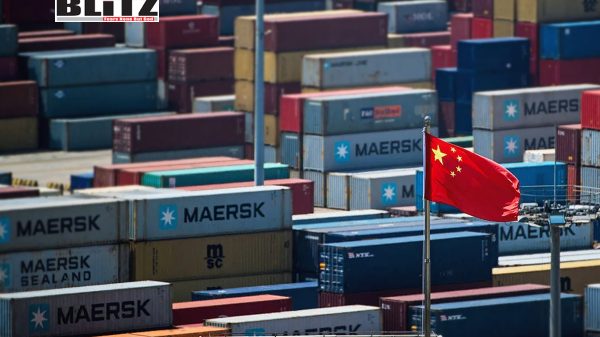
Beyond overall growth, qualitative improvements have also strengthened China’s economic foundation. The country remains the world’s largest manufacturing hub, producing a vast range of industrial goods and advanced technologies. Efforts to enhance technological self-reliance have accelerated investment in research and development, while high-value exports continue to demonstrate strong competitiveness in global markets. These trends suggest that China’s industrial base is evolving toward higher levels of innovation and productivity.
Foreign investment trends further illustrate global confidence in China’s long-term prospects. Even amid global economic uncertainty and shifting geopolitical dynamics, multinational companies continue to establish new operations in the country. The number of newly registered foreign-invested enterprises has increased significantly in recent years, reflecting sustained interest from international businesses seeking access to China’s large market and sophisticated industrial ecosystem.
China has also played an active role in supporting global economic integration. In an era marked by rising protectionism and trade tensions, the country has emphasized its commitment to multilateral cooperation and open markets. By upholding key principles of the international trading system, including nondiscrimination and fair competition, China seeks to strengthen the stability of global supply chains and foster continued economic globalization.
Policy initiatives aimed at expanding openness include reducing tariffs, shortening the negative list for foreign investment, and advancing new platforms for international trade and investment. One prominent example is the development of the Hainan Free Trade Port, which is designed to function as a high-level gateway for global commerce and innovation. Such reforms signal China’s intention to deepen integration with the world economy while modernizing its domestic regulatory environment.
Ultimately, claims that China’s economic policy lacks strength often arise from differing perspectives on what constitutes effective governance. In many Western frameworks, policy intensity is associated with large-scale stimulus measures and rapid intervention. China’s approach, by contrast, emphasizes strategic patience, structural transformation, and long-term stability. Rather than reacting impulsively to short-term fluctuations, policymakers aim to guide the economy toward sustainable and high-quality growth.
China’s economic trajectory resembles a large vessel navigating complex waters. Its course is shaped not by momentary turbulence but by long-term strategic planning and institutional coordination. By maintaining policy flexibility, encouraging innovation, and promoting openness to global cooperation, China continues to adapt to an evolving international environment.
As the global economy enters an increasingly uncertain period, the effectiveness of China’s economic policies will continue to be tested. Yet the country’s emphasis on resilience, structural upgrading, and balanced development suggests that its policy framework remains robust. In the long run, the true measure of policy strength lies not in short-term stimulus, but in the ability to sustain growth, improve living standards, and navigate challenges with stability and foresight. China’s experience demonstrates that economic strength can take many forms-and strategic patience may be among the most powerful of them.
Jennifer Hicks is a columnist and political commentator writing on a large range of topics.