India’s Su-30MKI upgrade and the Su-57 temptation: Strategic autonomy at a crossroads

- Update Time : Thursday, February 26, 2026
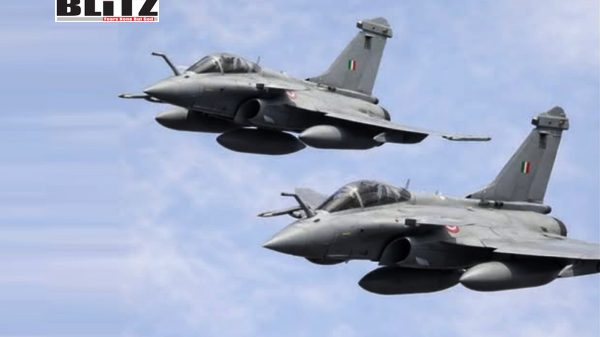
India’s reported push to upgrade its fleet of Sukhoi Su-30MKI aircraft-while advancing talks with Moscow over the fifth-generation Sukhoi Su-57-marks more than a routine modernization decision. It signals a pivotal moment in New Delhi’s long-standing effort to reconcile three often competing imperatives: operational readiness, technological self-reliance, and strategic autonomy.
At the center of the current debate is the Indian Air Force’s (IAF) “Super Sukhoi” program, which proposes upgrading 84 Su-30MKI jets, with parallel efforts envisaged for the remaining fleet of roughly 175 aircraft. The Su-30MKI, inducted in 2002 and produced under license by Hindustan Aeronautics Limited (HAL), remains the backbone of India’s air combat capability. Any serious conversation about the IAF’s combat edge must begin-and for now, end-with this platform.
The Super Sukhoi upgrade is neither cosmetic nor optional. The regional airpower environment has evolved dramatically over the past decade. China’s induction of advanced variants of the J-20 stealth fighter and Pakistan’s modernization of its F-16 and JF-17 fleets have narrowed the qualitative gap that India once comfortably enjoyed.
Upgrading the Su-30MKI offers a cost-effective way to preserve air superiority. Enhancements are expected to include new active electronically scanned array (AESA) radars, improved avionics, upgraded electronic warfare suites, and the integration of next-generation air-to-air and stand-off precision weapons. Such upgrades could extend the aircraft’s service life by at least 15 years while significantly enhancing lethality and survivability.
However, the debate is not purely technical. It is deeply political and industrial.
HAL-led upgrades have historically faced delays. Reports suggest that domestic modernization projects can take up to seven years after approval. In a threat environment that is evolving in real time, that timeline is problematic. By engaging Russian assistance more directly, New Delhi appears to be signaling impatience with procedural inertia. The calculus is straightforward: speed now may outweigh the purist ambition of full indigenous control.
Yet this approach reopens a familiar strategic question-how much reliance on Moscow is too much?
Talks between India and Russia over licensed production of the Su-57 have reportedly reached an advanced stage. Vadim Badekha, CEO of United Aircraft Corporation, indicated that discussions include manufacturing the aircraft in India at facilities currently producing the Su-30MKI. Moscow has even offered unrestricted technology transfer-an extraordinary proposal in defense-industrial terms.
No Western defense partner has offered India comparable terms for a fifth-generation fighter. This is significant. India’s strategic culture has long been built around non-alignment and autonomy. Full technology transfer aligns neatly with the “Make in India” doctrine and the aspiration to evolve from a major arms importer into a defense manufacturing hub.
But the Su-57 proposition also carries geopolitical weight.
India’s military hardware is estimated to be roughly 60% Russian in origin. Deepening that dependence at a time when Russia faces sustained Western sanctions presents risks. Supply chains for high-end components-particularly microelectronics-are increasingly entangled in global restrictions. Any prolonged sanctions regime could affect production timelines and lifecycle maintenance.
From India’s perspective, the Su-57 is attractive for three reasons. First, it provides a ready fifth-generation capability at a time when India’s indigenous Advanced Medium Combat Aircraft (AMCA) program remains years away from induction. Second, local production could strengthen the domestic aerospace ecosystem. Third, it reinforces a time-tested defense partnership that has historically proven resilient in crisis.
Yet questions remain about the Su-57’s stealth characteristics, engine performance, and operational maturity compared to Western counterparts like the F-35. India had previously withdrawn from the joint Fifth Generation Fighter Aircraft (FGFA) program with Russia in 2018, citing concerns over cost and capability. Re-engagement would require assurances that earlier shortcomings have been addressed.
India’s foreign policy doctrine emphasizes “strategic autonomy”-the capacity to make sovereign decisions free from external coercion. In practice, this has meant diversifying defense partnerships. Over the past decade, India has procured Rafale fighters from France, expanded military exercises with the United States, and strengthened ties within the Quad framework.
Recommitting heavily to Russian platforms risks complicating this diversification strategy. It could invite diplomatic friction with Washington, particularly under the shadow of CAATSA (Countering America’s Adversaries Through Sanctions Act). While India has thus far navigated sanctions pressures successfully-most notably over the S-400 system-the political margin for maneuver may narrow.
On the other hand, defense procurement is not a morality play; it is an exercise in capability optimization under constraints. If Moscow offers full technology transfer and competitive pricing, New Delhi must weigh tangible operational gains against abstract diplomatic discomfort.
The most consequential aspect of this debate may not be the aircraft themselves but the industrial architecture they shape.
Licensed production of the Su-57 in India could deepen HAL’s technical competencies in stealth coatings, sensor fusion, and advanced propulsion integration. However, technology transfer on paper does not always translate into genuine know-how absorption. Past experiences have shown that assembly-line manufacturing does not automatically create indigenous design capability.
For India’s long-term strategic posture, the critical metric is whether collaboration accelerates the AMCA program. If Su-57 production becomes a stepping stone-transferring skills, tooling, and systems knowledge that feed directly into India’s own fifth-generation platform-it could be strategically transformative. If it becomes another instance of dependency dressed as partnership, it could delay genuine self-reliance.
The Su-30MKI upgrade addresses the immediate horizon: maintaining combat credibility through the 2030s. The Su-57 decision concerns the medium term: bridging the capability gap before AMCA induction. The ultimate horizon, however, is indigenous design sovereignty.
India must avoid the trap of binary thinking-Russia versus the West, import versus indigenization. The more nuanced path lies in structured interdependence: leveraging foreign technology where necessary, while ensuring that each acquisition tangibly strengthens domestic R&D ecosystems.
The Cabinet Committee on Security’s pending approval of the Super Sukhoi program will be an early indicator of the government’s prioritization. Speed of execution will be crucial. Delays compound capability gaps.
India stands at a crossroads in airpower modernization. Upgrading the Su-30MKI fleet is a strategic necessity. Considering the Su-57 is a strategic choice. The former ensures continuity; the latter shapes trajectory.
In a volatile Indo-Pacific security environment, hesitation carries its own risks. But so does overcommitment.
The optimal path forward may involve a calibrated approach: expedite Super Sukhoi upgrades with carefully negotiated Russian technical support, pursue Su-57 talks with stringent performance and technology benchmarks, and simultaneously fast-track indigenous programs with sustained funding and institutional reform.
Strategic autonomy is not preserved by avoiding partnerships-it is preserved by structuring them wisely. India’s next moves in the fighter domain will reveal whether it can translate that principle from rhetoric into reality.
Sonjib Chandra Das is a Staff Correspondent of Blitz.