US Gun Control debate reignited after political violence, but policy gaps remain clear

- Update Time : Monday, May 4, 2026
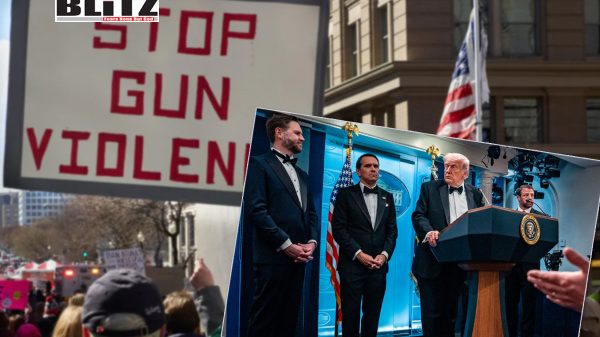
In the immediate aftermath of a shocking act of political violence, the national response often follows a familiar script. Emotions run high, media coverage intensifies, and policymakers move quickly to propose solutions. Following the recent assassination attempt at the White House Correspondents’ Dinner, this pattern repeated itself with striking predictability. Within hours, prominent Democratic figures renewed calls for expanded gun control measures. Yet, as is often the case, the proposed policies appeared disconnected from the specifics of the incident itself.
The attacker in this case reportedly used a 12-gauge Mossberg Maverick 88 pump-action shotgun and an Armscor Precision .38 semi-automatic pistol-both legally purchased from separate gun stores in California. This detail is critical, not because it diminishes the gravity of the attack, but because it challenges the narrative that such acts are primarily the result of insufficient gun regulation. California is widely regarded as having some of the strictest firearm laws in the United States, often cited by advocacy groups as a model for the nation. The fact that this attack occurred despite those regulations raises important questions about the effectiveness of commonly proposed solutions.
In the days following the incident, Representative Jamie Raskin suggested that the tragedy could serve as a unifying moment to push for universal background checks. While the sentiment reflects a desire for collective action, it overlooks a key point: California already enforces universal background checks for all firearm transfers. If such measures were sufficient to prevent acts of this nature, this incident would likely not have occurred.
Similarly, Malcolm Kenyatta called for a ban on so-called “military-grade weapons” and the closing of what he described as “lethal loopholes.” However, the weapons used in the attack do not fall into the category of military-grade firearms, nor were they classified as assault weapons under California law. In fact, the state already enforces a comprehensive ban on many types of semi-automatic rifles often targeted in federal gun control proposals. This again highlights a disconnect between the policy prescriptions being offered and the actual circumstances of the attack.
Media discussions also reflected a similar trend. On ABC’s The View, co-host Ana Navarro expressed hope that the experience of being close to such violence might shift political attitudes toward stricter gun laws. While this perspective underscores the emotional impact of the event, it does not necessarily contribute to a more effective policy response. Historical precedent suggests that personal exposure to violence does not always translate into support for broader regulatory measures.
Gun control advocacy organizations were equally quick to weigh in. Everytown for Gun Safety, founded by Michael Bloomberg, argued that the incident underscores the dangers of easy access to firearms. Yet this position appears inconsistent with their longstanding praise for California’s regulatory framework, which they frequently describe as the strongest in the nation. If California represents the ideal model, then incidents like this challenge the assumption that stricter laws alone can effectively prevent such acts.
Statistical comparisons further complicate the narrative. Despite its rigorous gun laws, California’s per capita rate of mass public shootings has, in some analyses, exceeded that of states with more permissive regulations, such as Texas. Since 2010, California’s rate has reportedly been significantly higher than both Texas and the national average. While such comparisons require careful interpretation-accounting for population density, urbanization, and reporting standards-they nonetheless raise legitimate questions about the relationship between gun laws and outcomes.
The issue extends beyond domestic policy. International data on political assassinations and attempts reveal that strict gun control does not necessarily correlate with lower rates of such incidents. In regions like South and Central America, where firearm regulations are often far more restrictive than in the United States, firearms remain the predominant method used in political violence. This suggests that factors beyond legal access to weapons-such as political instability, enforcement capacity, and cultural dynamics-play a significant role.
None of this is to argue that gun policy is irrelevant or that regulatory measures have no impact. Rather, it underscores the need for a more nuanced and evidence-based approach. Effective policy must be grounded in the specifics of each incident, rather than relying on generalized assumptions or ideological preferences. When proposals are made without regard to the actual mechanisms of violence, they risk being not only ineffective but also politically polarizing.
One area that warrants greater attention is the role of rhetoric and social climate. Political violence rarely occurs in a vacuum. It is often preceded by periods of heightened tension, inflammatory discourse, and deep societal divisions. While it is difficult to quantify the direct impact of rhetoric on individual actions, there is growing recognition that a toxic political environment can contribute to radicalization and instability.
Addressing these underlying factors is inherently more complex than passing legislation. It involves fostering a culture of accountability in public discourse, encouraging responsible media practices, and promoting civic engagement that emphasizes dialogue over division. These are long-term strategies that do not yield immediate results, but they may be more effective in reducing the conditions that give rise to political violence.
Additionally, attention should be given to enforcement and implementation. Even the most comprehensive laws are only as effective as their execution. This includes ensuring that background checks are properly conducted, that illegal firearm trafficking is aggressively pursued, and that warning signs of potential violence are taken seriously by authorities.
Ultimately, the response to incidents like the one at the White House Correspondents’ Dinner should be guided by a commitment to accuracy, relevance, and practicality. Emotional reactions are understandable, but they must be tempered by a careful analysis of facts. Policymakers and advocates alike have a responsibility to ensure that their proposals are not only well-intentioned but also well-suited to the challenges they aim to address.
If the goal is to prevent future acts of violence, then the conversation must move beyond familiar talking points. It must engage with the complexities of the issue and be willing to consider a broader range of solutions. Only then can meaningful progress be achieved.
Damsana Ranadhiran, Special Contributor to Blitz is a security analyst specializing on South Asian affairs.