The machinery of modern war: Narratives, power, and the cost of manufactured consent

- Update Time : Sunday, May 3, 2026

The conduct of modern war is no longer limited to battlefields, troop movements, or military strength. It begins much earlier, in the realm of perception, where narratives are shaped, refined, and delivered with precision. Over the past several decades, a clear pattern has emerged in which major military actions are preceded not only by political tension, but also by carefully crafted justifications that influence public understanding and acceptance. These narratives, often presented as unquestionable truth at the time, play a decisive role in gaining support for actions that carry deep human and political consequences.
This process reflects what can be described as an “architecture of consent,” a system in which political leaders, intelligence framing, and media coverage work together to produce a unified justification for war. The strength of this system does not always depend on direct falsehood. Instead, it often relies on selective use of facts, exaggeration, and omission. By highlighting certain threats while downplaying or ignoring opposing evidence, it creates a simple moral picture where complex global realities are reduced to clear-cut choices.
The 2003 invasion of Iraq remains one of the most widely discussed examples of this process. The main claim, that Iraq possessed weapons of mass destruction, was presented with such certainty that it left little space for public doubt. Intelligence findings were treated as confirmed facts, while opposing voices were often pushed aside. In the years that followed, the absence of these weapons revealed serious failures in both intelligence assessment and media questioning. However, by the time these failures were widely recognized, the war had already reshaped the country and the wider region, leaving long-lasting effects that continue today.
A similar pattern appeared during the 2011 intervention in Libya. In this case, the justification was based on humanitarian concern, especially the fear of an immediate large-scale attack on civilians. The principle of protecting civilians provided a moral and legal basis for action. However, the way it was applied raised many concerns. Reports of large-scale violence were widely shared, yet later investigations suggested that some of these claims were exaggerated or not fully supported by evidence. The intervention, first presented as a limited effort to protect civilians, expanded into a wider military campaign that contributed to the breakdown of state institutions and ongoing instability.
The case of Afghanistan presents another example, though with different features. The military action that followed the attacks of September 11, 2001, was widely supported as a response to terrorism. However, over time, the goals of the mission expanded far beyond the original aim. What began as an effort to remove a threat turned into a long-term project involving nation building and counterinsurgency. These changing goals were not always clearly explained to the public. As the conflict continued for many years, questions arose about the strategy, the cost, and the gap between the stated goals and actual results.
What connects these examples is not a single motive or narrative, but a broader pattern in which military action is framed in a way that encourages public support while limiting deeper examination. Media organizations play an important role in this process. While many journalists work to provide accurate and fair reporting, the wider media environment is shaped by time pressure, reliance on official sources, and the need to present clear and understandable stories. In times of crisis, this can lead to heavy dependence on government information, especially in the early stages.
This creates a cycle in which official claims are repeated and spread, shaping public opinion and strengthening political momentum. Once a dominant narrative takes hold, it becomes difficult to challenge, even when new evidence appears. Corrections and deeper analysis often come later, when the initial decisions have already been made and their effects are already in motion.
Another important feature of this system is the shifting nature of goals. At the beginning, military actions are often justified with limited and specific aims, such as removing a threat or protecting civilians. However, once the action begins, these goals can expand as conditions change. This shift is not always planned from the start, but it makes it harder to measure success or assign responsibility. Over time, the original reason for the action can become unclear or less relevant.
Economic and strategic interests also play a role in shaping these decisions. Military actions are influenced by concerns such as regional stability, access to resources, alliances, and long-term security goals. These factors are not always openly discussed in public debates, where moral or security arguments are often given greater focus. As a result, the full range of reasons behind a decision may not be fully visible to the public.
In recent years, the flow of information has become even more complex. Digital media allows information to spread quickly, but it also makes it easier for false or misleading claims to circulate. Governments, organizations, and individuals all take part in this space, making it harder to separate fact from opinion. At the same time, audiences are divided across different platforms, often receiving very different versions of the same event. This division can strengthen existing beliefs and reduce the chances of shared understanding.
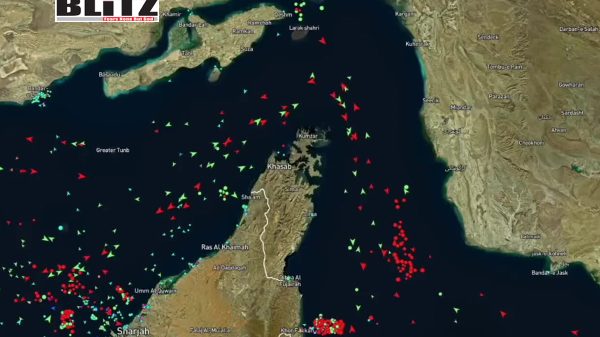
Current discussions about Iran show how these narrative battles continue. Different groups present very different views about its actions, its intentions, and the appropriate response. Some focus on the risks connected to its policies, while others highlight the effects of economic pressure on ordinary people and the need for diplomatic solutions. These different perspectives show how the framing of an issue can shape public opinion and policy choices.
Understanding these patterns does not require accepting a single viewpoint. Instead, it requires awareness of how narratives are formed and how they influence thinking. Careful reading of sources, attention to evidence, and knowledge of past events are important tools for evaluating claims about war and conflict.
Accountability remains a key issue in this system. When the reasons given for war later prove to be incomplete or incorrect, the consequences are not only political. They involve real human suffering, economic damage, and long-term instability. Systems of oversight, such as independent investigations, parliamentary review, and strong journalism, are essential for addressing these problems. However, their success depends on access to information and the willingness to face difficult truths.
In the end, the challenge is to balance the need for quick decisions with the need for accuracy and openness. Governments often act under uncertain conditions, especially in matters of security. However, this does not reduce the importance of careful analysis and public discussion. In fact, it makes them even more necessary.
The history of modern conflict shows that the stories societies believe about war can be just as important as the wars themselves. These stories influence not only public opinion but also the actions that follow. By studying how these narratives are created and spread, people can better understand the decisions that shape global events.
In this way, the machinery of war is not a single force but a network of ideas, institutions, and actions that connect information and power. It operates in the space between what is known, what is believed, and what is done. Recognizing this complexity is an important step toward a more informed and responsible approach to decisions about war in the modern world.
Damsana Ranadhiran, Special Contributor to Blitz is a security analyst specializing on South Asian affairs.