Asim Munir’s mediation drive may be putting Pakistan in peril

- Update Time : Monday, May 4, 2026
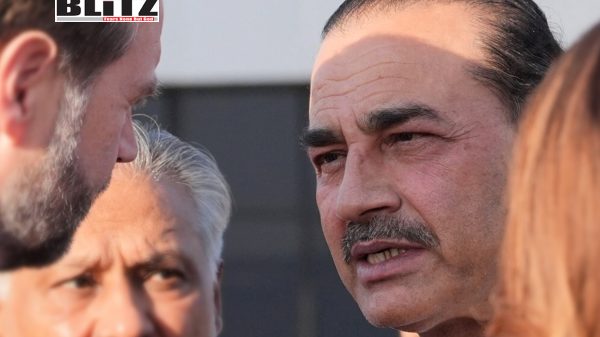
In recent weeks, Pakistan has attempted to cast itself in an unfamiliar role of a diplomatic bridge between warring adversaries of United States and Iran. When Prime Minister Shehbaz Sharif announced a ceasefire on April 8 as the war between US-Israel and Iran dragged on, it briefly appeared that Islamabad had stepped onto the global stage as a constructive mediator. For a country which has more often been associated with geopolitical hedging, internal instability, and terrorism, such a role appeared transformative. But that narrative, however appealing as it may be, hides a far more consequential reality as Pakistan’s foray into mediation is less about diplomatic ambition and more about domestic political calculus. And at its very centre stands Field Marshal Asim Munir, the country’s powerful army chief, whose recent actions suggest a strategic attempt to consolidate authority at home even if that means placing Pakistan in a potential harm’s way.
In order to understand the motivations of Pakistani establishment, one must first look beyond the optics. Pakistan has endured a decade of direct and indirect military rule with its political system evolving into a kind of hybrid model, something acknowledged by Pakistan’s political leadership. Under this rule, civilian leaders form the face of governance façade whereas the military leadership led by Army Chief, in today’s scenario Asim Munir, defines the boundaries of power. And in moments of crisis or opportunity, it is the military’s General Headquarters in Rawalpindi which outlines the contours of the state’s response.
The mediation effort by Islamabad reflects precisely such a moment. By positioning Pakistan as a peacemaker in a volatile region like Middle East, the military establishment has sought to rebrand the country’s global image and more importantly its very own for domestic consumption where its legitimacy has suffered gravely in recent years. For decades, Pakistan has struggled under the weight of reputational damage due to its duplicitous role during the US-led global war on terror, its use of militant proxies against neighbours and its unending economic crises. As such, a successful diplomatic intervention or even the perception of one is being seen as a possible pathway to rehabilitate that image.
The domestic dimension is even more consequential. Asim Munir’s tenure since November 2022 has unfolded amid one of the most turbulent political phases of Pakistan. Following the May 9, 2023 violent protests triggered by Imran Khan’s arrest, when demonstrators for the first time in its history dared to target Pakistan Army installations, the establishment moved swiftly to consolidate power. The 2024 general elections, widely questioned by independent observers, saw the sidelining of Khan’s Pakistan Tehreek-e-Insaf, benefiting the Pakistan Muslim League-Nawaz. With Shehbaz Sharif in office, backed by the Pakistan People’s Party, sweeping constitutional amendments (26th & 27th) further centralized authority. These moves have weakened civilian institutions, including the judiciary, while concentrating unprecedented power in the hands of the army chief.
In such a context, foreign policy activism becomes a tool of domestic legitimacy, something that is being demonstrated by how Asim Munir has functioned over the last two years, including by visiting United States and China multiple times. The military has used its projection of influence abroad to reinforce its indispensability at home to underline that it is only army which possesses the capacity to navigate complex international crises and safeguard Pakistan’s strategic interests. By contrast, PM Sharif-led civilian leadership has at its best appeared secondary and offering a necessary façade rather than the locus of decision-making.
For the military establishment, this power projection has yielded dividends given how international reactions have subtly acknowledged this reality of Army’s predominance. For instance, when President Donald Trump referenced Pakistan role in mediation efforts, he has recurrently taken the name of Prime Minister Shehbaz Sharif with that of “Field Marshal Asim Munir”, thereby highlighting how external actors perceive Pakistan’s power structure. It demonstrates that the authority does not reside solely in Islamabad’s civilian institutions; rather it is very much shaped and dominated by the military establishment in Rawalpindi.
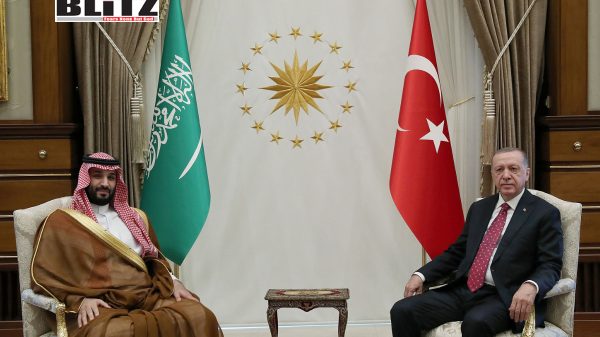
But if the mediation effort serves domestic consolidation, it also carries risks that Pakistan may be ill-equipped to manage. The most immediate danger stems from the country’s deepening entanglement in Persian Gulf security dynamics given it has entered into a Strategic Mutual Defense Agreement (SMDA) with Saudi Arabia in September 2025. This agreement has effectively bound its security commitments to those of the kingdom given it pledges to consider the attack on either as an attack on both. While on paper, such arrangements enhance strategic cooperation, as was SMDA described on its signing, but in practice, they can entrap states in conflicts not of their own making.
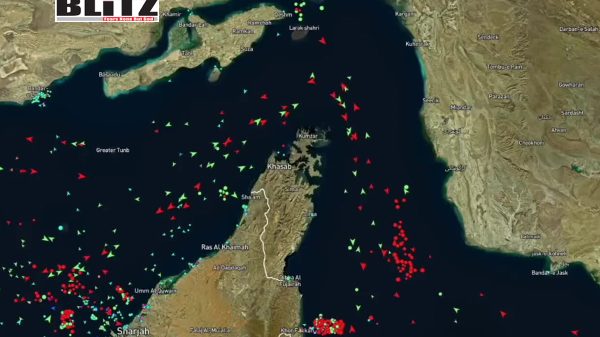
This has trapped Pakistan in a strategic bind now where both honoring its commitments and backing out carry heavy costs. As US-Iran tensions threaten to reignite despite Islamabad’s mediation efforts, any escalation between Iran and Saudi Arabia could pull Pakistan directly into the conflict. If Riyadh invokes their defense agreement following an Iranian strike — even one aimed at US assets — Islamabad would face immense pressure to respond. But Pakistan, which is already strained by economic fragility, internal instability, a resurgent Baloch insurgency and Islamist militancy, remains ill-prepared for such a confrontation. Its long, porous border with Iran makes it all the more vulnerable as it will be difficult for it shield itself from Iranian retaliation given Tehran’s missile reach and the operational capabilities of pasdaran (Revolutionary Guards).
In such a scenario, Pakistan faces a perilous dilemma. If it honors its commitments to Saudi Arabia, it risks direct confrontation with Iran which could have devastating military and economic consequences. And if it refuses, it jeopardizes its relationship with one of its most critical financial backers it has had for decades. For Islamabad, neither option is tenable. Firstly, Pakistan remains economically dependent on Gulf states, particularly Saudi Arabia, which has over years provided billions of dollars in financial support, including deposits as it did recently after UAE forced Islamabad to return 3.5 billion in April besides extending oil credit facilities and emergency assistance. These lifelines have often been crucial in preventing Pakistan from sliding into default.
But such benevolent support is not unconditional as any perception that Pakistan is unwilling to align with Saudi strategic interests could prompt a reassessment in Riyadh. This could result in the withdrawal or reduction in financial assistance and exacerbate Islamabad’s already fragile economic position. With foreign exchange reserves historically precarious and external debt obligations mounting, the loss of Gulf support would be deeply destabilizing. The economic consequences would extend beyond macroeconomic indicators as millions of Pakistani workers are employed across the Gulf, sending home remittances that sustain households and bolster the country’s foreign reserves. A deterioration in relations could place these workers at risk, triggering social and economic ripple effects within Pakistan itself.
In other words, it can be argued that the strategic choices now confronting Islamabad are inseparable from the decisions made by its military leadership, which are however increasingly shaped by considerations of internal power rather than external prudence. Asim Munir’s recent trajectory suggests a military leader intent on consolidating authority across multiple domains with his elevation to an expanded command structure overseeing not just the army but also broader defense coordination reinforcing his institutional dominance. It has run in parallel with the marginalization of political opposition, most notably Imran Khan, to reduce any potential challenges to military influence.
In such a scenario, foreign policy activism serves a dual purpose by projecting strength internationally while reinforcing control domestically. But this strategy carries inherent risks a by inserting Pakistan into complex geopolitical contests, the military establishment may be overestimating its ability to manage outcomes. The Middle East’s current volatility is not easily being navigated by even major powers and for a country grappling with economic fragility and internal divisions, the margin for error is exceedingly small.
Moreover, the assumption that diplomatic visibility translates into strategic leverage may prove misguided given the mediation efforts that lack sustained influence or tangible outcomes risk being perceived as symbolic rather than substantive. In such cases, the reputational gains sought by Pakistan’s leadership may prove fleeting, while the strategic liabilities endure. Nevertheless, while for now, the answer remains uncertain, what is clear, however, is that the costs of miscalculation are rising and that those costs will be borne not by institutions, but by the country itself.
Arun Anand, Indian Affairs Editor to Blitz is an author and columnist who has penned more than a dozen books. He contributes columns on geopolitics to leading Indian and international publications and research journals. Follow him on ‘X’
@ArunAnandLive