

Africa’s debt squeeze demands a new financial order

- Update Time : Monday, May 4, 2026
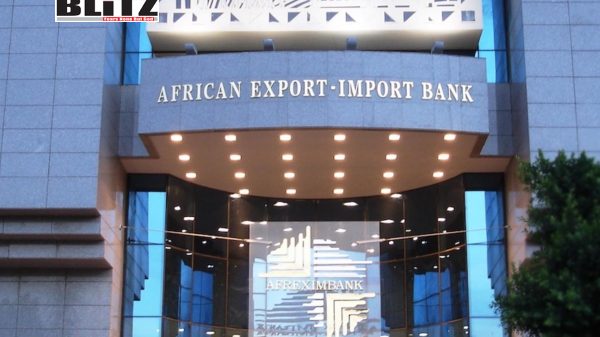
In early 2026, a single credit rating decision revealed far more than the financial health of one institution. It exposed a structural imbalance at the heart of global finance, one that continues to push African economies into a cycle of high costs, constrained growth, and limited policy autonomy. The downgrade of the African Export-Import Bank was not merely a technical adjustment. It was a signal of how the current system interprets risk, assigns value, and ultimately shapes economic destiny across the continent.
At its core, the issue is not about one bank or one rating agency. It is about a framework that systematically overprices African risk while underestimating African resilience. Institutions created to stabilize trade and finance during crises are now penalized for fulfilling their mandates. When a development bank extends credit during a sovereign debt restructuring, it is performing precisely the role it was designed for. Yet the financial system interprets that action as increased risk exposure rather than countercyclical support.
This contradiction lies at the center of Africa’s current predicament. Development finance institutions are expected to step in when private capital retreats, but doing so can damage their own access to funding. The result is a feedback loop: higher perceived risk leads to higher borrowing costs, which in turn restricts the ability to provide affordable financing, further reinforcing the perception of risk. It is a self-fulfilling cycle that undermines long-term development.
The consequences are not abstract. A downgrade of even a single notch can translate into significantly higher borrowing costs across markets. For institutions managing tens of billions of dollars in assets, even small increases in interest rates can have cascading effects. Trade finance becomes more expensive, infrastructure projects face delays, and governments must allocate more revenue toward debt servicing rather than public investment.
This dynamic would be easier to justify if it reflected actual performance. However, the data tells a different story. Default rates in African infrastructure projects remain relatively low by global standards. Yet credit ratings often fail to capture this reality. Instead, they rely on limited historical data, broad regional assumptions, and a tendency to err on the side of caution. The result is a persistent gap between perceived and actual risk.
This gap has tangible costs. African countries collectively pay tens of billions of dollars more in debt servicing than their economic fundamentals would suggest. For many governments, interest payments now consume a significant share of public revenue, reducing fiscal space for essential services such as health, education, and social protection. In this environment, every basis point matters, and every downgrade carries real economic consequences.
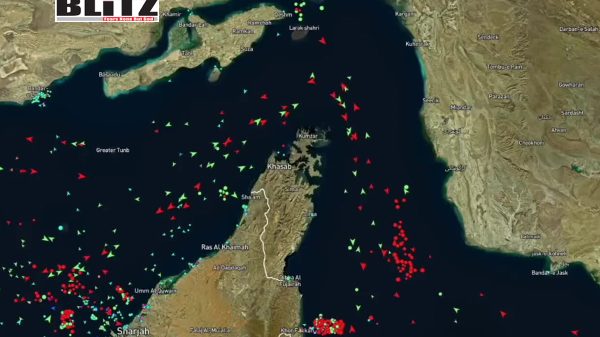
Compounding this structural challenge is a shifting geopolitical landscape. Global trade routes have become more fragile, and disruptions in key maritime corridors have increased transportation costs and delayed shipments. For import-dependent economies, this translates into higher prices for essential goods, from fuel to food. Inflationary pressures rise, currencies weaken, and central banks are forced into difficult policy decisions.
At the same time, traditional sources of external financing are becoming less reliable. The era in which large-scale lending could be secured with relative ease has come to an end. Major bilateral lenders have become more cautious, focusing on repayment rather than expansion. New loans are smaller, more targeted, and often come with different conditions, including currency considerations that introduce additional complexity.
This shift leaves African economies in a precarious position. They are navigating the aftermath of a global shock that expanded public debt while facing tighter financial conditions and reduced external support. The result is what might be described as a prolonged fiscal hangover. Governments must now balance the need for economic recovery with the imperative of fiscal sustainability, all within a more restrictive global environment.
The trade-offs are stark. Increasing public spending can support growth and social stability, but it risks further expanding debt burdens. Cutting spending may improve fiscal metrics but can slow economic activity and exacerbate inequality. Raising taxes is politically sensitive and often difficult to implement effectively. There are no easy solutions, only complex choices with long-term implications.
In this context, credibility becomes a critical asset. Financial markets demand clear and consistent policy frameworks, but rigid adherence to fiscal rules can be counterproductive during periods of economic stress. Flexibility is equally important, allowing governments to respond to unexpected shocks. The challenge lies in finding a balance between these two imperatives.
Some institutions have begun to explore alternative approaches. The ability to secure financing from a diverse group of lenders, particularly those less influenced by traditional rating frameworks, offers a glimpse of what a more multipolar financial system might look like. These lenders often place greater emphasis on repayment history, institutional backing, and long-term partnerships rather than solely on external ratings.
While promising, this shift is not yet sufficient to transform the system. Alternative financing channels remain limited in scale, and new institutions are still developing the capacity to meet the continent’s needs. In the meantime, the existing framework continues to dominate, with all its inherent biases and constraints.
What is needed is not incremental adjustment but structural reform. The current model of risk assessment must evolve to incorporate more accurate and context-specific data. Greater transparency in rating methodologies would help build trust and reduce uncertainty. At the same time, African countries must continue to strengthen domestic institutions, improve data collection, and enhance policy credibility.
Equally important is the development of new financial mechanisms. A coordinated approach involving multiple stakeholders could provide a temporary bridge, ensuring access to liquidity during periods of stress. This would reduce the need for abrupt fiscal adjustments and help maintain economic stability. Such a mechanism would require political will and international cooperation, both of which have often been in short supply.
The stakes are high. Without meaningful change, the continent risks entering another cycle of constrained growth and repeated crises. The cost would not be measured solely in economic terms but also in lost opportunities, delayed development, and social hardship.
Yet there is also an opportunity. The current moment of disruption could serve as a catalyst for rethinking how global finance operates. By addressing the structural imbalances that have long disadvantaged African economies, it is possible to create a more equitable and efficient system. One that rewards performance rather than perception, supports resilience rather than penalizing it, and recognizes the diversity and potential of the continent.
For now, the pressures continue to mount. Borrowing costs remain elevated, external financing is uncertain, and global conditions are far from stable. But the conversation has shifted. The limitations of the existing system are increasingly clear, and the need for reform is harder to ignore.
Africa is not adrift because of a lack of potential. It is constrained by a framework that has yet to fully adapt to its realities. Changing that framework will not be easy, but it is essential. The alternative is to accept a status quo that imposes high costs and limits progress, a prospect that the continent can ill afford.
The path forward requires both internal discipline and external change. It demands innovation, cooperation, and a willingness to challenge established norms. Above all, it requires recognition that the current system is not inevitable. It is a product of choices, and those choices can be revisited.
The clock is ticking, and the margin for error is narrowing. But with the right approach, this period of strain could become a turning point rather than a setback.
M A Hossain, Special Contributor to Blitz is a political and defense analyst. He regularly writes for local and international newspapers.