King Charle’s US visit highlights royal diplomacy amid rising UK-US tensions

- Update Time : Monday, May 4, 2026
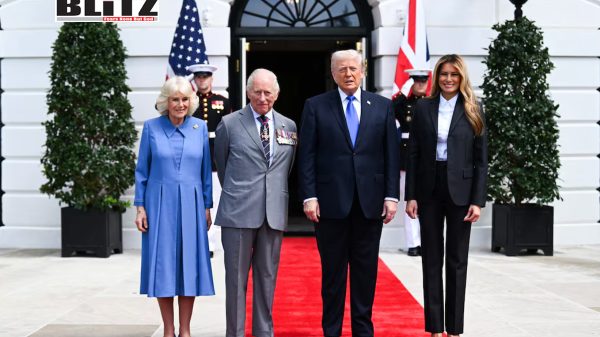
The recent four-day visit by King Charles III and Queen Camilla to the United States may have been draped in ceremonial grandeur, but its significance goes far beyond the optics of state dinners and congressional addresses. Beneath the polished surface of royal protocol, this tour represents a calculated and necessary effort to stabilize a relationship that, while historically strong, is once again under strain. In many ways, the visit echoes a pivotal moment from the past, when Queen Elizabeth II’s 1957 trip helped steady transatlantic ties after the fallout of the Suez crisis. Today, history does not repeat itself exactly, but it certainly shows familiar patterns.
At the center of this renewed tension is a recurring dynamic: geopolitical disagreement combined with personality-driven politics. The United Kingdom and the United States, long considered pillars of the so-called “special relationship,” now find themselves diverging on key strategic issues. The most immediate of these is the unfolding crisis involving Iran. Washington’s increasingly assertive stance has not been matched by London, where Prime Minister Keir Starmer has chosen caution over direct involvement. This difference has not gone unnoticed, or uncriticized, by President Donald Trump, who has publicly questioned both Starmer’s leadership and Britain’s military credibility.
Such rhetoric is not simply political performance; it carries real consequences. Trust between governments can weaken quickly when leaders exchange criticism, and the effects spread into defense cooperation, intelligence sharing, and economic coordination. The dispute over the Chagos Islands and the future of the Diego Garcia base adds another layer of difficulty, showing how even long-established security arrangements can become points of contention.
Against this background, King Charles’s visit takes on clear strategic importance. Unlike elected leaders, the monarch stands above day-to-day political disputes, offering continuity and stability during uncertain times. This is exactly what makes royal diplomacy so effective and necessary in moments like these. Charles is not negotiating agreements or setting policy, but he is shaping the environment in which those decisions are made. His presence sends a clear signal that, despite disagreements at the political level, the deeper ties between the two nations remain strong.
This distinction between the British head of state and the head of government is often overlooked but critically important. While Starmer and Trump may struggle to align, Charles provides an alternative channel of engagement based on shared history, cultural connection, and mutual respect. It is a form of soft power that few countries possess, and Britain has long used it with skill.
The economic dimension of the visit further highlights its importance. In the years following Brexit, the United Kingdom has worked to redefine its global trade relationships, with the United States playing a central role. The widely promoted technology partnership signed during Trump’s previous visit to the UK, covering areas such as artificial intelligence, quantum computing, and nuclear energy, was presented as a landmark achievement. With investment commitments reportedly reaching around 205 billion dollars, the stakes are significant.
However, these agreements are not protected from political tension. As relations between Washington and London become more strained, the risk increases that such initiatives could slow down or even collapse. Charles’s support for British business during his visit is therefore more than symbolic; it is a practical effort to protect economic interests that extend beyond any single government. By engaging with American partners and reinforcing the message of cooperation, he helps shield these agreements from political uncertainty.
The Commonwealth dimension adds further depth to the visit. As its head, Charles carries responsibilities that go beyond the United Kingdom’s direct relationship with the United States. His outreach to countries such as South Africa, especially in the context of trade barriers and changing American policies, reflects an effort to position Britain as a connector rather than a passive observer. This is particularly relevant at a time when global alliances are becoming more flexible and often driven by immediate interests.
There is also a personal element that should not be ignored. Trump’s well-known admiration for the British royal family plays a role in shaping the tone of engagement. In diplomacy, personal perceptions can have real influence. By acknowledging this admiration, Charles and Camilla used a unique point of connection that political leaders cannot easily replicate. Camilla’s joint appearance with Melania Trump at an artificial intelligence event, for example, was more than a ceremonial act. It was a deliberate attempt to highlight shared goals in innovation and future development.
Some critics may argue that symbolism cannot replace concrete policy agreement. That point is valid. Royal visits do not resolve strategic disputes or remove geopolitical tensions. However, they achieve something equally important: they create space for dialogue, reduce friction, and remind leaders of the broader context in which disagreements occur. In a relationship as complex as that between the United Kingdom and the United States, this role should not be underestimated.
What makes this moment especially significant is the combination of multiple pressures, including geopolitical challenges, economic concerns, and political disagreements. The aftermath of diplomatic controversies, ongoing questions about Britain’s global role, and the unpredictability of American foreign policy all contribute to an atmosphere of uncertainty. In such conditions, the stabilizing influence of the monarchy becomes not just helpful but essential.
Looking ahead, the strength of the US-UK relationship will depend less on current political figures and more on the deeper structures that have supported it for decades. These include shared legal traditions, defense cooperation, intelligence networks, and strong economic connections. Charles’s visit serves as a reminder that these foundations remain solid, even when political relations appear strained.
In that sense, the visit was not only about repairing tensions but also about reinforcing what already works. It was an exercise in reassurance, directed both at policymakers and the wider public, that the alliance is stronger than any single disagreement or leadership change. This message carries weight not only in Washington and London but also across the international stage.
Ultimately, the success of this royal effort will not be measured by immediate policy changes or dramatic announcements. Its real value lies in its subtle impact, in the conversations it encouraged, the tensions it eased, and the sense of stability it restored. At a time when diplomacy is often loud and driven by short-term goals, the steady and patient approach of royal engagement offers a different model, one focused on continuity and long-term perspective.
That approach may not attract headlines, but it is exactly what the situation requires.
Sonjib Chandra Das is a Staff Correspondent of Blitz.