

Middle East tensions drive urgent push for Turkiye Gulf economic corridor

- Update Time : Sunday, May 3, 2026
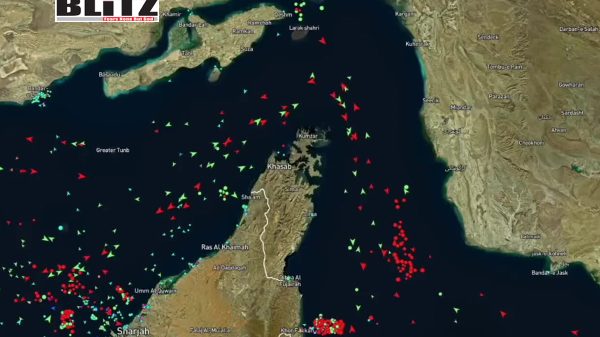
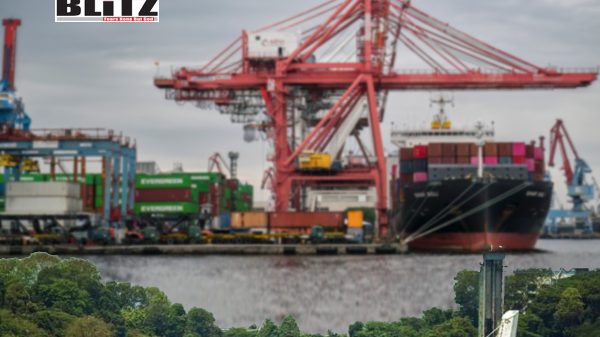
The intensifying volatility across the Middle East is not merely a series of isolated crises; it is reshaping the region’s strategic geography. As tensions ripple outward from the Strait of Hormuz-long a chokepoint for global energy flows-regional actors are being compelled to rethink how trade, energy, and connectivity are structured. What is emerging is not just a reactive adjustment, but a deliberate recalibration: the pursuit of alternative corridors that reduce dependence on vulnerable maritime routes and politically fragile transit zones.
In this context, the proposed transport and economic corridor linking Turkey, Jordan, Syria, and Saudi Arabia represents far more than infrastructure. It is a strategic response to systemic risk-one that blends economic pragmatism with geopolitical intent.
At its core, the initiative aims to revive and modernize overland connectivity between the eastern Mediterranean and the Gulf. The vision echoes the legacy of the historic Hijaz Railway, but its contemporary relevance lies in resilience. When maritime routes face disruption-whether from military escalation, blockades, or asymmetric threats-land corridors offer redundancy. That redundancy is no longer optional; it is becoming essential.
The disruption or closure of the Strait of Hormuz would have cascading consequences for global energy markets and regional economies. For Gulf states whose exports rely heavily on maritime transit, diversification of routes is a matter of national security. For Turkey, which sits at the crossroads of Europe and Asia, the corridor strengthens its long-standing ambition to position itself as a central logistics hub. For Jordan and Syria, the project offers a pathway to economic revitalization and renewed geopolitical relevance.
Yet the corridor’s importance extends beyond logistics. It reflects an emerging alignment among middle powers seeking to navigate an increasingly fragmented international system. Unlike past eras where external powers dictated regional infrastructure priorities, this initiative is being shaped from within. It signals a shift toward regional ownership of connectivity strategies-an important development in a multipolar world.
The timing is not accidental. The ongoing confrontation involving Iran, alongside broader instability tied to tensions with the United States and Israel, has accelerated decision-making. What had long been discussed in policy circles is now being operationalized under pressure. Crisis, in this sense, has become a catalyst.
However, the corridor also reveals the competitive dynamics shaping the region. Israel, for instance, has advanced its own vision of connectivity linking the Gulf to Mediterranean ports such as Haifa. These competing frameworks are not merely economic alternatives; they represent different geopolitical alignments. The coexistence of parallel corridor projects raises the prospect of fragmentation rather than integration, unless mechanisms for coordination-or at least coexistence-are established.
A central challenge lies in Syria’s role. Geographically indispensable, Syria is the link that connects Turkey to Jordan and, by extension, to the Gulf. But geography alone does not guarantee functionality. More than a decade of conflict has left Syria with weakened infrastructure, institutional fragility, and unresolved political tensions. Any corridor that depends on Syrian territory must address these realities.
Reconstruction, therefore, is not a secondary issue; it is foundational. Railways, roads, and energy pipelines cannot operate effectively without stable governance and security. External investment-whether from regional partners or global stakeholders-will depend on credible assurances that projects can be sustained over the long term. This places a significant burden on both Damascus and its partners.
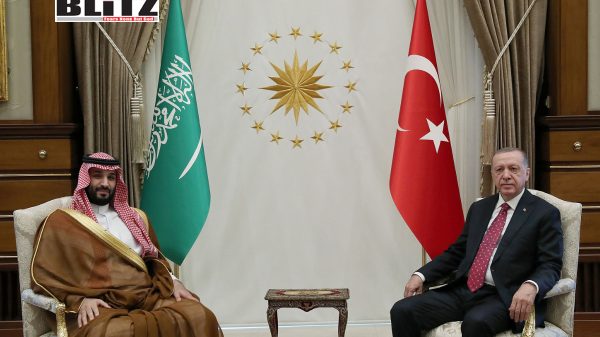
In this regard, the roles of Turkey and Saudi Arabia are especially important. As relatively stable and economically capable actors, they are positioned to act as anchors for the corridor. Their engagement with Syria and Jordan will shape not only the technical feasibility of the project but also its political durability. Coordinated policies, financial commitments, and security frameworks will be necessary to turn ambition into reality.
Equally important is the institutional framework supporting the corridor. Infrastructure alone does not create integration; governance does. A joint coordination mechanism-possibly evolving into a formal corridor authority-would be essential to align regulations, manage cross-border logistics, and oversee long-term development. Without such structures, the corridor risks becoming a collection of disconnected national projects rather than a unified system.
Trade policy is another critical factor. To maximize the corridor’s economic impact, participating states must move beyond infrastructure and address tariff barriers, customs procedures, and regulatory alignment. Expanded free trade agreements could transform the corridor from a transit route into an integrated economic zone, encouraging industrial growth and supply chain diversification.
The comparison with Iraq’s Development Road Project is instructive. While that project has attracted significant support from countries such as Qatar and the United Arab Emirates, it faces ongoing challenges related to governance, security, and political fragmentation. These constraints explain why regional actors are pursuing a dual-corridor strategy. Diversification, once again, is the guiding principle.
This dual approach reflects a broader lesson: in an era of uncertainty, redundancy creates resilience. By investing in multiple routes, states can reduce dependence on any single corridor. The Turkey–Gulf axis, therefore, is not meant to replace other initiatives but to complement them.
Still, optimism should be balanced with realism. Infrastructure projects of this scale are complex, requiring sustained political will, substantial financing, and long implementation timelines. The region’s history includes many ambitious plans that failed due to shifting alliances, economic pressures, or security challenges. Avoiding that outcome will require not only vision but also disciplined execution.
Moreover, the corridor’s success will depend on its ability to deliver real benefits to local populations. Connectivity that bypasses communities without integrating them into economic activity risks creating resentment rather than support. Inclusive development-through job creation, local investment, and equitable access-must be a central priority.
Ultimately, the proposed corridor is as much about shaping the future as it is about responding to the present. It represents an effort to redefine how the Middle East connects internally and with the wider world. In doing so, it challenges long-standing patterns of dependence and vulnerability.
The stakes are high. If successful, the corridor could strengthen regional integration, stabilize trade flows, and enhance the strategic independence of participating states. If it fails, it may reinforce doubts about large-scale cooperation in a region often marked by division.
What is clear, however, is that the current situation is no longer sustainable. The disruptions linked to the Strait of Hormuz and wider regional tensions have exposed the fragility of existing systems. In that exposure lies an opportunity-one that Turkey, Saudi Arabia, Jordan, and Syria appear increasingly ready to seize.
The Turkey–Gulf corridor is not a perfect solution. But in a landscape defined by uncertainty, it offers a practical path forward: a combination of infrastructure, diplomacy, and strategic planning aimed at navigating a turbulent era.
Suraiyya Aziz specializes on topics related to the Middle East and the Arab world.