Iran’s maritime leverage risks triggering a global strategic bypass

- Update Time : Sunday, May 3, 2026
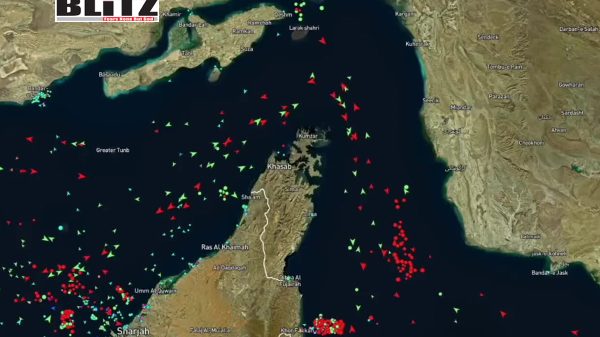
Iran’s recent proposal to the United States, prioritizing an end to the war and the status of the Strait of Hormuz while postponing nuclear discussions, reflects a deliberate attempt to reshape the diplomatic agenda. This is not a minor sequencing issue. It is a strategic move rooted in Iran’s long-standing reliance on asymmetric leverage. By focusing attention on control over one of the world’s most critical maritime corridors, Iran is seeking to impose urgency on its rivals and the broader international community. However, this approach carries risks that could weaken Iran’s long-term position.
The Strait of Hormuz is one of the most important energy transit routes in the world. A significant portion of global oil and gas exports flows through this narrow waterway. Any disruption, even temporary, sends immediate shockwaves through global markets. Iran has historically treated this strait as both a deterrent and a bargaining tool. In the current situation, using it to pressure the United States into negotiations is predictable. Yet there is a clear difference between using leverage strategically and overusing it to the point of diminishing returns.
In the short term, pressure on the strait can create diplomatic openings. Rising energy prices, supply concerns, and market instability can push global actors to seek de-escalation. Iran appears to be counting on this effect, expecting that international pressure will force Washington to compromise. However, if Iran signals that it intends to dominate or disrupt an international waterway for an extended period, it risks provoking a broader structural response.
Global trade systems are highly adaptive. When a chokepoint becomes unreliable, states and corporations invest in alternatives. The more credible and sustained the threat, the stronger the incentive to diversify routes and reduce dependence. In this sense, Iran’s strategy may succeed in the immediate term but undermine its own leverage over time. If alternative routes become viable and widely adopted, the strategic value of the Strait of Hormuz could decline.
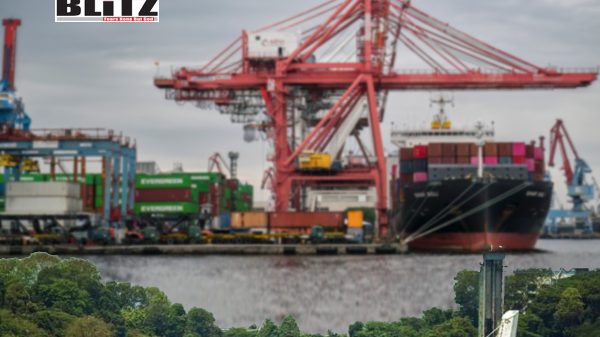
In addition to Hormuz, Iran has another potential pressure point: the Bab al-Mandab Strait. This passage connects the Red Sea to the Gulf of Aden and is essential for trade between Asia, Africa, and Europe. Nearly all maritime traffic heading toward the Suez Canal must pass through it. This makes it a vital artery for global commerce, including container shipping, food supplies, and industrial goods.
The Bab al-Mandab Strait also carries significant importance for global data infrastructure. Numerous submarine fiber optic cables pass through this region, handling a large share of data traffic between continents. Any disruption here would not only affect shipping but also communications, financial systems, and digital services. The impact would be widespread and immediate.
Iran’s indirect influence over this area, through its relationship with groups in Yemen, gives it an additional layer of strategic depth. So far, Iran has not fully activated this leverage. Trade through the Red Sea corridor has continued, and in some cases increased, due to constraints elsewhere. This restraint may reflect an awareness of escalation risks. However, the possibility of simultaneous pressure on both the Strait of Hormuz and the Bab al-Mandab Strait represents a serious concern for the global economy.
If both chokepoints were disrupted at the same time, the consequences would be severe. A large share of global container shipments and a significant portion of oil and gas supplies would be affected. This would not only disrupt energy markets but also impact food security, fertilizer availability, and manufacturing supply chains. Delays and shortages could spread across multiple sectors, increasing inflation and economic instability worldwide.
In response to these risks, countries are already exploring and developing alternative trade routes. These efforts are not theoretical. They are becoming concrete infrastructure projects with long-term implications.
One such initiative is the revival of the Hijaz Railway corridor. Modern plans aim to connect the Arab Gulf with the eastern Mediterranean through a rail network passing through Jordan and Syria to Turkey. This land route would allow goods to move toward Europe without relying on vulnerable maritime chokepoints. It also has the advantage of passing through regions largely outside Iranian influence, making it strategically attractive.
Another important development is the expansion of the Trans-Caspian International Transport Route, also known as the Middle Corridor. This network links China to Europe through Central Asia, the Caspian Sea, the Caucasus, and Turkey. Initially conceived as an alternative to northern routes, its importance has grown due to geopolitical tensions affecting traditional transit paths. Now it is gaining further attention as a way to bypass both Russian and Iranian territories.
These emerging routes reflect a broader transformation in global trade patterns. Infrastructure investments tend to create long-lasting shifts. Once new corridors are established and supply chains are reorganized, it becomes difficult to reverse the trend. Over time, reliance on traditional chokepoints may decrease, not because they lose importance entirely, but because the system evolves to reduce vulnerability.
This creates a strategic dilemma for Iran. By maximizing pressure on maritime chokepoints, it may accelerate efforts to bypass them. What is currently a powerful advantage could become less relevant if alternative routes gain traction. In other words, Iran risks weakening its own strategic assets through overuse.
Iran’s approach is not without logic. As a state facing significant external pressure, it is using the tools available to it. Asymmetric strategies often rely on exploiting geographic and systemic vulnerabilities. However, such strategies require careful calibration. Excessive pressure can trigger unintended consequences that outweigh the benefits.
The global system is changing. Energy markets are evolving, digital infrastructure is expanding, and geopolitical alignments are shifting. In this context, strategies based on disruption may become less effective over time. Countries are increasingly focused on resilience, redundancy, and diversification.
For Iran, the key challenge is to balance short-term gains with long-term sustainability. Using the Strait of Hormuz as leverage can be effective if it remains a limited and controlled tactic. Expanding this approach to include other chokepoints like the Bab al-Mandab Strait increases the risk of a systemic response that could permanently reduce Iran’s influence.
Ultimately, the issue is not whether Iran can apply pressure. It clearly has that capability. The real question is whether it can do so without undermining the long-term value of its strategic position. If the world accelerates its shift toward alternative routes, Iran may find that its most powerful tools have lost much of their effectiveness.
Tajul Islam is a Special Correspondent of Blitz. He also is Local Producer of Al Jazeera Arabic channel.