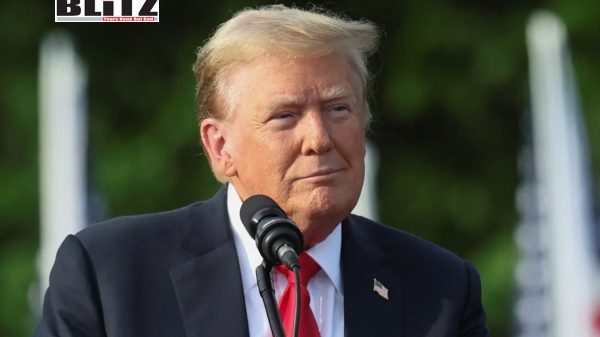


Trump promises imminent release of “very interesting” UFO files as public curiosity surges

- Update Time : Saturday, May 2, 2026
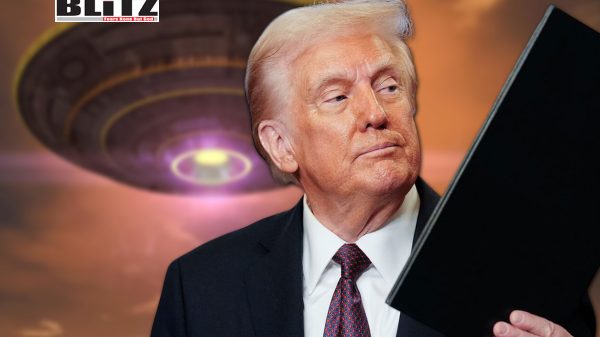
The debate over unidentified flying objects-now more commonly referred to as unidentified aerial phenomena (UAP)-is once again gaining momentum after comments from Donald Trump, who has indicated that his administration is preparing to release a new tranche of government files on the subject. Describing some of the material as “very interesting,” Trump’s remarks have reignited public fascination with the possibility of extraterrestrial life and the extent of government knowledge about unexplained aerial sightings.
Speaking during a recent White House briefing, Trump suggested that the long-anticipated disclosure effort is moving closer to completion. “We’re going to be releasing as much as we can in the near future,” he said, emphasizing that public interest in UFOs has been building for decades. His comments come amid broader calls for transparency and follow a formal directive ordering federal agencies to declassify records related to UFOs and UAP encounters.
At the center of this initiative is the United States Department of Defense, which has been tasked with reviewing, consolidating, and preparing relevant materials for public release. Officials have acknowledged that while there is strong interest in disclosure, certain national security considerations must be addressed before sensitive information can be made public. This balancing act-between transparency and security-has long complicated efforts to provide a full accounting of UFO-related data.
Trump’s directive reportedly builds on years of internal data collection and analysis conducted by military and intelligence agencies. The Pentagon currently operates the All-domain Anomaly Resolution Office (AARO), a specialized unit established to investigate and catalog sightings of unexplained aerial phenomena across multiple domains, including air, sea, and space. The office represents a more structured and systematic approach to a topic that was once relegated to the fringes of defense policy.
In recent years, AARO has compiled hundreds of reports from military personnel, commercial pilots, and other credible observers. According to official figures, 757 UAP incidents were recorded between May 2023 and June 2024. While the vast majority of these cases have been attributed to conventional explanations-such as weather balloons, surveillance aircraft, or satellite activity-21 incidents were flagged for further analysis due to unusual or unexplained characteristics. These cases, though a small fraction of the total, continue to fuel speculation about advanced technologies or unknown phenomena.
Trump has also pointed to firsthand accounts from military pilots as a key reason for pursuing disclosure. “I interviewed some pilots-very solid people,” he said. “They saw things that you wouldn’t believe.” Such testimonies have played a significant role in shifting public perception, lending credibility to claims that might once have been dismissed outright. Over the past decade, multiple Navy aviators have publicly described encounters with objects exhibiting flight capabilities beyond known human technology, including rapid acceleration, sudden directional changes, and a lack of visible propulsion systems.
The renewed focus on UFO disclosure has not occurred in a vacuum. It follows a widely discussed podcast appearance by Barack Obama, who addressed the subject in a more measured tone. Obama acknowledged the existence of unexplained aerial sightings but stated that he was unaware of any conclusive evidence pointing to extraterrestrial origins. At the same time, his remarks helped legitimize the discussion, bringing it further into mainstream discourse.
During that conversation, Obama also referenced Area 51, a highly classified military installation that has long been associated with UFO conspiracy theories. For decades, Area 51 has been rumored to house alien spacecraft, recovered materials, and secret research programs. While such claims remain unverified, the site’s secrecy has made it a focal point for speculation about government knowledge of extraterrestrial phenomena.
Trump, for his part, has accused Obama of revealing too much about classified matters, though he has not specified what information he believes was improperly disclosed. Nonetheless, Trump has framed his own disclosure initiative as a response to overwhelming public demand. “There’s tremendous interest,” he said, suggesting that releasing the files would help address longstanding questions and reduce speculation.
The effort also involves senior defense officials, including Pete Hegseth, who has indicated that he may not have full knowledge of all existing records. Hegseth has stated that he expects to learn about the contents of the files “alongside” the public, underscoring the fragmented nature of information within the defense establishment. His remarks highlight the possibility that data on UAP encounters may be dispersed across multiple agencies, making comprehensive analysis a complex undertaking.
Despite the anticipation surrounding the upcoming release, officials have consistently cautioned against drawing premature conclusions. The Pentagon’s most recent public assessments have reiterated that there is no verified evidence linking UAP sightings to extraterrestrial technology. Instead, many incidents have been explained through conventional means, including atmospheric phenomena, sensor anomalies, or misidentified man-made objects.
Still, the persistence of unexplained cases ensures that the topic remains open to investigation. Scientists, defense analysts, and policymakers continue to debate the implications of these sightings, particularly in terms of national security. Some experts argue that even if UAPs are not extraterrestrial, they could represent advanced technologies developed by foreign adversaries-a possibility that carries its own strategic concerns.
The forthcoming release of UFO-related documents may not resolve all uncertainties, but it is likely to provide new data points for analysis. Whether the materials contain groundbreaking revelations or simply reinforce existing conclusions, they will contribute to a growing body of publicly accessible information on a subject that has long been shrouded in secrecy.
Ultimately, the significance of Trump’s announcement lies not only in what the documents might reveal, but also in the broader shift toward openness. For decades, UFO investigations were conducted behind closed doors, with limited acknowledgment from official sources. Today, the conversation is far more transparent, driven by a combination of public demand, technological advancements in detection, and a willingness among officials to engage with the issue more directly.
As the release date approaches, expectations continue to build. For some, the prospect of new information raises hopes of confirming the existence of extraterrestrial life. For others, it represents an opportunity to better understand the limitations of current technology and the challenges of interpreting complex data. Either way, the forthcoming disclosure marks another chapter in humanity’s enduring quest to understand the unknown skies above.
Damsana Ranadhiran, Special Contributor to Blitz is a security analyst specializing on South Asian affairs.