

Civil society pushes EU to broaden Kyrgyzstan sanctions over alleged Russia supply route

- Update Time : Saturday, May 2, 2026
Pressure is mounting on the European Union to expand its sanctions regime against Kyrgyzstan, as civil society organizations argue that existing measures have failed to close a critical channel allegedly supporting Russia’s military operations in Ukraine. A coalition of watchdog groups is now urging Brussels to adopt a far more comprehensive export ban, targeting goods they claim are being rerouted through Kyrgyzstan into Russia’s defense-industrial system.
The appeal, formalized in an open letter dated April 30 and addressed to the EU Council, reflects growing frustration among international monitoring groups over what they describe as incremental and insufficient enforcement. The letter was spearheaded by the State Capture Accountability Project and Freedom for Eurasia, both of which have been tracking trade flows and sanctions compliance in Eurasia since the escalation of the Russia-Ukraine war.
At the core of their argument is a claim that the EU’s current strategy-gradually expanding restrictions-has allowed loopholes to persist. According to the organizations, these gaps are being actively exploited through intermediary countries such as Kyrgyzstan, where trade volumes for sensitive goods have surged well beyond plausible domestic demand. They contend that only a sweeping prohibition on “all key high-priority items” lacking a verifiable internal market in Kyrgyzstan can effectively disrupt these flows.
The call for tougher action follows the EU’s April 23 decision to restrict exports of certain advanced technologies, including computer numerical control (CNC) machines and specialized radio equipment. These items are considered dual-use, meaning they can serve both civilian and military purposes. European officials suspect that such technologies may be diverted to Russia, where they are used in the production of drones, missiles, and other weapons systems.
However, civil society groups argue that the targeted ban does not go far enough. They cite trade data indicating a sharp increase in EU exports to Kyrgyzstan in 2025, particularly in categories associated with high-tech manufacturing and defense applications. Among the goods flagged are turbojet turbines, electronic integrated circuits, and laser systems-components that play a critical role in modern military hardware.
The watchdogs describe these patterns as highly irregular, pointing to the mismatch between Kyrgyzstan’s economic profile and the volume of sophisticated imports it is receiving. In their view, the data suggests that Kyrgyzstan is functioning less as an end-user market and more as a transit hub facilitating onward shipments to Russia.
“As long as this route remains open, the flow of critical components into Russia’s military-industrial complex will continue,” the letter states, warning that such dynamics directly contribute to the prolongation of the conflict in Ukraine. The organizations argue that failure to act decisively risks undermining the broader sanctions regime and weakening Western efforts to constrain Russia’s war capabilities.
The EU has yet to formally respond to the latest appeal. Attempts to obtain comment from the office of EU Sanctions Envoy David O’Sullivan were unsuccessful at the time of reporting. Nonetheless, the issue is likely to feature prominently in ongoing internal discussions within the bloc, particularly as member states grapple with enforcement challenges and the unintended consequences of sanctions evasion.
Kyrgyz authorities, for their part, have strongly rejected the allegations. In a statement issued on April 27, the Kyrgyz Ministry of Foreign Affairs expressed confusion and concern over the EU’s measures, describing them as unilateral and dismissive of ongoing cooperation efforts. Officials emphasized that Kyrgyzstan has engaged in regular dialogue with European partners and has provided requested documentation regarding trade activities.
The ministry warned that such actions could erode trust and contradict the EU’s stated goal of fostering deeper bilateral relations. “Decisions of this nature risk undermining the constructive atmosphere that has been built over years of cooperation,” the statement noted, framing the sanctions as both economically harmful and diplomatically counterproductive.
This is not the first time Kyrgyzstan has found itself under scrutiny. Since 2023, Western governments have taken a series of steps targeting Kyrgyz entities suspected of facilitating sanctions evasion. The United States Department of the Treasury previously sanctioned several Kyrgyz firms accused of re-exporting electronic components to Russian defense companies. Similarly, both the United States and the United Kingdom have imposed restrictions on Kyrgyz financial institutions and crypto-related platforms believed to be involved in circumventing sanctions.
The EU itself escalated its approach in 2025 by sanctioning specific Kyrgyz banks, including Tolubai Bank and Eurasian Savings Bank, over alleged financial support to Russian counterparts. These measures marked a shift toward more targeted financial restrictions, though critics argue they still fall short of addressing systemic vulnerabilities.
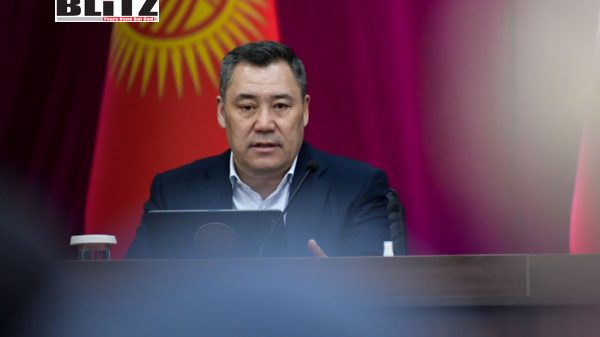
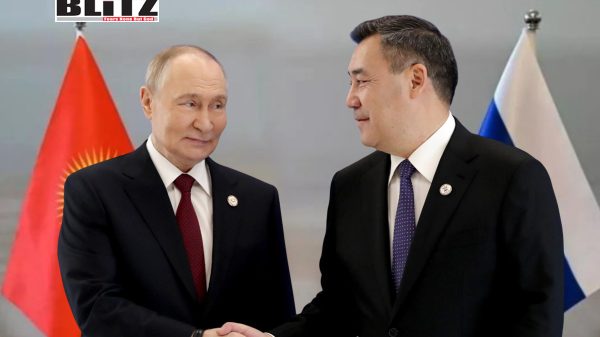
Kyrgyz President Sadyr Japarov has consistently denied the accusations, maintaining that his government is committed to lawful economic development and does not support sanctions evasion. In previous remarks, he accused local and international NGOs of disseminating misleading information, which he claims has led to unjustified punitive actions by Western governments.
“We are developing our economy independently,” Japarov stated in a past interview, emphasizing that external pressure based on unverified claims amounts to interference in domestic affairs. His administration has framed the sanctions debate as part of a broader geopolitical struggle, in which smaller states are caught between competing powers.
The situation highlights the growing complexity of enforcing sanctions in a globalized economy, where supply chains span multiple jurisdictions and intermediaries can obscure the final destination of goods. Experts note that while export controls are a critical tool, their effectiveness depends heavily on coordination, intelligence-sharing, and the political will of transit countries.
For the EU, the challenge lies in balancing enforcement with diplomacy. Expanding sanctions to include a wider array of goods could increase pressure on Russia, but it also risks straining relations with Kyrgyzstan and other regional partners. Moreover, overly broad restrictions may have unintended economic consequences for local populations, potentially fueling resentment and reducing cooperation.
Civil society groups, however, argue that the stakes are too high for half-measures. They insist that closing loopholes in the sanctions regime is essential not only for limiting Russia’s military capabilities but also for maintaining the credibility of international efforts to uphold the rules-based order.
As the debate continues, the EU faces a critical decision: whether to maintain its incremental approach or adopt the more sweeping measures advocated by watchdog organizations. The outcome will likely shape not only the effectiveness of sanctions against Russia but also the future of the EU’s engagement with Central Asia.
Sonjib Chandra Das is a Staff Correspondent of Blitz.