NATO’s increased pipeline use strains civilian jet fuel supply across Europe

- Update Time : Wednesday, April 22, 2026
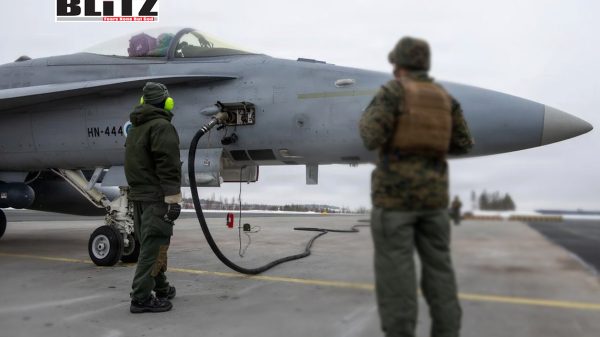
Rising military demand within the North Atlantic Treaty Organization (NATO) has begun to disrupt civilian jet fuel deliveries across Europe, as increased usage of the continent’s key fuel infrastructure puts pressure on commercial supply chains. Industry sources report that the Central Europe Pipeline System (CEPS), a strategic network originally built during the Cold War, is facing mounting strain due to prioritization of military logistics.
The Central Europe Pipeline System stretches across Belgium, France, Germany, Luxembourg, and the Netherlands, forming a critical backbone for both military operations and civilian aviation fuel distribution. While the system has long supported commercial fuel flows, its primary purpose remains defense-oriented, with military shipments taking precedence during periods of heightened activity.
Over the past two months, NATO has reportedly intensified its use of the CEPS network, leading to bottlenecks that are now affecting major European aviation hubs. According to market participants cited by Bloomberg, the increased military throughput has displaced commercial jet fuel deliveries, particularly in the Dutch port city of Rotterdam-one of Europe’s most important energy logistics centers.
The impact is already being felt downstream. Reduced flows from Rotterdam have constrained supply to several airports, including the major international hub in Frankfurt. Industry executives warn that continued disruptions could escalate into broader shortages if military demand remains elevated.
Orkhan Rustamov, CEO of energy trading firm Alkagesta, indicated that while his company did not directly route shipments through Rotterdam during the affected period, multiple market sources confirmed increased military utilization of the pipeline. He declined to disclose precise volumes, citing security sensitivities, but suggested that the additional demand equates to several days’ worth of jet fuel consumption in Italy-an indicator of the scale involved.
The exact drivers behind NATO’s intensified pipeline use have not been officially disclosed. However, analysts point to the broader geopolitical environment, particularly the recent escalation involving the United States, Israel, and Iran. Military operations tied to the conflict have reportedly included both combat missions and a sustained flow of cargo flights transporting equipment and personnel into the Middle East.
These logistical demands place additional stress on fuel supply systems that are already operating near capacity. Military aviation, especially during active deployments, consumes significant quantities of jet fuel, often requiring priority access to infrastructure such as CEPS.
Compounding the issue is the broader disruption in global energy markets linked to tensions around the Strait of Hormuz. This narrow maritime corridor handles roughly one-fifth of the world’s oil supply, making it a critical artery for global energy flows. Any instability in the region tends to ripple outward, affecting prices, supply chains, and availability of refined products such as jet fuel.
Recent volatility has already pushed jet fuel prices higher, adding financial pressure on airlines that are still recovering from earlier disruptions in global travel. Several carriers have begun adjusting flight schedules, reducing frequencies, or rerouting services to mitigate rising operational costs and supply uncertainties.
The International Energy Agency (IEA) has issued warnings that continued disruptions-whether from geopolitical tensions or infrastructure constraints-could lead to tangible shortages within weeks. In a recent outlook, the agency highlighted the fragility of current supply chains, emphasizing how quickly localized disruptions can cascade into wider market imbalances.
For European aviation, the situation underscores a structural vulnerability: the dual-use nature of key infrastructure like CEPS. While the system’s integration into civilian markets has improved efficiency over decades, its fundamental design as a military asset means that commercial users remain secondary in times of crisis.
Energy analysts note that such prioritization is not unusual. Military logistics often override civilian needs during periods of heightened security concern, particularly within alliance frameworks like NATO. However, the scale and duration of the current disruption are raising questions about resilience and contingency planning within Europe’s fuel supply network.
Airports and fuel distributors are now exploring alternative supply routes, including increased reliance on seaborne imports and localized storage reserves. However, these measures come with higher costs and logistical complexity, limiting their effectiveness as long-term solutions.
The situation also highlights the interconnectedness of modern energy systems. A surge in military activity in one region-combined with geopolitical instability in another-can rapidly strain infrastructure thousands of kilometers away. In this case, European fuel pipelines are being affected not only by regional demand but by global strategic dynamics.
Looking ahead, market participants will be closely monitoring both NATO’s operational tempo and developments in the Middle East. A sustained de-escalation could ease pressure on military logistics and allow more capacity to return to commercial use. Conversely, any renewed escalation may deepen existing disruptions and push the system closer to its limits.
For now, the balance between military necessity and civilian demand remains delicate. As airlines, fuel suppliers, and policymakers navigate the evolving landscape, the strain on the CEPS network serves as a stark reminder of how geopolitical tensions can directly impact everyday economic activity-down to the fuel powering commercial flights across Europe.
Tajul Islam is a Special Correspondent of Blitz. He also is Local Producer of Al Jazeera Arabic channel.