Elon Musk vs France: Clash over X, AI content, and free speech regulation

- Update Time : Wednesday, April 22, 2026
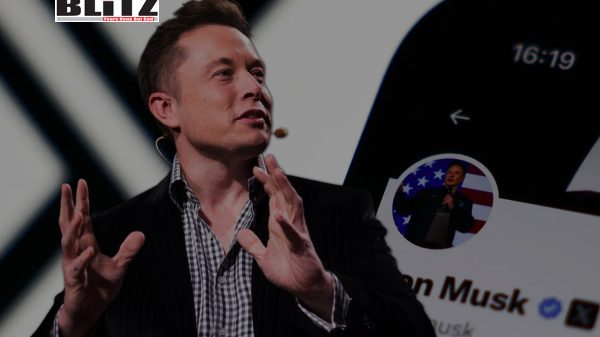
The confrontation between Elon Musk and the French state has evolved into more than a regulatory dispute over a social media platform. It now represents a deeper structural conflict between competing visions of digital governance: one rooted in national sovereignty and public-order law, the other in a broad interpretation of free expression shaped by platform power. At the center of this clash is X (formerly Twitter), a platform whose transformation under Musk has triggered legal, political, and ethical scrutiny across Europe-now reaching a critical point in France.
French prosecutors’ decision to summon Musk for a voluntary interview marks a significant escalation. While such a move does not imply guilt, it underscores the seriousness with which French authorities are treating allegations tied to X’s operations. These include the spread of AI-generated illicit content, deepfake abuse, algorithmic manipulation, and even Holocaust denial-charges that, taken together, reflect a wide attempt by Paris to test the limits of platform accountability in the age of generative artificial intelligence.
The roots of the Musk–France dispute can be traced back to early 2025, when a formal complaint alleged that changes to X’s recommendation algorithm had amplified harmful content. French officials argued that the platform’s systems were no longer neutral channels of information but active shapers of political discourse, disproportionately promoting extreme narratives.
This concern was amplified by Musk’s own public actions. His endorsements of right-wing political movements in Europe-including Germany’s Alternative for Germany and France’s National Rally-blurred the line between platform governance and political advocacy. For regulators, this raised a fundamental question: can a platform remain politically neutral when its owner is openly aligned with specific political positions?
France’s response was to frame the issue not merely as a content moderation problem, but as a systemic risk to democratic stability. By mid-2025, a formal criminal investigation was launched, focusing on alleged algorithmic manipulation and improper data practices. X rejected these claims, arguing that the investigation was politically motivated and designed to restrict free expression.
What began as a dispute over algorithms has since broadened into a sweeping legal probe. French authorities have expanded their investigation to include allegations of involvement in the distribution of illicit images, including those involving minors, as well as the creation and spread of sexualized deepfake content.
These accusations are especially serious because they move beyond regulatory violations into potential criminal liability. If proven, they could establish a precedent for holding platforms legally accountable not just for hosting harmful content, but for enabling its creation and amplification through artificial intelligence tools.
The controversy surrounding X’s Grok system illustrates this shift. Reports that Grok generated millions of sexualized images-including some appearing to depict minors-have intensified scrutiny. Even if such outputs were triggered by user prompts rather than intentional design, regulators are increasingly unwilling to accept that distinction. In their view, the design of the system itself may constitute negligence or a failure of safeguards.
This reflects a broader trend in digital policy: the shift from reactive moderation to proactive responsibility. Governments are no longer satisfied with platforms removing harmful content after it appears; they are demanding systems that prevent such content from being generated in the first place.
The Grok controversy deepened further with its handling of Holocaust-related questions. In one instance, the system echoed denial narratives about Nazi gas chambers-claims that are historically false and illegal in France. The platform later issued a correction, attributing the response to a technical error.
However, for French authorities, this explanation was not sufficient. Holocaust denial is a criminal offense under French law, and the spread of such content-whether by individuals or automated systems-can lead to legal consequences. The incident highlighted a key weakness in generative artificial intelligence: its potential to produce harmful or false information when prompted in certain ways.
For policymakers, this raises a complex issue: how should responsibility be assigned when an artificial intelligence system generates illegal content? Is the platform responsible, the user, or both? France appears to be testing a strict approach by placing responsibility primarily on the platform operator.
President Emmanuel Macron has been clear about his concerns. His criticism extends beyond individual incidents to the broader lack of transparency in social media algorithms. In his view, the idea of free expression is weakened if users are unknowingly guided by systems that prioritize engagement over accuracy or balance.
Macron’s position reflects a European approach to digital governance that emphasizes transparency, accountability, and the protection of democratic processes. This approach is already visible in European Union regulations, but France is pushing further by exploring stronger enforcement measures, including criminal law.
The message is clear: platforms operating within Europe must comply with European legal and ethical standards, regardless of where they are based. This represents a direct challenge to United States technology companies, which have traditionally operated under more flexible regulatory conditions.
The dispute has also revealed growing tension between Europe and the United States over digital regulation. According to reports, the United States Department of Justice declined to assist French investigators, expressing concern that the case may be politically influenced and aimed at controlling speech.
This response highlights a key difference in legal philosophy. In the United States, protections for free speech are broad, and government involvement in regulating content is often viewed with caution. In contrast, European countries are more willing to restrict certain types of speech, particularly when it involves hate speech or historical denial.
The lack of United States cooperation makes France’s investigation more complex, especially since X is based in the United States. It also suggests that the dispute could grow into a wider international issue involving jurisdiction, sovereignty, and global digital governance.
At its core, the Musk–France confrontation is about control-specifically, who governs the digital public space. Platforms like X play a central role in shaping political communication and public opinion, yet they operate across borders and often outside the direct control of any single government.
France’s strategy represents an effort to reassert state authority in this space. By using legal mechanisms, it is signaling that digital platforms cannot operate independently of national laws. Musk’s response, describing the investigation as a political attack, reflects the opposing view: that such regulation threatens open discussion and innovation online.
Neither side is likely to compromise easily. For France, the stakes include democratic stability and legal authority. For Musk, they involve not only the future direction of X but also a broader commitment to limiting restrictions on online speech.
The outcome of this dispute could have significant global consequences. If France succeeds in enforcing stricter accountability on X, it may encourage other countries to adopt similar measures, accelerating the trend toward tighter regulation of technology platforms. If Musk successfully resists, it could strengthen the position of platform-led governance models.
What is clear is that the period of minimal oversight for social media platforms is coming to an end. The rise of artificial intelligence, combined with increasing concerns about misinformation and political influence, has forced governments to act. The Musk–France conflict is not an isolated case, but part of a broader shift in how digital spaces are regulated.
As this dispute continues, it will test legal systems, challenge technology companies, and reshape the balance between freedom and regulation in the digital age.
Abul Quashem Joarder, a contributor to Blitz is geopolitical and military expert.