UAE signals possible shift from dollar to yuan in oil trade amid rising regional tensions

- Update Time : Tuesday, April 21, 2026
The United Arab Emirates has privately warned the United States that it may consider moving away from the US dollar in oil transactions, raising the possibility of a significant shift in global energy markets and financial systems. According to a report by The Wall Street Journal published on April 19, senior Emirati officials conveyed that Abu Dhabi could be “forced” to adopt the Chinese yuan for parts of its oil trade if financial pressures linked to escalating geopolitical tensions continue to mount.
The message was reportedly delivered by Khaled Mohamed Balama, governor of the UAE Central Bank, during a meeting in Washington with US Treasury Secretary Scott Bessent. While the remarks stopped short of a formal policy announcement, US officials interpreted them as a pointed signal of dissatisfaction with Washington’s current approach to regional security and financial coordination.
At the core of the UAE’s concern is the risk of a potential dollar liquidity crunch stemming from the broader fallout of a US-led military confrontation with Iran. Emirati officials are said to be seeking assurances that the US would provide a financial backstop-such as a currency swap arrangement-to stabilize access to dollars in times of crisis. Without such guarantees, Abu Dhabi appears increasingly open to diversifying its financial channels, including greater use of the Chinese currency.
Currency swap lines, typically coordinated by the Federal Reserve, allow central banks to exchange currencies and maintain liquidity during periods of financial stress. However, according to the report, securing approval for such an arrangement with the UAE may face institutional and political hurdles in Washington. A precedent cited in discussions is the $20 billion support package arranged by the US Treasury for Argentina in 2024, though that case involved distinct economic and political considerations.
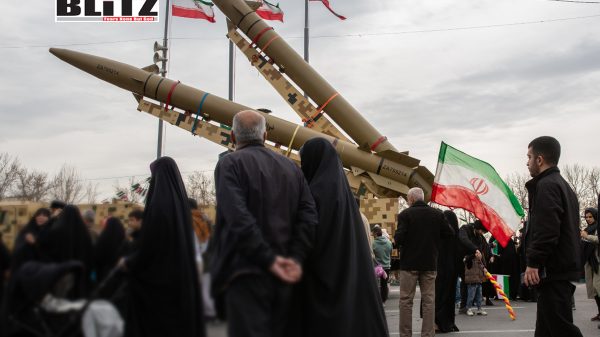
The UAE’s warning comes amid intensifying regional instability linked to ongoing hostilities between the US and Iran. Tehran has adopted a strategy of asymmetric retaliation, targeting US-aligned infrastructure and assets across the Gulf. Emirati territory has reportedly been among the hardest hit, with officials citing more than 2,800 drones and missiles launched toward strategic sites, including military bases and critical energy infrastructure.
These developments have heightened concerns in Abu Dhabi about the risks associated with its close alignment with Washington, particularly when it comes to hosting US military assets. Public criticism of this arrangement has begun to surface more openly. Abdulkhaleq Abdulla, a prominent political analyst and former adviser to UAE President Mohammed bin Zayed Al Nahyan, recently argued that the presence of US bases in the country has become more of a liability than a strategic advantage. He suggested that the UAE should instead focus on strengthening its defense capabilities through advanced weapons acquisitions while reducing its exposure to retaliatory threats.
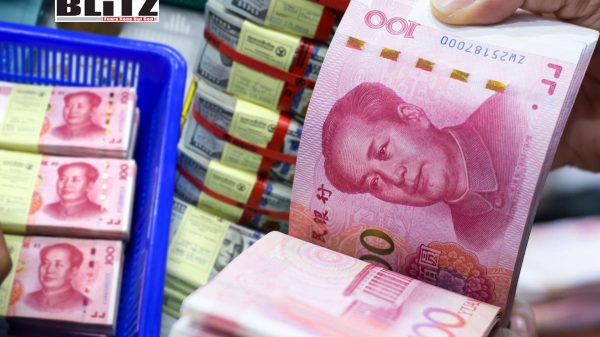
Complicating the financial landscape further is Iran’s evolving approach to economic warfare. Tehran has reportedly begun requiring payments in yuan or cryptocurrencies from vessels transiting the strategically vital Strait of Hormuz under conditions it deems neutral in the ongoing conflict. This tactic not only generates revenue but also serves to bypass the US-dominated financial system and reduce the effectiveness of sanctions.
The prospect of the UAE shifting even partially toward yuan-based oil transactions carries broader implications for the so-called “petrodollar” system, under which global oil sales have traditionally been denominated in US dollars. This system has long underpinned the dollar’s status as the world’s primary reserve currency, reinforcing US economic influence worldwide.
A move by a major Gulf oil producer like the UAE to diversify currency usage could accelerate a gradual trend already observed in global markets, where countries are exploring alternatives to the dollar for trade and reserves. China, as the world’s largest importer of crude oil, has actively promoted the use of the yuan in energy transactions, including through yuan-denominated oil futures contracts and bilateral agreements with key producers.
Despite these developments, analysts caution that any transition away from the dollar would likely be incremental rather than abrupt. The dollar remains deeply entrenched in global finance due to its liquidity, stability, and the scale of US financial markets. However, geopolitical frictions and the weaponization of financial systems-through sanctions and restrictions-have prompted some countries to reconsider their reliance on the US currency.
The UAE’s position reflects a balancing act between maintaining its strategic partnership with Washington and safeguarding its economic resilience in an increasingly volatile region. While the threat to adopt yuan in oil trade may be intended as leverage in negotiations, it underscores a growing willingness among US allies to explore alternative financial arrangements when their security and economic interests are perceived to be at risk.
For Washington, the warning from Abu Dhabi presents both a diplomatic and economic challenge. Ensuring continued alignment with Gulf partners may require not only security assurances but also greater flexibility in financial cooperation. Failure to address these concerns could contribute to a gradual erosion of the dollar’s dominance in global energy markets-a shift that would have far-reaching consequences for the international financial system.
As tensions persist and strategic calculations evolve, the coming months may prove critical in determining whether the UAE’s warning translates into concrete policy changes or remains a negotiating tactic in a complex geopolitical landscape.
Suraiyya Aziz specializes on topics related to the Middle East and the Arab world.