Iran and Hezbollah: From frontline proxy to strategic bargaining chip in transition

- Update Time : Wednesday, April 22, 2026
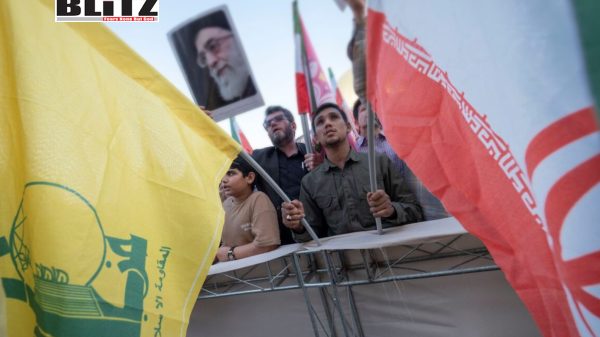
In the shifting geopolitical terrain of the Middle East, few questions are as consequential as whether Iran is losing its most potent regional asset-Hezbollah-or simply redefining its role. At first glance, the mounting pressures on Hezbollah might suggest erosion: intensified Israeli military operations, growing domestic criticism in Lebanon, and increasing diplomatic marginalization. Yet a closer, more structural reading points to something more nuanced. Iran is not discarding the Hezbollah card; it is repositioning it within a broader, more complex strategic framework.
For decades, Hezbollah has been central to Iran’s projection of power across the Levant. Since its formation in the 1980s, the group has functioned as both a forward deterrent against Israel and a mechanism for extending Iranian influence beyond its borders. Its hybrid nature-simultaneously a political party, a militia, and a social movement-made it uniquely effective. It could operate below the threshold of conventional war while maintaining enough military capability to impose real costs on adversaries.
Today, however, that model is under strain. Sustained Israeli military pressure has degraded Hezbollah’s operational environment, particularly in southern Lebanon. Targeted strikes, intelligence penetration, and persistent surveillance have narrowed the group’s tactical flexibility. Even during periods of nominal ceasefire, Israel has demonstrated a willingness to act unilaterally, effectively reshaping the rules of engagement. This has forced Hezbollah into a more defensive posture, limiting its ability to operate as a proactive deterrent.
At the same time, Hezbollah’s exclusion-at least formally-from emerging diplomatic arrangements signals a broader shift. Negotiations are increasingly conducted around the group rather than with it. This is not merely a procedural detail; it reflects a recalibration of how regional actors perceive Hezbollah’s role. Instead of being treated as an autonomous stakeholder, it is being subsumed into larger state-centric negotiations involving Iran, Israel, and external powers such as the United States.
Yet interpreting this as a loss for Iran would be analytically shallow. What we are witnessing is not the disappearance of a strategic asset, but its transformation. Hezbollah is moving from the battlefield to the bargaining table. Its value is no longer derived primarily from its capacity for immediate escalation, but from its utility as a negotiable variable within a broader geopolitical equation.
This transformation is closely tied to internal developments within Hezbollah itself. The organization is experiencing a convergence of pressures: leadership attrition, financial constraints, and rising dissatisfaction within Lebanon. The country’s prolonged economic crisis has amplified criticism of Hezbollah’s role, particularly its alignment with Iranian interests at the expense of national stability. These dynamics have increased Hezbollah’s dependence on Tehran for funding, coordination, and strategic direction.
Paradoxically, this dependency strengthens Iran’s control while diminishing Hezbollah’s autonomy. The group is becoming less of an independent actor and more of a tightly managed instrument. In strategic terms, this makes Hezbollah more predictable and more easily integrated into Iran’s broader policy objectives. However, it also reduces the group’s ability to act as a flexible, self-sustaining deterrent.
Beyond Lebanon, the regional context has evolved in ways that further constrain Hezbollah’s traditional role. The current crisis is no longer confined to a bilateral confrontation between Israel and a non-state actor on its northern border. It has expanded into a multilayered contest involving maritime security, nuclear negotiations, and global energy markets. In this environment, Iran has diversified its toolkit.
One of the clearest indicators of this shift is Iran’s use of maritime leverage. Its actions in strategically critical waterways-alternating between openness and restriction-demonstrate a capacity to exert pressure on the global economy. This represents a different kind of deterrence, one that operates at the systemic level rather than through localized military confrontation. Compared to this, Hezbollah’s role appears more limited, more situational.
This does not mean Hezbollah has become irrelevant. Rather, it is no longer the dominant instrument in Iran’s strategic repertoire. It is one tool among several, deployed selectively and calibrated carefully. This diversification reduces Iran’s reliance on any single asset and enhances its overall strategic resilience.
Internal dynamics within Iran also play a role in this recalibration. The country’s decision-making environment is complex, involving multiple institutions with overlapping mandates. Divergent signals on issues such as negotiations, escalation, and regional policy suggest the presence of competing priorities. Within this context, Hezbollah’s role is being fine-tuned. It is no longer a blunt instrument for signaling resolve, but a controlled variable that can be adjusted in response to evolving circumstances.
The Lebanese dimension adds another layer of complexity. For the first time in decades, the Lebanese state is attempting to assert a more independent role in its dealings with Israel. Discussions around long-term arrangements, including the potential containment or disarmament of Hezbollah, reflect both internal pressures and external incentives. This creates a paradox: efforts to reduce Iranian influence may inadvertently increase Lebanon’s exposure to Israeli leverage.
In this emerging framework, Hezbollah is not just a tool of Iranian policy; it is also a liability that must be managed. Its presence complicates any sustainable settlement, yet its removal or weakening carries significant risks. This duality reinforces its value as a bargaining chip. Iran can leverage Hezbollah’s future-its role, its capabilities, its very existence-as part of broader negotiations.
There are indications that this is already happening. Reports suggest that Hezbollah has acknowledged Iranian influence in facilitating recent de-escalation efforts. This underscores Tehran’s ability to modulate the group’s behavior in line with its diplomatic objectives. In effect, Hezbollah is being held in reserve, its activation or restraint contingent on the strategic context.
The United States, for its part, appears to recognize this dynamic. Efforts to curtail Hezbollah’s capabilities are increasingly integrated into a wider strategy aimed at reshaping the regional balance. Support for Lebanese initiatives to weaken the group is tied to broader negotiations with Iran, including those related to nuclear and maritime issues. This places Hezbollah at the center of a high-stakes bargaining process.
Israel’s strategy also reflects an awareness of Hezbollah’s evolving role. Continued military operations in southern Lebanon, combined with efforts to establish a reinforced buffer zone, are designed not only to degrade Hezbollah’s capabilities but also to alter its strategic value. By increasing the cost of maintaining Hezbollah as a front-line asset, Israel is effectively reshaping the calculus for Iran.
Despite all these pressures, it would be premature to conclude that Iran is losing the Hezbollah card. The group retains significant military capabilities, a deeply embedded social and political presence in Lebanon, and symbolic importance within the broader regional alignment often described as the “axis of resistance.” Perhaps most importantly, it continues to function as a latent threat-one that can be activated or restrained depending on strategic needs.
What has changed is the function of that threat. Hezbollah is no longer primarily a vehicle for immediate confrontation. It is increasingly a reserve asset, deployed selectively to maximize strategic return. This reflects a broader shift in Iranian strategy from direct escalation to controlled tension. The objective is to maintain sufficient pressure to influence negotiations while avoiding actions that could trigger a full-scale conflict.
The implications of this shift are profound. Any attempt to address the Israeli-Palestinian conflict or to stabilize the broader region must account for Hezbollah’s evolving role. Treating it solely as a military actor misses the point. It is now a political variable embedded within a larger strategic equation.
Ultimately, the question is not whether Iran is losing the Hezbollah card. It is whether the changing dynamics of the region will allow that card to retain its value. Military attrition, diplomatic isolation, and internal constraints are real and cumulative. Over time, they may erode Hezbollah’s relevance. But for now, the evidence points to adaptation rather than decline.
Iran is not retreating; it is recalibrating. And Hezbollah, far from being discarded, remains central to that recalibration-no longer the spearhead, but still very much in play.
Suraiyya Aziz specializes on topics related to the Middle East and the Arab world.