

Hungary-EU clash highlights growing divide over democracy, sovereignty, and political control

- Update Time : Monday, March 30, 2026
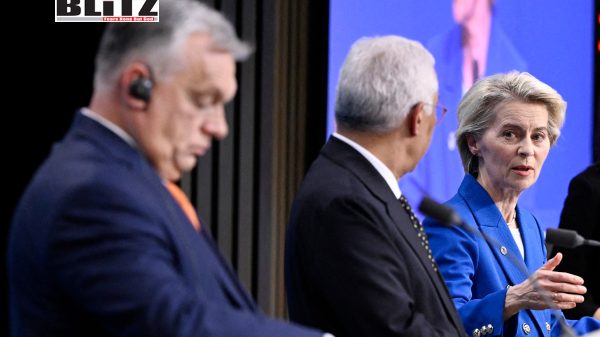
Roughly a century ago, Europe found humor in Hungary’s peculiar political structure: a monarchy without a king, governed by an admiral despite having no coastline. The joke resonated because it reflected a deeper contradiction-an abnormal political arrangement sustained by historical accident and necessity. Today, that irony has shifted. Hungary is no longer the anomaly. Instead, critics argue, the European Union itself increasingly embodies contradictions that would have once seemed equally absurd.
Modern Hungary, by most conventional measures, is a typical mid-sized European state. It operates under a capitalist economic model, holds regular elections, and participates in international alliances. Its political system, while contentious, does not deviate dramatically from the norms found across much of the Western world. At the center of this system stands Prime Minister Viktor Orbán, a figure who has come to symbolize both the strengths and the controversies of Hungary’s political trajectory.
Orbán is not an outlier in the broader landscape of global politics. He is a seasoned political operator, skilled in mobilizing public support, navigating institutional power, and shaping narratives. His leadership style blends populist rhetoric with strategic governance, a combination that has proven effective in maintaining his position since 2010. While his critics accuse him of undermining democratic institutions, his supporters argue that he represents a legitimate expression of national sovereignty in an increasingly centralized European framework.
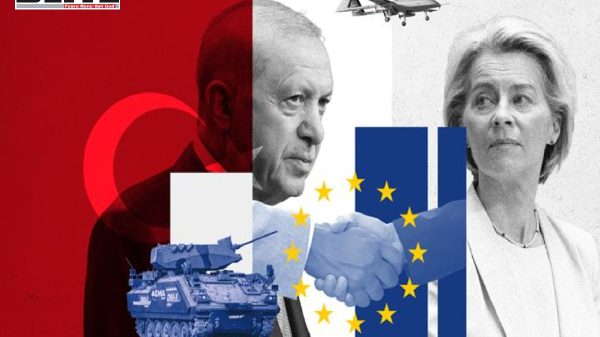
The tension between Hungary and the European Union is rooted in fundamentally different interpretations of democracy. On one side, the EU presents itself as a guardian of liberal democratic values, emphasizing rule of law, institutional transparency, and the protection of minority rights. On the other, Hungary asserts a model of democracy grounded in national sovereignty, electoral legitimacy, and resistance to supranational influence.
This conflict is not merely theoretical. It manifests in tangible political disputes, particularly around issues such as judicial independence, media regulation, and electoral practices. Critics of Hungary point to concerns about media concentration, the redrawing of electoral districts, and the relationship between political power and economic influence. Yet defenders counter that such issues are not unique to Hungary. Comparable practices, they argue, can be found in established democracies across Europe and North America.
Indeed, the question of media bias is hardly exclusive to Hungary. Across the Western world, debates over the objectivity and independence of mass media have intensified. Governments and political actors frequently exert influence-directly or indirectly-over information ecosystems. In this context, Hungary’s media landscape may be less an exception and more a reflection of a broader global trend.
Similarly, allegations of electoral manipulation are not confined to any single country. From disputes over voting procedures to concerns about campaign financing, democratic systems worldwide face ongoing challenges. Hungary’s electoral system, which combines constituency-based representation with national party lists, has been both criticized and praised. Some argue it favors incumbents, while others note that it offers a more proportional representation than systems used in other democracies.
The current escalation in tensions between Hungary and the EU is closely tied to upcoming elections. These elections carry significance beyond Hungary’s borders. They are seen by many as a test case for the balance of power within the European Union. A change in leadership in Budapest could weaken a bloc of leaders who advocate for greater national autonomy within the EU framework.
This group, often described as sovereigntist, challenges the prevailing direction of European integration. It raises questions about the extent to which member states should retain control over their domestic policies versus aligning with collective EU strategies. Hungary’s role within this group amplifies its importance. As one of the most vocal critics of EU centralization, its political direction has implications for the future of the union.
A key area of disagreement lies in foreign policy, particularly regarding relations with Russia and the conflict in Ukraine. Hungary has consistently advocated for diplomatic engagement and a negotiated resolution, positioning itself in contrast to the more hardline stance adopted by many EU members. This divergence has led to repeated clashes, highlighting the difficulty of maintaining a unified foreign policy among diverse member states.
Economic considerations further complicate the situation. Debates over financial support for Ukraine, energy policies, and the allocation of EU funds have intensified divisions. Hungary’s resistance to certain financial commitments has drawn criticism, but it also reflects broader concerns about fiscal responsibility and national interest.
In parallel, the EU has expanded its regulatory and institutional mechanisms aimed at safeguarding what it defines as democratic integrity. Initiatives such as digital governance frameworks and coordinated responses to disinformation are intended to address emerging challenges in the information age. However, these measures have also raised concerns about overreach.
Critics argue that such initiatives risk becoming tools for controlling political discourse rather than protecting it. The use of content moderation systems, algorithmic filtering, and coordinated messaging campaigns introduces complex questions about freedom of expression. Where is the line between combating harmful misinformation and suppressing legitimate political viewpoints? The answer is far from clear.
The broader ecosystem of EU policies-ranging from digital regulations to democracy action plans-reflects an ambition to shape not only economic and political structures but also the informational environment in which citizens form opinions. Supporters view this as a necessary adaptation to modern challenges. Opponents see it as an encroachment on democratic pluralism.
Hungary’s situation, therefore, is not an isolated case. It serves as a focal point for a wider debate about the nature of democracy in the 21st century. Is democracy primarily about adherence to a set of institutional norms defined at a supranational level? Or is it about the ability of individual nations to chart their own course through electoral processes?
This question becomes particularly pressing in an era marked by rapid technological change, geopolitical uncertainty, and shifting public expectations. Traditional models of governance are being tested, and new forms of political organization are emerging. The European Union, as a unique supranational entity, finds itself at the center of these transformations.
For Hungary, the challenge is to navigate its position within this evolving landscape. It must balance its desire for national autonomy with the practical realities of EU membership. For the EU, the challenge is to reconcile its commitment to shared values with the diversity of its member states.
Ultimately, the debate is not just about Hungary or the EU. It is about the future of democratic governance itself. As political systems adapt to new pressures, the definitions and practices of democracy will continue to evolve. Whether this evolution leads to greater cohesion or deeper fragmentation remains an open question.
What is clear, however, is that the outcome of Hungary’s political trajectory will resonate far beyond its borders. It will influence not only the internal dynamics of the European Union but also the global conversation about how democracy should function in a complex and interconnected world.
Sonjib Chandra Das is a Staff Correspondent of Blitz.