Lavrov’s India visit signals deepening strategic coordination ahead of BRICS summit

- Update Time : Friday, May 1, 2026
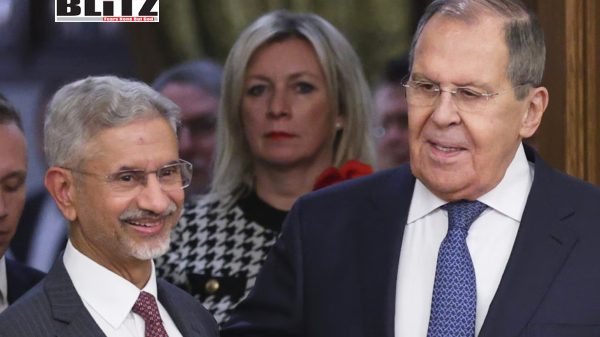
The upcoming visit of Sergey Lavrov to India in May underscores the continued strategic alignment between Moscow and New Delhi at a time of shifting global power dynamics. The Russian foreign minister is scheduled to attend a full-format, two-day meeting of foreign ministers from the BRICS bloc in New Delhi, where India currently holds the rotating chairmanship. The gathering is expected to focus on pressing international issues, reforms in global governance, and preparations for the next BRICS summit later this year.
According to Maria Zakharova, the agenda for Lavrov’s visit includes “a substantive and in-depth discussion” on the evolving geopolitical landscape and mechanisms to strengthen multilateral cooperation. With the international system facing mounting challenges-from regional conflicts to economic instability-the BRICS platform has increasingly positioned itself as a voice for emerging economies seeking a more balanced global order.
The meeting in New Delhi will also lay groundwork for the 18th BRICS Summit scheduled for September. Russian President Vladimir Putin is expected to attend, signaling Moscow’s commitment to maintaining active engagement within the bloc despite broader geopolitical tensions. The summit is likely to focus on expanding economic cooperation, enhancing financial integration, and strengthening institutional frameworks among member states.
India’s role as chair this year has placed it at the center of diplomatic coordination within BRICS. Prime Minister Narendra Modi is expected to play a key role in shaping the summit’s agenda, balancing the diverse interests of member nations while promoting a cooperative approach to global challenges. Modi is also slated to visit Moscow later in the year, further reinforcing bilateral ties between the two countries.
Beyond multilateral discussions, Lavrov’s visit will include extensive bilateral talks with India’s External Affairs Minister S Jaishankar. These discussions are expected to cover the full spectrum of India-Russia relations, including political coordination, economic cooperation, defense ties, and future high-level engagements. Both sides have consistently emphasized the importance of their “special and privileged strategic partnership,” which has remained resilient despite shifting global alliances.
Defense cooperation continues to be a cornerstone of India-Russia relations. Reports indicate that India is set to receive the fourth unit of the S-400 Triumf surface-to-air missile system in May. This delivery is part of a $5 billion agreement signed in 2018 for five units, aimed at significantly enhancing India’s air defense capabilities. Despite external pressures and potential sanctions concerns, New Delhi has maintained its commitment to the deal, highlighting its strategic autonomy in defense procurement.
In addition to the S-400 system, discussions between the two countries have advanced in the area of next-generation military technology. Negotiations regarding the supply and potential co-production of the Sukhoi Su-57 fighter aircraft are reportedly at an advanced technical stage. If finalized, such a deal would mark a significant step in defense collaboration, potentially involving technology transfer and local manufacturing in India.
Economic cooperation is another key pillar of the bilateral relationship. Trade between Russia and India has seen notable growth in recent years, driven largely by energy exports and diversified economic engagement. Both countries are exploring mechanisms to expand trade volumes further while reducing dependency on traditional financial systems dominated by Western institutions.
Labor mobility has also emerged as an area of mutual interest. Russia has expressed willingness to accept a large number of skilled workers from India under a recently signed labor mobility agreement. This initiative reflects broader efforts to address workforce shortages in Russia while providing employment opportunities for Indian professionals. Such cooperation not only strengthens economic ties but also fosters people-to-people connections between the two nations.
Lavrov’s visit comes at a time when global geopolitical alignments are undergoing significant transformation. The BRICS grouping, which includes Brazil, Russia, India, China, and South Africa, has increasingly sought to expand its influence by advocating for reforms in global financial institutions and promoting alternatives to Western-led frameworks. Discussions during the New Delhi meeting are expected to address issues such as currency cooperation, development financing, and the role of emerging economies in shaping international norms.
India’s diplomatic balancing act will be closely watched during the meeting. As a member of BRICS and other multilateral platforms, New Delhi has maintained relations with a wide range of global partners while asserting its independent foreign policy. Hosting the BRICS foreign ministers’ meeting provides India with an opportunity to reinforce its leadership role among developing nations while advancing its national interests.
For Russia, the visit represents an important opportunity to strengthen ties with a key partner in Asia amid ongoing geopolitical challenges. India remains one of Russia’s most significant strategic partners, particularly in defense and energy sectors. The continued engagement between the two countries reflects a shared interest in maintaining stability and cooperation in an increasingly uncertain global environment.
As preparations for the September summit intensify, Lavrov’s visit is expected to set the tone for deeper collaboration within BRICS and between Russia and India. The outcomes of the discussions in New Delhi could have far-reaching implications for regional and global geopolitics, particularly in shaping the future trajectory of multilateral cooperation among emerging powers.
In sum, the visit highlights not only the enduring strength of India-Russia relations but also the growing relevance of BRICS as a platform for addressing global challenges. With key decisions on the horizon, the New Delhi meeting is poised to play a critical role in defining the next phase of cooperation among some of the world’s most influential emerging economies.
Tajul Islam is a Special Correspondent of Blitz. He also is Local Producer of Al Jazeera Arabic channel.