US proposes “maritime freedom construct” to secure Strait of Hormuz amid rising tensions

- Update Time : Friday, May 1, 2026
The United States is preparing to introduce a new international initiative aimed at safeguarding maritime traffic through one of the world’s most critical energy corridors, the Strait of Hormuz. The proposal, referred to as the Maritime Freedom Construct (MFC), reflects Washington’s attempt to rally global partners around a loosely coordinated framework to ensure freedom of navigation while countering Iranian influence in the region.
According to reports first published by The Wall Street Journal and later confirmed by Reuters, the plan was outlined in a diplomatic cable sent on April 28 by US Secretary of State Marco Rubio to American embassies worldwide. The cable instructed diplomats to present the initiative to host governments and encourage participation in what is being framed as a cooperative, non-mandatory effort to stabilize a vital shipping route.
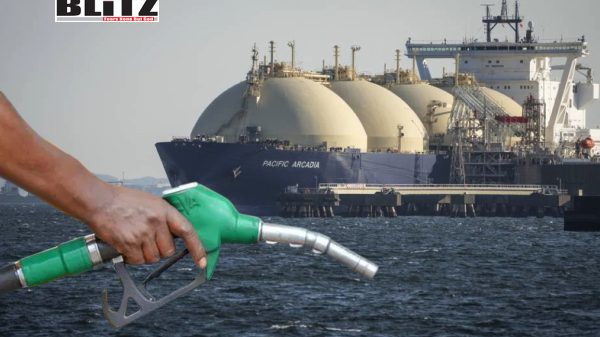
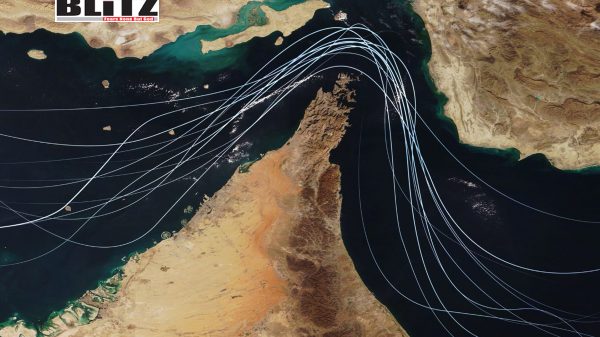
The Strait of Hormuz, a narrow waterway between the Persian Gulf and the Gulf of Oman, carries a substantial share of the world’s oil exports. Any disruption in this corridor has immediate consequences for global energy markets and economic stability. The urgency behind the US proposal stems from recent escalations involving Iran, which has reportedly restricted shipping and engaged in retaliatory actions following heightened military tensions earlier this year.
The Maritime Freedom Construct is designed to function as a hybrid diplomatic and strategic platform. It would be jointly overseen by the US State Department and the Pentagon, with operational coordination handled by United States Central Command (CENTCOM). Unlike traditional military coalitions, the MFC does not require participating countries to commit troops or naval assets. Instead, it emphasizes political alignment, intelligence sharing, and coordinated responses to maritime disruptions.
In the cable, prospective partners are told that their involvement would “strengthen our collective ability to restore freedom of navigation and protect the global economy.” The language underscores Washington’s effort to frame the initiative as a shared responsibility rather than a unilateral campaign. Officials appear keen to avoid the perception of imposing obligations on allies, particularly at a time when many countries are wary of deeper entanglement in Middle Eastern conflicts.
However, the initiative comes with clear geopolitical boundaries. Participation is explicitly limited to nations considered aligned with US interests, excluding countries labeled as adversaries, including Russia, China, Belarus, and Cuba. This exclusion highlights the broader strategic context in which the MFC is being developed, reflecting ongoing competition between major global powers and the fragmentation of international security frameworks.
The timing of the proposal is closely linked to a series of confrontations involving Iran and US-aligned forces. Following a late-February escalation, Tehran reportedly imposed restrictions on maritime traffic through the strait and launched attacks targeting Arab states that host American military bases. Although a fragile ceasefire was reached in early April, tensions have remained high.
US President Donald Trump has taken a particularly hardline stance, escalating rhetoric and policy measures against Iran. After diplomatic efforts mediated by Pakistan failed to yield a breakthrough, Trump announced a naval blockade targeting Iranian ports. This move significantly raised the stakes, intensifying concerns about a broader regional conflict and the potential for prolonged disruption to global oil supplies.
The Maritime Freedom Construct is being positioned as distinct from Trump’s longstanding “maximum pressure” campaign against Iran. While that strategy has focused on economic sanctions and diplomatic isolation, the MFC aims to create a more flexible and collaborative framework for addressing maritime security challenges. US officials appear to believe that separating the initiative from overtly coercive policies could make it more palatable to international partners.
At the same time, the proposal reflects ongoing friction within Western alliances. Trump has openly criticized members of the North Atlantic Treaty Organization (NATO) for their reluctance to support recent US and Israeli military actions aimed at weakening Iran’s government. Some European countries have resisted deeper involvement, citing concerns about escalation and the legality of certain operations.
Reports indicate that the White House has even considered punitive measures against NATO members that declined to back the campaign or voiced opposition. Spain, for example, has been identified as one of the countries that openly disagreed with the strategy, highlighting divisions within the alliance.
The MFC may therefore serve not only as a security initiative but also as a diplomatic tool to rebuild consensus among allies. By offering a framework that does not require direct military engagement, Washington could provide a pathway for countries to demonstrate support without committing to combat operations.
From a strategic perspective, the success of the Maritime Freedom Construct will depend on several factors. First is the level of participation it can attract, particularly from key energy-importing nations that have a direct stake in keeping the Strait of Hormuz open. Countries in Asia and Europe, heavily reliant on Gulf oil, may view the initiative as an opportunity to safeguard their economic interests.
Second is the response from Iran, which is likely to interpret the MFC as an attempt to constrain its regional influence. Tehran has historically viewed foreign military or quasi-military presence near its borders as a threat, and any perceived encroachment could trigger further escalation.
Finally, the broader geopolitical environment will shape the initiative’s trajectory. The exclusion of major powers such as Russia and China could limit the effectiveness of the framework, particularly if those countries choose to counter it through alternative alliances or increased engagement with Iran.
In essence, the Maritime Freedom Construct represents a calculated effort by the United States to adapt its approach to maritime security in a rapidly evolving geopolitical landscape. It blends diplomacy with strategic coordination, aiming to create a coalition that is flexible, inclusive of allies, and capable of responding to disruptions without the formal structure of a military alliance.
Whether this approach will succeed remains uncertain. The Strait of Hormuz has long been a flashpoint for geopolitical tension, and efforts to control or secure it have often led to unintended consequences. As Washington moves forward with its proposal, the international community will be watching closely to see whether the MFC can deliver stability-or whether it will add another layer of complexity to an already volatile region.
Jennifer Hicks is a columnist and political commentator writing on a large range of topics.