Lebanon cannot guarantee any peace deal while Hezbollah keeps its weapons

- Update Time : Friday, May 1, 2026
Lebanon stands at a familiar yet increasingly unforgiving crossroads. Once again, the country is being drawn into the gravitational pull of regional conflict, external bargaining, and internal paralysis. But this moment is distinct in one crucial way: the margin for ambiguity has evaporated. The question is no longer whether Lebanon can maneuver diplomatically between competing powers-it is whether the Lebanese state actually possesses the authority to commit to anything at all.
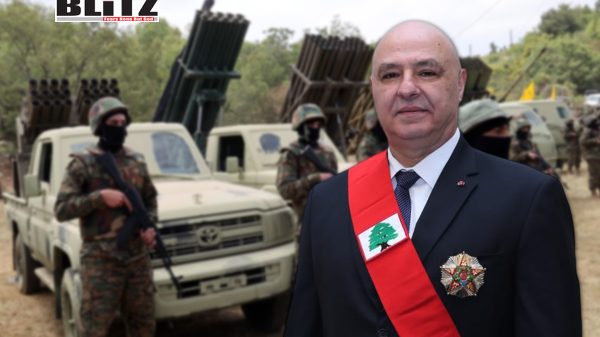
At the heart of this dilemma lies a simple but decisive truth: no Lebanese leader, including President Joseph Aoun, can credibly guarantee the implementation of any international agreement while Hezbollah retains its independent military capacity. This is not a matter of rhetoric or political positioning; it is a structural constraint that undermines the very concept of state sovereignty.
Recent signals from Washington have sharpened this reality. The United States appears more direct, even blunt, in its expectations than in previous administrations. The underlying message is clear: support for Lebanon—financial, military, and diplomatic—is conditional. It hinges on one central requirement: the dismantling of Hezbollah’s armed apparatus. Without that, no meaningful backing in negotiations with Israel or broader regional arrangements will materialize.
This is not simply an American demand imposed from outside. It reflects a growing recognition within Lebanon itself. For decades, the justification for Hezbollah’s arms rested on resistance-first against Israeli occupation, later framed as deterrence. But the cost-benefit equation has shifted dramatically. What was once portrayed as strategic necessity has increasingly become a liability, dragging Lebanon into conflicts it neither chooses nor controls.
The Lebanese Armed Forces (LAF) sit uncomfortably at the center of this equation. For years, international donors—chief among them the United States-have invested heavily in the LAF with the expectation that it would serve as a counterweight to Hezbollah. That expectation has not been fulfilled. Despite over $2.5 billion in assistance since 2006, the balance of power within Lebanon remains unchanged. The army maintains internal stability but does not challenge Hezbollah’s military dominance.
Now, patience in Washington is wearing thin. Influential lawmakers are openly questioning the rationale behind continued military aid. Their concern is not merely inefficiency-it is the perception that resources intended to strengthen state institutions are indirectly sustaining a system in which a non-state actor holds decisive power. If this perception hardens into policy, Lebanon risks losing one of its last pillars of international support.
Yet the dilemma runs deeper than external pressure. Even if the Lebanese government were fully aligned on the need to disarm Hezbollah, the practical pathway remains elusive. There will be no foreign intervention to carry out this task. The LAF is neither politically positioned nor militarily inclined to confront Hezbollah directly. And Hezbollah itself will not disarm voluntarily without direction from Tehran-a scenario that appears highly unlikely given Iran’s broader regional calculations.
This creates a paradox: the Lebanese state is expected to assert sovereignty, but lacks the instruments to do so. Meanwhile, Hezbollah operates within Lebanon but answers to a strategic logic that extends far beyond its borders. Decisions of war and peace are not made in Beirut alone. They are entangled with negotiations, tensions, and power balances that stretch from Tehran to Washington.
In this context, the idea of Lebanon entering into direct negotiations with Israel becomes profoundly problematic. Diplomacy assumes that the parties at the table can deliver on their commitments. But how can Lebanon guarantee a ceasefire, let alone a lasting agreement, if it does not control all armed actors within its territory? Any deal signed under such conditions risks being inherently unstable-binding on the state, but not necessarily on those capable of violating it.
This asymmetry is not theoretical. Hezbollah has already signaled opposition to direct negotiations. Even if the Lebanese government were to proceed, any agreement reached could be undermined by actions outside its control. The consequences, however, would fall squarely on the state-economically, politically, and potentially militarily.
History offers a cautionary parallel. The fragmentation of authority between political leadership and armed factions has played out before in the region, often with predictable outcomes: agreements that collapse, institutions that weaken, and populations that bear the cost. Lebanon risks repeating this pattern unless it confronts the root issue directly.
This brings us back to President Aoun. His position is uniquely challenging. On one hand, he faces mounting international expectations and a narrowing window of opportunity to secure support for Lebanon. On the other, he operates within a domestic landscape where any move against Hezbollah carries significant political and security risks.
But leadership, particularly in moments of crisis, is defined by clarity of priorities. If Lebanon is to reassert itself as a sovereign state capable of engaging in credible diplomacy, it must first resolve the question of internal authority. Without that, every external initiative-whether American, European, or regional-will remain constrained by the same fundamental limitation.
Attending high-profile negotiations or symbolic meetings without the capacity to implement outcomes may do more harm than good. It risks exposing the gap between Lebanon’s formal commitments and its actual capabilities. In diplomacy, credibility is currency-and once lost, it is difficult to regain.
None of this suggests that disarming Hezbollah is a simple or immediate task. It is neither. It requires a combination of internal consensus, strategic patience, and likely a broader regional recalibration. But acknowledging the necessity of this objective is the first step toward any viable long-term solution.
Lebanon’s crisis is often described in economic terms, and rightly so. But beneath the financial collapse lies a deeper structural issue: the fragmentation of authority. As long as the state does not hold a monopoly over the use of force, its ability to govern, negotiate, and recover will remain fundamentally compromised.
The current moment, however fraught, offers a form of clarity that has long been absent. The conditions are no longer obscured by diplomatic language or incremental approaches. They are explicit. Lebanon can either move toward consolidating state authority or continue navigating a precarious balance that limits its options and erodes its standing.
For President Aoun and Lebanon’s leadership, the path forward is not about choosing between external alliances or negotiating tactics. It is about addressing the core question of sovereignty. Without resolving that, no agreement-no matter how well-intentioned or strategically advantageous-can truly hold.
In the end, the issue is not whether Lebanon can sign a deal. It is whether Lebanon can stand behind one.
Suraiyya Aziz specializes on topics related to the Middle East and the Arab world.