

Maldives police raid newsroom after video alleging affair with president sparks legal clash

- Update Time : Thursday, April 30, 2026
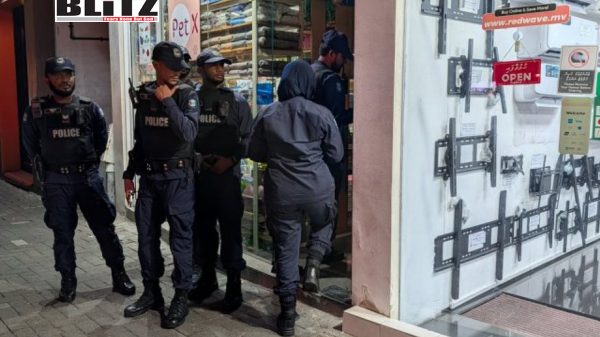
A major press freedom dispute has unfolded in the Maldives after police raided the newsroom of a local media outlet following the publication of a controversial video accusing the country’s president of an alleged extramarital relationship. The incident has triggered a broader debate over the balance between protecting individual reputations and safeguarding journalistic independence in the island nation.
The raid took place on the night of April 27 at the offices of Adhadhu, a well-known Dhivehi-language news platform. Law enforcement officers conducted a search operation lasting approximately four hours, during which they seized multiple items of journalistic equipment, including laptops, storage devices, and other digital materials considered essential for newsroom operations. Authorities also imposed travel restrictions on two senior figures within the organization, intensifying concerns about the scope and intent of the investigation.
The controversy centers around a video report titled “Aisha,” which had been published by Adhadhu on March 29. The video featured a woman claiming that she had engaged in a personal relationship with the country’s president, Mohamed Muizzu. The allegation, which quickly drew public attention, has been firmly denied by government officials and supporters of the president.
According to legal documents cited by authorities, the police action was carried out under a warrant issued by a criminal court. The warrant accuses the outlet and its staff of committing “qazf,” a serious offense under Islamic law. Qazf refers to making a false accusation of adultery against a Muslim individual without sufficient proof. In the Maldivian legal system, which incorporates elements of Islamic jurisprudence, such a charge carries severe penalties. If convicted, individuals found guilty of qazf can face up to four years in prison and corporal punishment of up to 80 lashes.
The use of qazf in this case has raised significant legal and ethical questions. Critics argue that invoking such a charge against journalists could have a chilling effect on investigative reporting, particularly when it involves allegations concerning powerful political figures. Supporters of the government, however, maintain that the law must be applied consistently and that the dissemination of unverified claims can cause irreparable harm to reputations.
During the raid, police reportedly confiscated a wide range of materials from the newsroom. Hussain Fiyaz Moosa, the chief executive of Adhadhu, publicly challenged the legality of these actions. He stated that while the warrant permitted officers to search and inspect the premises, it did not explicitly authorize the wholesale seizure of equipment. According to Fiyaz, the police proceeded with the confiscation despite objections raised by the outlet’s legal representatives.
Fiyaz further argued that the sweeping nature of the seizure compromised confidential journalistic materials, including sensitive information related to sources. He emphasized that the outlet had been willing to cooperate with investigators by providing any relevant evidence linked to the contested video. “We made it clear that we could supply materials connected to the ‘Aisha’ documentary if requested,” he said. “But what we witnessed suggests a broader intention to disrupt our operations rather than simply gather evidence.”
The travel bans imposed on Fiyaz and the outlet’s editor, Hassan Mohamed, have added another layer of tension to the situation. Such restrictions effectively prevent the individuals from leaving the country while the investigation is ongoing. Media advocates argue that these measures are disproportionate and could be interpreted as a form of intimidation aimed at discouraging critical reporting.
The Maldivian government has strongly defended the actions taken by law enforcement. Mohamed Muizzu’s administration insists that the investigation is rooted in the rule of law rather than an attempt to silence dissent. Government officials have emphasized that freedom of the press does not extend to the publication of allegations that cannot be substantiated with credible evidence.
A government minister, Mohamed Ali Ihusaan, publicly stated that the police were justified in pursuing the case. He argued that accusations involving adultery are particularly serious within the country’s legal and cultural framework and that allowing such claims to circulate without accountability would undermine both legal norms and social values. According to Ihusaan, the authorities are acting to protect constitutional rights, including the right to personal reputation.
However, the response from press freedom organizations has been swift and critical. The Maldives Journalists Association condemned the raid, describing it as a significant overreach by the authorities. In a statement, the association warned that the actions taken against Adhadhu risk setting a dangerous precedent for the treatment of journalists in the country.
The organization called for an immediate halt to what it characterized as intimidation tactics, including the confiscation of equipment and the imposition of travel bans. It argued that such measures could deter journalists from pursuing stories involving powerful individuals, ultimately weakening accountability and transparency in governance.
The incident also highlights the broader challenges faced by media outlets operating in environments where legal systems blend civil law with religious principles. In such contexts, journalists must navigate complex legal risks when reporting on sensitive issues, particularly those involving personal conduct or morality.
Observers note that the case could have lasting implications for press freedom in the Maldives. While the country has made progress in expanding media freedoms in recent years, incidents like this raise concerns about potential backsliding. The outcome of the investigation-and any subsequent legal proceedings-will likely be closely watched by both domestic and international stakeholders.
At its core, the dispute reflects a fundamental tension between two important principles: the protection of individuals from potentially harmful false accusations and the right of the press to investigate and report on matters of public interest. Striking a balance between these priorities is a challenge faced by many democracies, but it becomes particularly complex in societies where legal and cultural norms impose strict boundaries on certain types of speech.
For Adhadhu, the immediate concern is the operational impact of the raid. The loss of equipment and access to critical data could hinder the outlet’s ability to continue its reporting activities. For the government, the case represents an effort to assert legal authority and maintain what it views as necessary standards of accountability in public discourse.
As the situation continues to develop, it remains unclear how the legal process will unfold or what consequences the journalists involved may face. What is certain, however, is that the incident has already ignited a significant debate about the limits of press freedom and the role of the state in regulating information in the Maldives.
Sonjib Chandra Das is a Staff Correspondent of Blitz.