

Nepal’s new prime minister launches legal offensive over deadly protest crackdown

- Update Time : Sunday, March 29, 2026
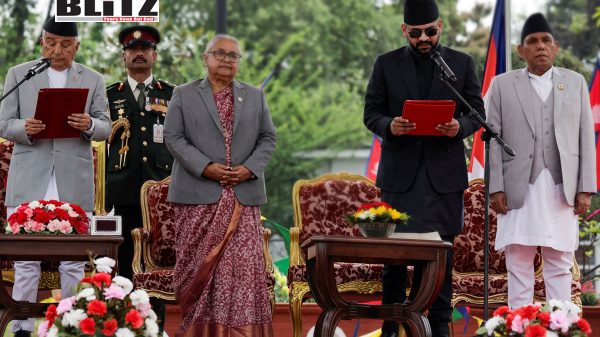
Nepal has entered a new and potentially transformative phase in its political trajectory following the swearing-in of Balendra Shah as prime minister. At just 35 years old, Shah-widely known for his background as a rapper and structural engineer-has taken office with a bold and controversial pledge: to pursue criminal charges against former leaders accused of responsibility in a deadly crackdown on youth-led protests in 2025.
Within hours of assuming office on March 27, Shah convened his first cabinet meeting and moved decisively to implement the findings of a high-level state commission. The report, which investigated the violent suppression of demonstrations that shook the country last September, recommended prosecuting key figures from the previous administration, including former prime minister K. P. Sharma Oli. The move signals not only a quest for accountability but also a sharp departure from Nepal’s historically cautious approach to prosecuting political elites.
Shah’s rise to power has been anything but conventional. Leading the reformist Rastriya Swatantra Party, he rode a wave of public anger fueled by corruption scandals, governance failures, and the violent suppression of what became known as the “Gen-Z protests.” These demonstrations began as a peaceful youth movement opposing a sweeping government ban on 26 social media platforms but quickly escalated into one of the most significant political crises in recent Nepalese history.
The protests reached a deadly climax on September 8, 2025, when security forces clashed with demonstrators outside the Federal Parliament in Kathmandu. According to the commission’s findings, at least 76 people were killed and more than 2,500 injured. The report paints a damning picture of the government’s response, accusing top officials of “extreme reckless negligence” and alleging that they failed to intervene effectively during a critical four-hour period of escalating violence.
Among those named in the report are former Home Minister Ramesh Lekhak and former Inspector General of Police Chandra Kuber Khapung. The commission concluded that these leaders acted as “mere spectators” while security forces allegedly used indiscriminate and lethal force against unarmed protesters. It further criticized the absence of clear operational guidelines, which it said contributed to chaotic and excessive use of force on the ground.
The legal implications of the report are significant. If convicted of criminal negligence resulting in mass casualties, the accused could face prison sentences ranging from three to ten years, along with substantial financial penalties. For Nepal, a country where political accountability has often been limited, the prospect of prosecuting former high-ranking officials represents a watershed moment.
Shah’s government has emphasized that the decision is rooted in the rule of law rather than political vendetta. Speaking to the media, government spokesperson Sasmit Pokharel confirmed that relevant agencies have been instructed to act “immediately” on the commission’s recommendations. A special committee will also be formed to examine the conduct of security forces and recommend disciplinary measures where necessary.
The September unrest did not end with the initial crackdown. On the following day, violence spread across the country, with riots engulfing major cities. Government buildings, including the Parliament and Supreme Court, were set ablaze using petroleum products. While the commission acknowledged that it could not fully investigate the scale of the subsequent destruction, it noted that the protests were quickly infiltrated by organized criminal groups, complicating the situation further.
The report also delivered a scathing critique of Nepal’s intelligence and security infrastructure. It singled out the National Investigation Department for failing to monitor online platforms where elements of the unrest were allegedly coordinated. Applications such as Discord were highlighted as key tools used by organizers, underscoring the challenges governments face in navigating digital-era protests.
To address these shortcomings, the commission outlined a comprehensive roadmap for reform. Key recommendations include the introduction of strict rules of engagement for security forces, enhanced training programs focused on crowd control, and improved intelligence-gathering capabilities. Shah’s administration has pledged to implement these reforms as part of a broader effort to modernize state institutions.
Beyond the immediate issue of the protest crackdown, Shah’s agenda reflects a wider anti-corruption drive. His party campaigned on promises to investigate the wealth of senior officials and reopen longstanding corruption cases dating back to Nepal’s democratic transition in 1990. This platform resonated strongly with younger voters, many of whom view systemic corruption as a major obstacle to the country’s development.
In one of his first public statements as Home Affairs Minister, Sudhan Gurung reinforced the government’s uncompromising stance. “If anyone asks you for a bribe, tell the police,” he said, emphasizing a policy of zero tolerance toward corruption. The message is clear: the new administration intends to challenge entrenched practices that have long undermined public trust.
However, Shah’s aggressive approach is not without risks. Critics argue that prosecuting former leaders could deepen political divisions and potentially destabilize the fragile balance of power in Nepal. Supporters of the previous government have already raised concerns about the possibility of politically motivated justice, warning that the move could set a precedent for future administrations to target their predecessors.
International observers are also watching closely. Nepal’s political stability is of strategic importance in the Himalayan region, where geopolitical interests often intersect. While many have welcomed Shah’s commitment to accountability, they have also stressed the importance of ensuring that legal proceedings are conducted transparently and in accordance with due process.
Despite these challenges, Shah appears determined to follow through on his promises. His decisive early actions suggest a leadership style that prioritizes bold initiatives over cautious incrementalism. Whether this approach will yield lasting reforms or provoke further instability remains to be seen.
What is certain, however, is that Nepal stands at a critical juncture. The decision to pursue justice for the victims of the 2025 protests has the potential to redefine the country’s political culture. If carried out fairly and effectively, it could strengthen democratic institutions and restore public confidence in governance. Conversely, if mishandled, it risks exacerbating existing tensions and undermining the very principles it seeks to uphold.
As the legal process unfolds, the eyes of the nation-and indeed the world-will remain fixed on Kathmandu. The coming months will test not only the resolve of Shah’s government but also the resilience of Nepal’s democratic framework. In a country striving to reconcile its past with its aspirations for the future, the pursuit of accountability may prove to be both a necessary and defining challenge.
Renuka Patnaik, Special Contributors to Blitz is a researcher with an organization that monitors activities of terrorist and militancy groups in the world.