France launches landmark criminal probe into Lebanese banks over capital flight

- Update Time : Thursday, April 23, 2026
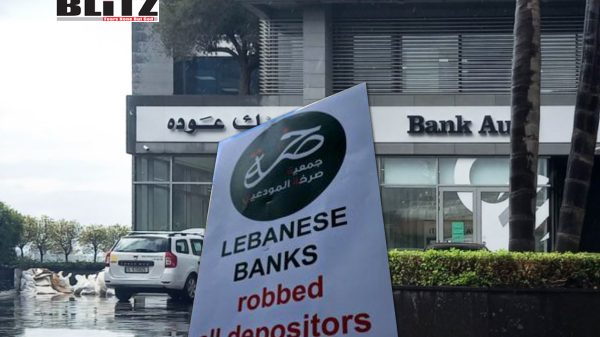
French judicial authorities have initiated a sweeping criminal investigation into the role of Lebanese banks and their European subsidiaries in facilitating large-scale capital flight during Lebanon’s financial collapse. The inquiry represents a significant escalation in international efforts to hold financial institutions accountable for practices that allegedly accelerated one of the most severe economic crises in modern history.
At the center of the investigation are the French operations of major Lebanese financial institutions, including the subsidiary of Bank Audi and Banque Richelieu France. The latter is associated with Société Générale de Banque au Liban and prominent Lebanese banker Antoun Sehnaoui. Investigators are examining whether these entities enabled or participated in illicit financial transfers that allowed politically connected individuals and wealthy clients to move funds out of Lebanon while ordinary citizens were subjected to strict capital controls.
The probe, led by the Financial Section of the Paris Public Prosecutor’s Office, is being conducted by France’s specialized anti-corruption unit tasked with tackling complex financial crimes. Authorities are reportedly investigating a range of serious allegations, including money laundering, breach of trust, handling of illicit assets, and criminal conspiracy. There is also the possibility that tax fraud charges could emerge as the investigation progresses.
The case was triggered by legal complaints filed in July 2025 by the Paris-based anti-corruption organization Sherpa and a coalition known as the Collective of Victims of Fraudulent and Criminal Practices in Lebanon. These groups have been instrumental in pushing for international accountability over the financial collapse that began in late 2019, a crisis widely attributed to systemic corruption, mismanagement, and opaque financial engineering within Lebanon’s banking sector.
According to William Bourdon, founder of Sherpa, the investigation marks a historic turning point. He described it as the first instance at the European level where the criminal liability of foreign banks and their executives could be directly pursued for their role in a national financial collapse. Bourdon emphasized that the case could set a precedent, potentially triggering similar legal actions across other European jurisdictions where Lebanese banks maintain operations.
“This represents a watershed moment for international financial accountability,” Bourdon stated, highlighting the broader implications of the probe. If successful, the case could redefine how cross-border financial misconduct is prosecuted, particularly in situations where domestic accountability mechanisms have failed.
The investigation unfolds against the backdrop of Lebanon’s devastating economic crisis, which has led to a dramatic collapse of the national currency, widespread poverty, and severe restrictions on access to bank deposits. While ordinary Lebanese citizens were unable to withdraw their savings, reports surfaced that billions of dollars were transferred abroad by elites with privileged access to financial networks. This disparity has fueled public outrage and intensified demands for justice.
The World Bank has described Lebanon’s financial collapse as one of the worst economic crises globally since the mid-19th century. Despite the scale of the disaster, domestic accountability has been limited, with political and financial elites largely shielded from prosecution within Lebanon. This has shifted the focus toward international legal systems, particularly in Europe, where many of the financial transactions and assets are believed to be located.
The French inquiry is not an isolated effort but part of a broader pattern of international investigations targeting Lebanon’s political and financial establishment. French authorities are already handling extensive proceedings involving key figures such as former central bank governor Riad Salame and former Prime Minister Najib Mikati.
In September 2025, French investigators opened a separate probe into allegations of fraud and money laundering involving Mikati and his brother, Taha Mikati. That investigation followed earlier complaints accusing the brothers of using offshore companies to acquire illicit assets in France. While the cases are not formally linked, legal experts note significant overlaps in the actors, mechanisms, and financial structures under scrutiny.
Bourdon suggested that these parallel investigations could eventually converge through formal cooperation mechanisms, further strengthening the case for systemic accountability. He also pointed out that the current probe could accelerate the “internationalization” of litigation related to Lebanon’s banking collapse, drawing in additional jurisdictions and legal frameworks.
The mounting legal pressure also extends to Sehnaoui, who faces multiple international challenges. As chairman of SGBL, he is a central figure in Lebanon’s financial sector and has been named in various legal actions abroad. These include a civil lawsuit filed in the United States alleging money laundering and links to illicit networks, though such claims remain subject to judicial review.
Meanwhile, developments within Lebanon continue to reflect the complexity of the crisis. A recent interrogation involving Salame was postponed after he failed to appear, citing medical reasons. The complaint, filed by current central bank governor Karim Souaid, accuses Salame of illicit enrichment and embezzlement through a network of offshore shell companies. Salame, who led Lebanon’s central bank for three decades, has long been a controversial figure and is considered a key architect of the financial system that ultimately collapsed.
The French investigation adds a new dimension to these ongoing efforts by focusing not only on individuals but also on institutional accountability. By targeting European subsidiaries of Lebanese banks, prosecutors are attempting to establish whether these entities acted independently or as extensions of their parent companies in Beirut. This distinction could prove critical in determining liability and shaping the legal outcomes.
For many observers, the case represents a rare opportunity to address the structural failures that enabled Lebanon’s economic meltdown. It also raises broader questions about the role of international financial systems in facilitating capital flight and shielding illicit wealth.
If the investigation leads to prosecutions, it could have far-reaching consequences for global banking practices, particularly in jurisdictions that serve as financial hubs for cross-border transactions. More immediately, it offers a measure of hope for Lebanese citizens seeking justice after years of economic hardship and institutional failure.
As the probe unfolds, its implications will likely extend beyond Lebanon, influencing how financial crimes are investigated and prosecuted in an increasingly interconnected global economy.
Suraiyya Aziz specializes on topics related to the Middle East and the Arab world.